
 Sign in with Facebook
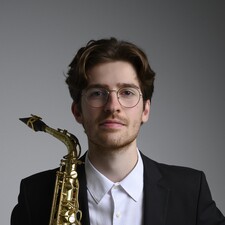
Tomé Barrios
https://www.goodreads.com/tomebarrios





“Her persuit [Annea Lockwood] was the opposite: she wanted to see where close listening and attention to process might get her. Above all, she searched for sounds that were rich and complex enough to trigger a wake-up call. Her hunch was that if we allow ourselves to listen properly, if we start to really feel a sound in our bodies, we might also start to take more notice of the thing that made it. If that thing is a river, or a cat, or a neighbourhood, or a fellow human being, we might start to care about the source in new and deeper ways.”
― Sound Within Sound: Opening Our Ears to the Twentieth Century
― Sound Within Sound: Opening Our Ears to the Twentieth Century
“[José] Maceda thought a lot about opposites, and how they seemed to him to be a Western obsession. In an essay called A Concept of Time in a Music of Southeast Asia, he references Jacques Derrida on the subject:
Good vs. evil, being vs. nothingness, presence vs. absence, truth vs. error, identity vs. difference, mind vs. matter, man vs. woman. soul vs. body, life vs. death, nature vs. culture...”
― Sound Within Sound: Opening Our Ears to the Twentieth Century
Good vs. evil, being vs. nothingness, presence vs. absence, truth vs. error, identity vs. difference, mind vs. matter, man vs. woman. soul vs. body, life vs. death, nature vs. culture...”
― Sound Within Sound: Opening Our Ears to the Twentieth Century

“The modern battlefield is like a huge, sleeping machine with innumerable eyes and ears and arms, lying hidden and inactive, ambushed for the one moment on which all depends. Then from some hole in the ground a single red light ascends in fiery orelude. A thousand guns roar out on the instant, and at a touch, driven by innumerable levers, the work of annihilation goes pounding on its way.
Orders fly like sparks and flashes over a close network, spurring on to heightened destruction in front and bringing up from behind a steady stream of fresh men and fresh materials to fling into the flames. Every one feels that he is caught in a vortex which draws him on and on and thrusts him with unrelenting precision over the brink of death.”
―
Orders fly like sparks and flashes over a close network, spurring on to heightened destruction in front and bringing up from behind a steady stream of fresh men and fresh materials to fling into the flames. Every one feels that he is caught in a vortex which draws him on and on and thrusts him with unrelenting precision over the brink of death.”
―
“In her [Éliane Radigue] essay Le temps n'a pas d'importance, she likens her music to a plant. "We never see a plant move, but it is growing continually." I ask her about that thing she does with time - her temporal sorcery, how time in her music feels both contracted (in the way it focuses on tiny details) and elongated (in the way it unfolds over many hours). "By nature," she says, "slowness is expansive yet it allows us to hear up close.”
― Sound Within Sound: Opening Our Ears to the Twentieth Century
― Sound Within Sound: Opening Our Ears to the Twentieth Century
“Meaning," she [Éliane Radigue] insists, "always comes from the life of the sound itself." Instead, she describes music and spirituality as train tracks, never meeting but connected by the vehicle (presumably us) which is travelling upon them.”
― Sound Within Sound: Opening Our Ears to the Twentieth Century
― Sound Within Sound: Opening Our Ears to the Twentieth Century


Tomé’s 2025 Year in Books
Take a look at Tomé’s Year in Books, including some fun facts about their reading.

855 books
|
5 friends

5 books
|
2 friends

446 books
|
51 friends

2 books
|
1 friend

340 books
|
80 friends

52 books
|
5 friends
25 books
|
2 friends


Favorite Genres
Polls voted on by Tomé
Lists liked by Tomé
