
Discover new books on Goodreads
Meet your next favorite book



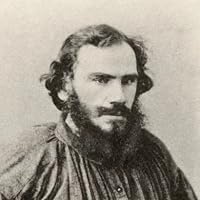
“It is amazing how complete is the delusion that beauty is goodness. A handsome woman talks nonsense, you listen and hear not nonsense but cleverness. She says and does horrid things, and you see only charm. And if a handsome woman does not say stupid or horrid things, you at once persuade yourself that she is wonderfully clever and moral.”
― The Kreutzer Sonata
― The Kreutzer Sonata

“You always own the option of having no opinion. There is never any need to get worked up or to trouble your soul about things you can't control. These things are not asking to be judged by you. Leave them alone.”
― Meditations
― Meditations

“There are also books full of great writing that don't have very good stories. Read sometimes for the story, Bobby. Don't be like the book-snobs who won't do that. Read sometimes for the words - the language. Don't be like the play-it-safers that won't do that. But when you find a book that has both a good story and good words, treasure that book.”
― Hearts in Atlantis
― Hearts in Atlantis
“Begin each day by telling yourself: Today I shall be meeting with interference, ingratitude, insolence, disloyalty, ill-will, and selfishness – all of them due to the offenders’ ignorance of what is good or evil. But for my part I have long perceived the nature of good and its nobility, the nature of evil and its meanness, and also the nature of the culprit himself, who is my brother (not in the physical sense, but as a fellow creature similarly endowed with reason and a share of the divine); therefore none of those things can injure me, for nobody can implicate me in what is degrading. Neither can I be angry with my brother or fall foul of him; for he and I were born to work together, like a man’s two hands, feet or eyelids, or the upper and lower rows of his teeth. To obstruct each other is against Nature’s law – and what is irritation or aversion but a form of obstruction.”
― Meditations
― Meditations

“Am I in love? – yes, since I am waiting. The other one never waits. Sometimes I want to play the part of the one who doesn't wait; I try to busy myself elsewhere, to arrive late; but I always lose at this game. Whatever I do, I find myself there, with nothing to do, punctual, even ahead of time. The lover's fatal identity is precisely this: I am the one who waits.”
― A Lover's Discourse: Fragments
― A Lover's Discourse: Fragments

David’s 2025 Year in Books
Take a look at David’s Year in Books, including some fun facts about their reading.

286 books
|
122 friends

257 books
|
10 friends

607 books
|
146 friends

66 books
|
32 friends

8 books
|
89 friends

1 book
|
127 friends

2 books
|
37 friends

0 books
|
55 friends
More friends…

Polls voted on by David
Lists liked by David