
Discover new books on Goodreads
Meet your next favorite book




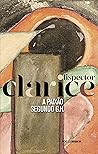
Mas se eu gritasse uma só vez que fosse, talvez nunca mais pudesse parar. Se eu gritasse ninguém poderia fazer mais nada por mim; enquanto, se eu nunca revelar a minha carência, ninguém se assustará comigo e me ajudarão sem saber; mas só
...more


“My apologies to everything that I can't be everywhere at once.
My apologies to everyone that I can't be each woman and each man.
I know I won't be justified as long as I live,
since I myself stand in my own way.
Don't bear me ill will, speech, that I borrow weighty words,
then labor heavily so that they may seem light.”
― View with a Grain of Sand: Selected Poems
My apologies to everyone that I can't be each woman and each man.
I know I won't be justified as long as I live,
since I myself stand in my own way.
Don't bear me ill will, speech, that I borrow weighty words,
then labor heavily so that they may seem light.”
― View with a Grain of Sand: Selected Poems

“Lady, shall I lie in your lap?
Ophelia: No, my lord.
Hamlet: DId you think I meant country matters?
Ophelia: I think nothing, my lord.
Hamlet: That's a fair thought to lie between maids' legs.
Ophelia: What is, my lord?
Hamlet: Nothing.”
― Hamlet
Ophelia: No, my lord.
Hamlet: DId you think I meant country matters?
Ophelia: I think nothing, my lord.
Hamlet: That's a fair thought to lie between maids' legs.
Ophelia: What is, my lord?
Hamlet: Nothing.”
― Hamlet

“Your silence will not protect you.”
― Sister Outsider: Essays and Speeches
― Sister Outsider: Essays and Speeches

“Cannery Row in Monterey in California is a poem, a stink, a grating noise, a quality of light, a tone, a habit, a nostalgia, a dream. Cannery Row is the gathered and scattered, tin and iron and rust and splintered wood, chipped pavement and weedy lots and junk heaps, sardine canneries of corrugated iron, honky-tonks, restaurants and whore-houses, and little crowded groceries, and laboratories and flop-houses. Its inhabitants are, as the man once said, "whores, pimps, gamblers, and sons of bitches," by which he meant Everybody. Had the man looked through another peep-hole he might have said: "Saints and angels and martyrs and holy men," and he would have meant the same thing.
In the morning when the sardine fleet has made a catch, the purse-seiners waddle heavily into the bay blowing their whistles. The deep-laden boats pull in against the coast where the canneries dip their tails into the bay. The figure is advisedly chosen, for if the canneries dipped their mouths into the bay the canned sardines which emerge from the other end would be metaphorically, at least, even more horrifying. Then cannery whistles scream and all over the town men and women scramble into their clothes and come running down to the Row to go to work. Then shining cars bring the upper classes down: superintendents, accountants, owners who disappear into offices. Then from the town pour Wops and Chinamen and Polaks, men and women in trousers and rubber coats and oilcloth aprons. They come running to clean and cut and pack and cook and can the fish. The whole street rumbles and groans and screams and rattles while the silver rivers of fish pour in out of the boats and the boats rise higher and higher in the water until they are empty. The canneries rumble and rattle and squeak until the last fish is cleaned and cut and cooked and canned and then the whistles scream again and the dripping, smelly, tired Wops and Chinamen and Polaks, men and women, straggle out and droop their ways up the hill into the town and Cannery Row becomes itself again-quiet and magical. Its normal life returns. The bums who retired in disgust under the black cypress-tree come out to sit on the rusty pipes in the vacant lot. The girls from Dora's emerge for a bit of sun if there is any. Doc strolls from the Western Biological Laboratory and crosses the street to Lee Chong's grocery for two quarts of beer. Henri the painter noses like an Airedale through the junk in the grass-grown lot for some pan or piece of wood or metal he needs for the boat he is building. Then the darkness edges in and the street light comes on in front of Dora's-- the lamp which makes perpetual moonlight in Cannery Row. Callers arrive at Western Biological to see Doc, and he crosses the street to Lee Chong's for five quarts of beer.
How can the poem and the stink and the grating noise-- the quality of light, the tone, the habit and the dream-- be set down alive? When you collect marine animals there are certain flat worms so delicate that they are almost impossible to capture whole, for they break and tatter under the touch. You must let them ooze and crawl of their own will on to a knife blade and then lift them gently into your bottle of sea water. And perhaps that might be the way to write this book-- to open the page and to let the stories crawl in by themselves.”
―
In the morning when the sardine fleet has made a catch, the purse-seiners waddle heavily into the bay blowing their whistles. The deep-laden boats pull in against the coast where the canneries dip their tails into the bay. The figure is advisedly chosen, for if the canneries dipped their mouths into the bay the canned sardines which emerge from the other end would be metaphorically, at least, even more horrifying. Then cannery whistles scream and all over the town men and women scramble into their clothes and come running down to the Row to go to work. Then shining cars bring the upper classes down: superintendents, accountants, owners who disappear into offices. Then from the town pour Wops and Chinamen and Polaks, men and women in trousers and rubber coats and oilcloth aprons. They come running to clean and cut and pack and cook and can the fish. The whole street rumbles and groans and screams and rattles while the silver rivers of fish pour in out of the boats and the boats rise higher and higher in the water until they are empty. The canneries rumble and rattle and squeak until the last fish is cleaned and cut and cooked and canned and then the whistles scream again and the dripping, smelly, tired Wops and Chinamen and Polaks, men and women, straggle out and droop their ways up the hill into the town and Cannery Row becomes itself again-quiet and magical. Its normal life returns. The bums who retired in disgust under the black cypress-tree come out to sit on the rusty pipes in the vacant lot. The girls from Dora's emerge for a bit of sun if there is any. Doc strolls from the Western Biological Laboratory and crosses the street to Lee Chong's grocery for two quarts of beer. Henri the painter noses like an Airedale through the junk in the grass-grown lot for some pan or piece of wood or metal he needs for the boat he is building. Then the darkness edges in and the street light comes on in front of Dora's-- the lamp which makes perpetual moonlight in Cannery Row. Callers arrive at Western Biological to see Doc, and he crosses the street to Lee Chong's for five quarts of beer.
How can the poem and the stink and the grating noise-- the quality of light, the tone, the habit and the dream-- be set down alive? When you collect marine animals there are certain flat worms so delicate that they are almost impossible to capture whole, for they break and tatter under the touch. You must let them ooze and crawl of their own will on to a knife blade and then lift them gently into your bottle of sea water. And perhaps that might be the way to write this book-- to open the page and to let the stories crawl in by themselves.”
―

“... the companions of our childhood always possess a certain power over our minds which hardly any later friend can obtain.”
― Frankenstein: The 1818 Text
― Frankenstein: The 1818 Text


Ziggy’s 2025 Year in Books
Take a look at Ziggy’s Year in Books, including some fun facts about their reading.

269 books
|
11 friends

233 books
|
6 friends

77 books
|
5 friends

312 books
|
16 friends

669 books
|
17 friends

11 books
|
25 friends

58 books
|
34 friends

236 books
|
18 friends
More friends…
Favorite Genres
Polls voted on by Ziggy
Lists liked by Ziggy