
Discover new books on Goodreads
Meet your next favorite book


“O VENENO ARDENTE DO DESGOSTO. THE WHITE HOT POISON OF ANGER.
When others make us angry at them- at their shamelessness, injustice, inconsideration- then they exercise power over us, they proliferate and gnaw at our soul, then anger is like a white-hot poison that corrods all mild, noble and balanced feelings and robs us of sleep. Sleepless, we turn on the light and are angry at the anger that has lodged like a succubus who sucks us dry and debilitates us. We are not only furious at the damage, but also that it develops in us all by itself, for while we sit on the edge of the bed with aching temples, the distant catalyst remains untouched by the corrosive force of the anger that eats at us. On the empty internal stage bathed in the harsh light of mute rage, we perform all by ourselves a drama with shadow figures and shadow words we hurl against enemies in helpless rage we feel as icy blazing fire in our bowels. And the greater our despair that is only a shadow play and not a real discussion with the possibility of hurting the other and producing a balance of suffering, the wilder the poisonous shadows dance and haunt us even in the darkest catacombs of our dreams. (We will turn the tables, we think grimly, and all night long forge words that will produce in the other the effect of a fire bomb so that now he will be the one with the flames of indignation raging inside while we, soothed by schadenfreude, will drink our coffee in cheerful calm.)
What could it mean to deal appropriately with anger? We really don't want to be soulless creatures who remain thoroughly indifferent to what they come across, creatures whose appraisals consist only of cool, anemic judgments and nothing can shake them up because nothing really bothers them. Therefore, we can't seriously wish not to know the experience of anger and instead persist in an equanimity that wouldn't be distinguished from tedious insensibility. Anger also teaches us something about who we are. Therefore this is what I'd like to know: What can it mean to train ourselves in anger and imagine that we take advantage of its knowledge without being addicted to its poison?
We can be sure that we will hold on to the deathbed as part of the last balance sheet- and this part will taste bitter as cyanide- that we have wasted too much, much too much strength and time on getting angry and getting even with others in a helpless shadow theater, which only we, who suffered impotently, knew anything about. What can we do to improve this balance sheet? Why did our parents, teachers and other instructors never talk to us about it? Why didn't they tell something of this enormous significance? Not give us in this case any compass that could have helped us avoid wasting our soul on useless, self-destructive anger?”
― Night Train to Lisbon

“Confusion is a luxury which only the very, very young can possibly afford and you are not that young anymore”
― Giovanni’s Room
― Giovanni’s Room
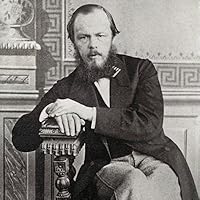
“For the direct, lawful, immediate fruit of consciousness is inertia – that is, a conscious sitting with folded arms. I’ve already mentioned this above. I repeat, I emphatically repeat: ingenuous people and active figures are all active simply because they are dull and narrow minded. How to explain it? Here’s how: as a consequence of their narrow-mindedness, they take the most immediate and secondary causes for the primary ones, and thus become convinced more quickly and easily than others that they have found an indisputable basis for their doings, and so they feel at ease; and that, after all, is the main thing. For in order to begin to act, one must first be completely at ease, so that no more doubts remain. Well, and how am I, for example, to set myself at ease? Where are the primary causes on which I can rest, where are my bases? Where am I going to get them? I exercise thinking, and, consequently, for me every primary cause immediately drags with it yet another, still more primary one, and so on ad infinitum. Such is precisely the essence of all consciousness and thought. So,”
― Notes from Underground
― Notes from Underground

“Hope is the denial of reality. It is the carrot dangled before the draft horse to keep him plodding along in a vain attempt to reach it."
"Are you saying we shouldn't hope?"
"I'm saying we should remove the carrot and walk forward with our eyes open!”
―
"Are you saying we shouldn't hope?"
"I'm saying we should remove the carrot and walk forward with our eyes open!”
―
“It takes strength to remember, it takes another kind of strength to forget, it takes a hero to do both. People who remember court madness through pain, the pain of the perpetually recurring death of their innocence; people who forget court another kind of madness, the madness of the denial of pain and the hatred of innocence; and the world is mostly divided between madmen who remember and madmen who forget. Heroes are rare.”
― Giovanni’s Room
― Giovanni’s Room

Jenwrwobblee’s 2025 Year in Books
Take a look at Jenwrwobblee’s Year in Books, including some fun facts about their reading.

434 books
|
23 friends

875 books
|
44 friends

97 books
|
64 friends

230 books
|
186 friends

214 books
|
51 friends

3 books
|
168 friends

338 books
|
32 friends

32 books
|
109 friends
More friends…


Polls voted on by Jenwrwobblee
Lists liked by Jenwrwobblee