
Discover new books on Goodreads
Meet your next favorite book



“I think we ought to read only the kind of books that wound or stab us. If the book we're reading doesn't wake us up with a blow to the head, what are we reading for? So that it will make us happy, as you write? Good Lord, we would be happy precisely if we had no books, and the kind of books that make us happy are the kind we could write ourselves if we had to. But we need books that affect us like a disaster, that grieve us deeply, like the death of someone we loved more than ourselves, like being banished into forests far from everyone, like a suicide. A book must be the axe for the frozen sea within us. That is my belief.”
―
―

“The current ruling ontology denies any possibility of a social causation of mental illness. The chemico-biologization of mental illness is of course strictly commensurate with its depoliticization. Considering mental illness an individual chemico-biological problem has enormous benefits for capitalism. First, it reinforces Capital’s drive towards atomistic individualization (you are sick because of your brain chemistry). Second, it provides an enormously lucrative market in which multinational pharmaceutical companies can peddle their pharmaceuticals (we can cure you with our SSRIs). It goes without saying that all mental illnesses are neurologically instantiated, but this says nothing about their causation. If it is true, for instance, that depression is constituted by low serotonin levels, what still needs to be explained is why particular individuals have low levels of serotonin. This requires a social and political explanation; and the task of repoliticizing mental illness is an urgent one if the left wants to challenge capitalist realism.”
― Capitalist Realism: Is There No Alternative?
― Capitalist Realism: Is There No Alternative?

“Sure I worried that writing about it might be a mistake. You write a thing down because you're hoping to get a hold on it. You write about experiences partly to understand what they mean, partly not to lose them to time. To oblivion. But there's always the danger of the opposite happening. Losing the memory of the experience itself to the memory of writing about it. Like people whose memories of places they've traveled to are in fact only memories of the pictures they took there. In the end, writing and photography probably destroy more of the past than they ever preserve of it. So it could happen: by writing about someone lost - or even just talking too much about them - you might be burying them for good.”
― The Friend
― The Friend
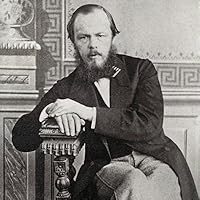
“Hold your tongue, or I'll kill you!
You'll kill me? No, excuse me, I will speak. I came to treat myself to that pleasure. Oh, I love the dreams of my ardent young friends, quivering with eagerness for life! 'There are new men,' you decided last spring, when you were meaning to come here, 'they propose to destroy everything and begin with cannibalism. Stupid fellows! they didn't ask my advice! I maintain that nothing need be destroyed, that we only need to destroy the idea of God in man, that's how we have to set to work. It's that, that we must begin with. Oh, blind race of men who have no understanding! As soon as men have all of them denied God -- and I believe that period, analogous with geological periods, will come to pass -- the old conception of the universe will fall of itself without cannibalism, and, what's more, the old morality, and everything will begin anew. Men will unite to take from life all it can give, but only for joy and happiness in the present world. Man will be lifted up with a spirit of divine Titanic pride and the man-god will appear. From hour to hour extending his conquest of nature infinitely by his will and his science, man will feel such lofty joy from hour to hour in doing it that it will make up for all his old dreams of the joys of heaven. Everyone will know that he is mortal and will accept death proudly and serenely like a god. His pride will teach him that it's useless for him to repine at life's being a moment, and he will love his brother without need of reward. Love will be sufficient only for a moment of life, but the very consciousness of its momentariness will intensify its fire, which now is dissipated in dreams of eternal love beyond the grave'... and so on and so on in the same style. Charming!
Ivan sat with his eyes on the floor, and his hands pressed to his ears, but he began trembling all over. The voice continued.
(The devil) The question now is, my young thinker reflected, is it possible that such a period will ever come? If it does, everything is determined and humanity is settled for ever. But as, owing to man's inveterate stupidity, this cannot come about for at least a thousand years, everyone who recognises the truth even now may legitimately order his life as he pleases, on the new principles. In that sense, 'all things are lawful' for him. What's more, even if this period never comes to pass, since there is anyway no God and no immortality, the new man may well become the man-god, even if he is the only one in the whole world, and promoted to his new position, he may lightheartedly overstep all the barriers of the old morality of the old slaveman, if necessary. There is no law for God. Where God stands, the place is holy. Where I stand will be at once the foremost place... 'all things are lawful' and that's the end of it! That's all very charming; but if you want to swindle why do you want a moral sanction for doing it? But that's our modern Russian all over. He can't bring himself to swindle without a moral sanction. He is so in love with truth-.”
― The Brothers Karamazov
You'll kill me? No, excuse me, I will speak. I came to treat myself to that pleasure. Oh, I love the dreams of my ardent young friends, quivering with eagerness for life! 'There are new men,' you decided last spring, when you were meaning to come here, 'they propose to destroy everything and begin with cannibalism. Stupid fellows! they didn't ask my advice! I maintain that nothing need be destroyed, that we only need to destroy the idea of God in man, that's how we have to set to work. It's that, that we must begin with. Oh, blind race of men who have no understanding! As soon as men have all of them denied God -- and I believe that period, analogous with geological periods, will come to pass -- the old conception of the universe will fall of itself without cannibalism, and, what's more, the old morality, and everything will begin anew. Men will unite to take from life all it can give, but only for joy and happiness in the present world. Man will be lifted up with a spirit of divine Titanic pride and the man-god will appear. From hour to hour extending his conquest of nature infinitely by his will and his science, man will feel such lofty joy from hour to hour in doing it that it will make up for all his old dreams of the joys of heaven. Everyone will know that he is mortal and will accept death proudly and serenely like a god. His pride will teach him that it's useless for him to repine at life's being a moment, and he will love his brother without need of reward. Love will be sufficient only for a moment of life, but the very consciousness of its momentariness will intensify its fire, which now is dissipated in dreams of eternal love beyond the grave'... and so on and so on in the same style. Charming!
Ivan sat with his eyes on the floor, and his hands pressed to his ears, but he began trembling all over. The voice continued.
(The devil) The question now is, my young thinker reflected, is it possible that such a period will ever come? If it does, everything is determined and humanity is settled for ever. But as, owing to man's inveterate stupidity, this cannot come about for at least a thousand years, everyone who recognises the truth even now may legitimately order his life as he pleases, on the new principles. In that sense, 'all things are lawful' for him. What's more, even if this period never comes to pass, since there is anyway no God and no immortality, the new man may well become the man-god, even if he is the only one in the whole world, and promoted to his new position, he may lightheartedly overstep all the barriers of the old morality of the old slaveman, if necessary. There is no law for God. Where God stands, the place is holy. Where I stand will be at once the foremost place... 'all things are lawful' and that's the end of it! That's all very charming; but if you want to swindle why do you want a moral sanction for doing it? But that's our modern Russian all over. He can't bring himself to swindle without a moral sanction. He is so in love with truth-.”
― The Brothers Karamazov

“Attention, taken to its highest degree, is the same thing as prayer. It presupposes faith and love. Absolutely unmixed attention is prayer.”
― Simone Weil: An Anthology
― Simone Weil: An Anthology
 Literary Fiction by People of Color
— 13669 members
— last activity 3 hours, 14 min ago
Literary Fiction by People of Color
— 13669 members
— last activity 3 hours, 14 min ago
This can include genre fiction that is literary (e.g. speculative fiction, historical fiction, etc.), as long as it's written by a person of color (Af ...more

Basia’s 2025 Year in Books
Take a look at Basia’s Year in Books, including some fun facts about their reading.

837 books
|
37 friends

644 books
|
12 friends

729 books
|
43 friends

91 books
|
5 friends

678 books
|
45 friends

168 books
|
14 friends

674 books
|
17 friends

392 books
|
7 friends
More friends…


Favorite Genres
Polls voted on by Basia
Lists liked by Basia