
Discover new books on Goodreads
Meet your next favorite book
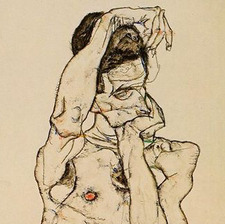


“At some point when tending someone you love who is in pain, you reach the edge of a lake, and you look at each other with such joy at the stillness. [Letter unsent]”
― From A to X: A Story in Letters
― From A to X: A Story in Letters

“For the rest of the earth’s organisms, existence is relatively uncomplicated. Their lives are about three things: survival, reproduction, death—and nothing else. But we know too much to content ourselves with surviving, reproducing, dying—and nothing else. We know we are alive and know we will die. We also know we will suffer during our lives before suffering—slowly or quickly—as we draw near to death. This is the knowledge we “enjoy” as the most intelligent organisms to gush from the womb of nature. And being so, we feel shortchanged if there is nothing else for us than to survive, reproduce, and die. We want there to be more to it than that, or to think there is. This is the tragedy: Consciousness has forced us into the paradoxical position of striving to be unself-conscious of what we are—hunks of spoiling flesh on disintegrating bones.”
― The Conspiracy Against the Human Race
― The Conspiracy Against the Human Race
“No place for illusions here. The beat doesn't stop solitude, it doesn't cure pain, you can't telephone it - it's simply a reminder that you belong to a shared story.”
― From A to X: A Story in Letters
― From A to X: A Story in Letters

“When asked whether or not we are Marxists, our position is the same as that of a physicist, when asked if he is a “Newtonian” or of a biologist when asked if he is a “Pasteurian.”
There are truths so evident, so much a part of the peoples’ knowledge, that it is now useless to debate them. One should be a “Marxist” with the same naturalness with which one is a “Newtonian” in physics or a “Pasteurian.” If new facts bring about new concepts, the latter will never take away that portion of truth possessed by those that have come before.
Such is the case, for example, of “Einsteinian” relativity or of Planck’s quantum theory in relation to Newton’s discoveries. They take absolutely nothing away from the greatness of the learned Englishman. Thanks to Newton, physics was able to advance until it achieved new concepts of space. The learned Englishman was the necessary stepping-stone for that.
Obviously, one can point to certain mistakes of Marx, as a thinker and as an investigator of the social doctrines and of the capitalist system in which he lived. We Latin Americans, for example, cannot agree with his interpretation of Bolivar, or with his and Engels’ analysis of the Mexicans, which accepted as fact certain theories of race or nationality that are unacceptable today.
But the great men who discover brilliant truths live on despite their small faults and these faults serve only to show us they were human. That is to say, they were human beings who could make mistakes, even given the high level of consciousness achieved by these giants of human thought.
This is why we recognize the essential truths of Marxism as part of humanity’s body of cultural and scientific knowledge. We accept it with the naturalness of something that requires no further argument.”
―
There are truths so evident, so much a part of the peoples’ knowledge, that it is now useless to debate them. One should be a “Marxist” with the same naturalness with which one is a “Newtonian” in physics or a “Pasteurian.” If new facts bring about new concepts, the latter will never take away that portion of truth possessed by those that have come before.
Such is the case, for example, of “Einsteinian” relativity or of Planck’s quantum theory in relation to Newton’s discoveries. They take absolutely nothing away from the greatness of the learned Englishman. Thanks to Newton, physics was able to advance until it achieved new concepts of space. The learned Englishman was the necessary stepping-stone for that.
Obviously, one can point to certain mistakes of Marx, as a thinker and as an investigator of the social doctrines and of the capitalist system in which he lived. We Latin Americans, for example, cannot agree with his interpretation of Bolivar, or with his and Engels’ analysis of the Mexicans, which accepted as fact certain theories of race or nationality that are unacceptable today.
But the great men who discover brilliant truths live on despite their small faults and these faults serve only to show us they were human. That is to say, they were human beings who could make mistakes, even given the high level of consciousness achieved by these giants of human thought.
This is why we recognize the essential truths of Marxism as part of humanity’s body of cultural and scientific knowledge. We accept it with the naturalness of something that requires no further argument.”
―

Oday’s 2025 Year in Books
Take a look at Oday’s Year in Books, including some fun facts about their reading.


Favorite Genres
Polls voted on by Oday
Lists liked by Oday