
Discover new books on Goodreads
Meet your next favorite book



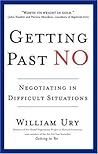
Breakthrough negotiation is the opposite of imposing your position on the other side. Rather than pounding in a new idea from the outside, you encourage them to reach for it from within. Rather than telling them what to do, you let them
...more


“He treated Navani—and, well, everyone—as if he knew them intimately. There was a mystery about this Wit that Navani had never noticed during Elhokar’s reign. Perhaps he molded himself to the monarch he served. He stayed in step right behind Jasnah, silvery-sheathed sword on his hip, his lips drawn ever so slightly to a smile. The type that made you think he must be considering a joke about you that no one had the decency to say to your face.”
― Rhythm of War
― Rhythm of War
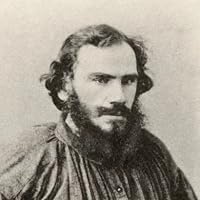
“While half of Russia was conquered, and the inhabitants of Moscow were fleeing to remote provinces, and one levy of militia after another was being raised for the defense of the country, we, not living at the time, cannot help imagining that all the people in Russia, great and small alike, were engaged in doing nothing else but making sacrifices, saving their country, or weeping over its downfall. The tales and descriptions of that period without exception tell us of nothing but the self-sacrifice, the patriotism, the despair, the grief, and the heroism of the Russians. In reality, it was not at all like that. It seems so to us, because we see out of the past only the general historical interest of that period, and we do not see all of the personal human interests of the men of that time. And yet in reality these personal interests of the immediate present are of so much greater importance than public interests, that they prevent the public interest from ever being felt - from being noticed at all, indeed. The majority of the people of that period took no heed of the general progress of public affairs, and were only influenced by their immediate personal interests. And those very people played the most useful part in the work of the time.
Those who are striving to grasp the general course of events, and trying by self-sacrifice and heroism to take a hand in it, were the most useless members of society;
...
In historical events we see more plainly than ever the law that forbids us to taste of the fruit of the Tree of Knowledge. It is only unself-conscious activity that bears fruit, and the man who plays a part in an historical drama never understands its significance. If he strives to comprehend it, he is stricken with barrenness.”
― War and Peace
Those who are striving to grasp the general course of events, and trying by self-sacrifice and heroism to take a hand in it, were the most useless members of society;
...
In historical events we see more plainly than ever the law that forbids us to taste of the fruit of the Tree of Knowledge. It is only unself-conscious activity that bears fruit, and the man who plays a part in an historical drama never understands its significance. If he strives to comprehend it, he is stricken with barrenness.”
― War and Peace
“I've learned one thing, and that's to quit worrying about stupid things. You have four years to be irresponsible here, relax. Work is for people with jobs. You'll never remember class time, but you'll remember the time you wasted hanging out with your friends. So stay out late. Go out with your friends on a Tuesday when you have a paper due on Wednesday. Spend money you don't have. Drink 'til sunrise. The work never ends, but college does...”
―
―
“Vronsky meanwhile, in spite of the complete fulfilment of what he had so long desired, was not completely happy. He soon felt that the realization of his longing gave him only one grain of the mountain of bliss he had anticipated. That realization showed him the eternal error men make by imagining that happiness consists in the gratification of their wishes. When first he united his life with hers and donned civilian clothes, he felt the delight of freedom in general, such as he had not before known, and also the freedom of love—he was contented then, but not for long. Soon he felt rising in his soul a desire for desires—boredom. Involuntarily he began to snatch at every passing caprice, mistaking it for a desire and a purpose.”
― Anna Karenina
― Anna Karenina

“It remains an astonishing, disturbing fact that in America—a nation where nearly every new drug is subjected to rigorous scrutiny as a potential carcinogen, and even the bare hint of a substance’s link to cancer ignites a firestorm of public hysteria and media anxiety—one of the most potent and common carcinogens known to humans can be freely bought and sold at every corner store for a few dollars.”
― The Emperor of All Maladies: A Biography of Cancer
― The Emperor of All Maladies: A Biography of Cancer


Eric’s 2025 Year in Books
Take a look at Eric’s Year in Books, including some fun facts about their reading.

5,664 books
|
143 friends

2,111 books
|
83 friends

1,112 books
|
79 friends

532 books
|
48 friends

359 books
|
111 friends

849 books
|
176 friends

381 books
|
124 friends

220 books
|
119 friends
More friends…
Favorite Genres
Polls voted on by Eric
Lists liked by Eric