
 Sign in with Facebook

Kauã Barreto
https://www.goodreads.com/kgbarretokgb
to-read
(126)
currently-reading (10)
read (23)
did-not-finish (0)
dc-comics (8)
superman (6)
marxismo (5)
estado (4)
philosophy (4)
90s (3)
currently-reading (10)
read (23)
did-not-finish (0)
dc-comics (8)
superman (6)
marxismo (5)
estado (4)
philosophy (4)
90s (3)
grant-morrison
(3)
justice-league (3)
deleuze (2)
favorites (2)
marvel-comics (2)
nietzsche (2)
art-and-literature (1)
batman (1)
dialetica (1)
economia-politica (1)
justice-league (3)
deleuze (2)
favorites (2)
marvel-comics (2)
nietzsche (2)
art-and-literature (1)
batman (1)
dialetica (1)
economia-politica (1)
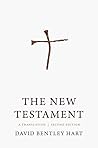
Kauã Barreto
is currently reading
progress:
(page 185 of 648)
"I tell you that such will the joy be in heaven over one sinner changing his heart, more than over ninety-nine upright men having no need of a change of heart... Thus, I tell you, joy arises in the presence of God’s angels
over one sinner changing his heart" — May 12, 2025 02:18AM
"I tell you that such will the joy be in heaven over one sinner changing his heart, more than over ninety-nine upright men having no need of a change of heart... Thus, I tell you, joy arises in the presence of God’s angels
over one sinner changing his heart" — May 12, 2025 02:18AM
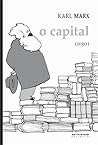
progress:
(page 477 of 856)
"O cérebro capitalista confunde a relação entre trabalho morto e vivo, entre valor e força criadora de valor..." — May 06, 2025 09:25AM
"O cérebro capitalista confunde a relação entre trabalho morto e vivo, entre valor e força criadora de valor..." — May 06, 2025 09:25AM


“With the advent of the first truly revolutionary means of reproduction, photography, simultaneously with the rise of socialism, art sensed the approaching crisis which has become evident a century later. At the time, art reacted with the doctrine of l'art pour l'art, that is, with a theology of art. This gave rise to what might be called a negative theology in the form of the idea of "pure" art, which not only denied any social function of art but also any categorizing by subject matter.”
― Illuminations: Essays and Reflections
― Illuminations: Essays and Reflections

“A kiss is the beginning of cannibalism.”
―
―

“Nothing written for pay is worth printing. Only what has been written against the market.”
―
―

“The Couple Overfloweth
We sometimes go on as though people can’t express themselves. In fact they’re always expressing themselves. The sorriest couples are those where the woman can’t be preoccupied or tired without the man saying “What’s wrong? Say something…,” or the man, without the woman saying … and so on. Radio and television have spread this spirit everywhere, and we’re riddled with pointless talk, insane quantities of words and images. Stupidity’s never blind or mute. So it’s not a problem of getting people to express themselves but of providing little gaps of solitude and silence in which they might eventually find something to say. Repressive forces don’t stop people expressing themselves but rather force them to express themselves; What a relief to have nothing to say, the right to say nothing, because only then is there a chance of framing the rare, and ever rarer, thing that might be worth saying. What we’re plagued by these days isn’t any blocking of communication, but pointless statements. But what we call the meaning of a statement is its point. That’s the only definition of meaning, and it comes to the same thing as a statement’s novelty. You can listen to people for hours, but what’s the point? . . . That’s why arguments are such a strain, why there’s never any point arguing. You can’t just tell someone what they’re saying is pointless. So you tell them it’s wrong. But what someone says is never wrong, the problem isn’t that some things are wrong, but that they’re stupid or irrelevant. That they’ve already been said a thousand times. The notions of relevance, necessity, the point of something, are a thousand times more significant than the notion of truth. Not as substitutes for truth, but as the measure of the truth of what I’m saying. It’s the same in mathematics: Poincaré used to say that many mathematical theories are completely irrelevant, pointless; He didn’t say they were wrong – that wouldn’t have been so bad.
(Negotiations)”
― Negotiations 1972-1990
We sometimes go on as though people can’t express themselves. In fact they’re always expressing themselves. The sorriest couples are those where the woman can’t be preoccupied or tired without the man saying “What’s wrong? Say something…,” or the man, without the woman saying … and so on. Radio and television have spread this spirit everywhere, and we’re riddled with pointless talk, insane quantities of words and images. Stupidity’s never blind or mute. So it’s not a problem of getting people to express themselves but of providing little gaps of solitude and silence in which they might eventually find something to say. Repressive forces don’t stop people expressing themselves but rather force them to express themselves; What a relief to have nothing to say, the right to say nothing, because only then is there a chance of framing the rare, and ever rarer, thing that might be worth saying. What we’re plagued by these days isn’t any blocking of communication, but pointless statements. But what we call the meaning of a statement is its point. That’s the only definition of meaning, and it comes to the same thing as a statement’s novelty. You can listen to people for hours, but what’s the point? . . . That’s why arguments are such a strain, why there’s never any point arguing. You can’t just tell someone what they’re saying is pointless. So you tell them it’s wrong. But what someone says is never wrong, the problem isn’t that some things are wrong, but that they’re stupid or irrelevant. That they’ve already been said a thousand times. The notions of relevance, necessity, the point of something, are a thousand times more significant than the notion of truth. Not as substitutes for truth, but as the measure of the truth of what I’m saying. It’s the same in mathematics: Poincaré used to say that many mathematical theories are completely irrelevant, pointless; He didn’t say they were wrong – that wouldn’t have been so bad.
(Negotiations)”
― Negotiations 1972-1990

“Interpretations of interpretations interpreted.”
―
―

Kauã’s 2025 Year in Books
Take a look at Kauã’s Year in Books, including some fun facts about their reading.
Kauã hasn't connected with his friends on Goodreads, yet.
Favorite Genres
Art, Biography, Classics, Comics, Fantasy, Fiction, Graphic novels, History, Manga, Memoir, Music, Mystery, Non-fiction, Philosophy, Poetry, Religion, and Science fiction
Polls voted on by Kauã
Lists liked by Kauã
