
Discover new books on Goodreads
Meet your next favorite book



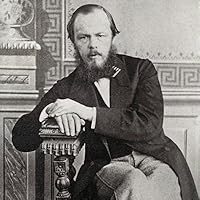
“The point is in life, in life alone—in discovering it, constantly and eternally, and not at all in the discovery itself!”
― The Idiot
― The Idiot

“Algebra applies to the clouds; the radiance of the star benefits the rose; no thinker would dare to say that the perfume of the hawthorn is useless to the constellations. Who could ever calculate the path of a molecule? How do we know that the creations of worlds are not determined by falling grains of sand? Who can understand the reciprocal ebb and flow of the infinitely great and the infinitely small, the echoing of causes in the abyss of being and the avalanches of creation? A mite has value; the small is great, the great is small; all is balanced in necessity: frightening vision for the mind. There are marvelous relations between beings and things; in this inexhaustible whole, from sun to grub, there is no scorn; each needs the other. Light does not carry terrestrial perfumes into the azure depths without knowing what it does with them; night distributes the stellar essence to the sleeping plants. Every bird that flies has the thread of the infinite in its claw. Germination includes the hatching of a meteor and the tap of a swallow's beak breaking the egg, and it guides the birth of an earthworm and the advent of Socrates. Where the telescope ends, the microscope begins. Which of the two has the greater view? Choose. A bit of mold is a pleiad of flowers; a nebula is an anthill of stars.”
― Les Misérables
― Les Misérables
“As to life in a prison, of course there may be two opinions, said the prince. I once heard the story of a man who lived twelve years in a prison-I heard it from the man himself. He was one of the persons under treatment with my professor; he had fits, and attacks of melancholy, then he would weep, and once he tried to commit suicide. His life in prison was sad enough; his only acquaintances were spiders and a tree that grew outside his grating-but I think I had better tell you of another man I met last year. There was a very strange feature in this case, strange because of its extremely rare occurrence. This man had once been brought to the scaffold in company with several others, and had had the sentence of death by shooting passed upon him for some political crime. Twenty minutes later he had been reprieved and some other punishment substituted; but the interval between the two sentences, twenty minutes, or at least a quarter of an hour, had been passed in the certainty that within a few minutes he must die. I was very anxious to hear him speak of his impressions during that dreadful time, and I several times inquired of him as to what he thought and felt. He remembered everything with the most accurate and extraordinary distinctness, and declared that he would never forget a single iota of the experience.
About twenty paces from the scaffold, where he had stood to hear the sentence, were three posts, fixed in the ground, to which to fasten the criminals. The first three criminals were taken to the posts, dressed in long white tunics, with white caps drawn over their faces, so that they could not see the rifles pointed at them. Then a group of soldiers took their stand opposite to each post. My friend was the eighth on the list, and therefore he would have been among the third lot to go up. A priest went about among them with a cross: and there was about five minutes of time left for him to live.
He said that those five minutes seemed to him to be a most interminable period, an enormous wealth of time; he seemed to be living, in these minutes, so many lives that there was no need as yet to think of that last moment, so that he made several arrangements, dividing up the time into portions--one for saying farewell to his companions, two minutes for that; then a couple more for thinking over his own life and career and all about himself; and another minute for a last look around. He remembered having divided his time like this quite well. While saying good- bye to his friends he recollected asking one of them some very usual everyday question, and being much interested in the answer. Then having bade farewell, he embarked upon those two minutes which he had allotted to looking into himself; he knew beforehand what he was going to think about. He wished to put it to himself as quickly and clearly as possible, that here was he, a living, thinking man, and that in three minutes he would be nobody; or if somebody or something, then what and where? He thought he would decide this question once for all in these last three minutes. A little way off there stood a church, and its gilded spire glittered in the sun. He remembered staring stubbornly at this spire, and at the rays of light sparkling from it. He could not tear his eyes from these rays of light; he got the idea that these rays were his new nature, and that in three minutes he would become one of them, amalgamated somehow with them.
The repugnance to what must ensue almost immediately, and the uncertainty, were dreadful, but worst of all was the idea, 'What should I do if I were not to die now? What if I were to return to life again? What an eternity of days, and all mine! How I should grudge and count up every minute of it, so as to waste not a single instant!' He said that this thought weighed so upon him and became such a terrible burden upon his brain that he could not bear it, and wished they would shoot him quickly and have done with it!”
―
About twenty paces from the scaffold, where he had stood to hear the sentence, were three posts, fixed in the ground, to which to fasten the criminals. The first three criminals were taken to the posts, dressed in long white tunics, with white caps drawn over their faces, so that they could not see the rifles pointed at them. Then a group of soldiers took their stand opposite to each post. My friend was the eighth on the list, and therefore he would have been among the third lot to go up. A priest went about among them with a cross: and there was about five minutes of time left for him to live.
He said that those five minutes seemed to him to be a most interminable period, an enormous wealth of time; he seemed to be living, in these minutes, so many lives that there was no need as yet to think of that last moment, so that he made several arrangements, dividing up the time into portions--one for saying farewell to his companions, two minutes for that; then a couple more for thinking over his own life and career and all about himself; and another minute for a last look around. He remembered having divided his time like this quite well. While saying good- bye to his friends he recollected asking one of them some very usual everyday question, and being much interested in the answer. Then having bade farewell, he embarked upon those two minutes which he had allotted to looking into himself; he knew beforehand what he was going to think about. He wished to put it to himself as quickly and clearly as possible, that here was he, a living, thinking man, and that in three minutes he would be nobody; or if somebody or something, then what and where? He thought he would decide this question once for all in these last three minutes. A little way off there stood a church, and its gilded spire glittered in the sun. He remembered staring stubbornly at this spire, and at the rays of light sparkling from it. He could not tear his eyes from these rays of light; he got the idea that these rays were his new nature, and that in three minutes he would become one of them, amalgamated somehow with them.
The repugnance to what must ensue almost immediately, and the uncertainty, were dreadful, but worst of all was the idea, 'What should I do if I were not to die now? What if I were to return to life again? What an eternity of days, and all mine! How I should grudge and count up every minute of it, so as to waste not a single instant!' He said that this thought weighed so upon him and became such a terrible burden upon his brain that he could not bear it, and wished they would shoot him quickly and have done with it!”
―
“And one asks oneself where are one's dreams. And one shakes one's head and says how rapidly the years fly by! And again one asks oneself what has one done with one's years. Where have you buried your best days? Have you lived or not? Look, one says to oneself, look how cold the world is growing. Some more years will pass, and after them will come gloomy solitude; then will come old age trembling on its crutch, and after it misery and desolation. Your fantastic world will grow pale, your dreams will fade and die and will fall like the yellow leaves from the trees.... Oh, Nastenka! you know it will be sad to be left alone, utterly alone, and to have not even anything to regret —nothing, absolutely nothing ... for all that you have lost, all that, all was nothing, stupid, simple nullity, there has been nothing but dreams!”
― Nopți albe / Soțul etern
― Nopți albe / Soțul etern

decu777’s 2025 Year in Books
Take a look at decu777’s Year in Books, including some fun facts about their reading.

86 books
|
17 friends

18,185 books
|
83 friends

1,542 books
|
116 friends

438 books
|
11 friends

119 books
|
12 friends

349 books
|
76 friends

483 books
|
17 friends

154 books
|
21 friends
More friends…

Favorite Genres
Polls voted on by decu777
Lists liked by decu777