Pim Van

Add friend
Sign in to Goodreads to learn more about Pim.

https://www.goodreads.com/pimvan

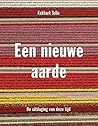
Een nieuwe aarde
Pim Van is currently reading
bookshelves: currently-reading
Rate this book
Clear rating

 
Darwin in de stad...
Pim Van is currently reading
by Menno Schilthuizen (Goodreads Author)
bookshelves: currently-reading
Rate this book
Clear rating

 
Thinking, Fast an...
Pim Van is currently reading
bookshelves: currently-reading
Reading for the 2nd time
read in December 2015
Rate this book
Clear rating

 
Loading...
Yuval Noah Harari
“In 2012 about 56 million people died throughout the world; 620,000 of them died due to human violence (war killed 120,000 people, and crime killed another 500,000). In contrast, 800,000 committed suicide, and 1.5 million died of diabetes. Sugar is now more dangerous than gunpowder.”
Yuval Noah Harari, Homo Deus: A History of Tomorrow

Yuval Noah Harari
“However, once technology enables us to re-engineer human minds, Homo sapiens will disappear, human history will come to an end and a completely new kind of process will begin, which people like you and me cannot comprehend. Many scholars try to predict how the world will look in the year 2100 or 2200. This is a waste of time. Any worthwhile prediction must take into account the ability to re-engineer human minds, and this is impossible. There are many wise answers to the question, ‘What would people with minds like ours do with biotechnology?’ Yet there are no good answers to the question, ‘What would beings with a different kind of mind do with biotechnology?’ All we can say is that people similar to us are likely to use biotechnology to re-engineer their own minds, and our present-day minds cannot grasp what might happen next.”
Yuval Noah Harari, Homo Deus: A Brief History of Tomorrow

Yuval Noah Harari
“The glass ceiling of happiness is held in place by two stout pillars, one psychological, the other biological. On the psychological level, happiness depends on expectations rather than objective conditions. We don’t become satisfied by leading a peaceful and prosperous existence. Rather, we become satisfied when reality matches our expectations. The bad news is that as conditions improve, expectations balloon. Dramatic improvements in conditions, as humankind has experienced in recent decades, translate into greater expectations rather than greater contentment. If we don’t do something about this, our future achievements too might leave us as dissatisfied as ever. On”
Yuval Noah Harari, Homo Deus: A Brief History of Tomorrow

Kevin Kelly
“A good question is not concerned with a correct answer. A good question cannot be answered immediately. A good question challenges existing answers. A good question is one you badly want answered once you hear it, but had no inkling you cared before it was asked. A good question creates new territory of thinking. A good question reframes its own answers. A good question is the seed of innovation in science, technology, art, politics, and business. A good question is a probe, a what-if scenario. A good question skirts on the edge of what is known and not known, neither silly nor obvious. A good question cannot be predicted. A good question will be the sign of an educated mind. A good question is one that generates many other good questions. A good question may be the last job a machine will learn to do. A good question is what humans are for.  •”
Kevin Kelly, The Inevitable: Understanding the 12 Technological Forces That Will Shape Our Future

Yuval Noah Harari
“Centuries ago human knowledge increased slowly, so politics and economics changed at a leisurely pace too. Today our knowledge is increasing at breakneck speed, and theoretically we should understand the world better and better. But the very opposite is happening. Our new-found knowledge leads to faster economic, social and political changes; in an attempt to understand what is happening, we accelerate the accumulation of knowledge, which leads only to faster and greater upheavals. Consequently we are less and less able to make sense of the present or forecast the future. In 1016 it was relatively easy to predict how Europe would look in 1050. Sure, dynasties might fall, unknown raiders might invade, and natural disasters might strike; yet it was clear that in 1050 Europe would still be ruled by kings and priests, that it would be an agricultural society, that most of its inhabitants would be peasants, and that it would continue to suffer greatly from famines, plagues and wars. In contrast, in 2016 we have no idea how Europe will look in 2050. We cannot say what kind of political system it will have, how its job market will be structured, or even what kind of bodies its inhabitants will possess.”
Yuval Noah Harari, Homo Deus: A Brief History of Tomorrow

year in books
Ruben Bos
848 books | 35 friends

Martijn...
184 books | 72 friends

Co van ...
196 books | 7 friends

Paulus ...
89 books | 23 friends

Maarten...
145 books | 28 friends

Steven ...
163 books | 12 friends

Emiel
164 books | 43 friends

Maria Ríos
65 books | 115 friends

More friends…


Polls voted on by Pim

Lists liked by Pim