
Discover new books on Goodreads
Meet your next favorite book
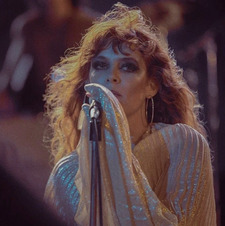


“Those things that he held most deeply were most profoundly betrayed when he spoke of them to his classes; what was most alive withered in his words; and what moved him most became cold in its utterance . And the consciousness of his inadequacy distressed him so greatly that the sense of it grew habitual, as much a part of him as the stoop of his shoulders.”
― Stoner
― Stoner

“There’s a kind of time travel in letters, isn’t there? I imagine you laughing at my small joke; I imagine you groaning; I imagine you throwing my words away. Do I have you still? Do I address empty air and the flies that will eat this carcass? You could leave me for five years, you could return never—and I have to write the rest of this not knowing.”
― This Is How You Lose the Time War
― This Is How You Lose the Time War
“He felt himself at last beginning to be a teacher, which is simply a man to whom his book is true, to whom is given a dignity of art that has little to do with his foolishness or weakness or inadequacy as a man.”
― Stoner
― Stoner
“He had, in odd ways, given it to every moment of his life, and had perhaps given it most fully when he was unaware of his giving. It was a passion neither of the mind nor of the flesh; rather, it was a force that comprehended them both, as if they were but the matter of love, its specific substance. To a woman or to a poem, it said simply: Look! I am alive.”
― Stoner
― Stoner
“Eventually he would came to learn that there was a technique in music that felt a lot like this, called ‘tempo rubato’. It involved speeding or slowing the traditional tempo of a song to invoke new feeling, as beautiful representation of freedom that relied completely on the discretion of the musician. If done incorrectly the technique could effectively butcher a thing of beauty—but if done right, it could award complete and utter freedom over the most expressive art known to man. That rubato was the thing one heard when an orchestra conductor briefly slowed a key moment in a classical piece. It was that breath at the end of a love ballad where your very heart felt as though it was shattering. It was responsible for every moment of emotion felt by conscious beings capable of hearing a music note played aloud.
Tempo rubato meant ‘robbed time’. That was the name humans gave to the concept. Like a word, time could not be captured, so people did the only thing they could, they attempted to defy it. They used surgeries to fix the physical flaws that came with age, and took photographs to help them remember a moment otherwise lost. People defied time by naming it. They called the past ‘memories’ and the future ‘what’s yet to pass’. They called hopelessness ‘rubato’, and in doing so, they granted themselves the illusion of controlling time.
At least, that's how he'd described it whenever someone cared enough to ask.
But still, it remained a comforting thought. If someone could speed up or slow down something as uncapturable as music—as pure emotion—then maybe time really was within their control. But everyone knew it wasn't possible. Not really. Whether as a conscious realisation or an inherent knowing, the answer was clear; time passed with or without people. With or without photographs or tempo. It always did, and it was easy to look back and desperately want to cling to it. Natural even, because what was behind was clear—it'd already been lived. It was the unknown ahead that scared people.
At sixteen Remus couldn’t have told anyone what a ‘tempo rubato’ was, but he’d been unknowingly experiencing it all his life. Being at school felt like the traditional, fast-moving tempo of the piece, and those few precious moments in the flat were his rubato. There he couldn’t play or make music, he could only listen and live. Conversations were without any real goal, the days blurred into one another, and the nights felt endless but not hopeless. There was very little action or adventure and that was how he liked it. The flat was rubato, one he’d never find anywhere else. There would be others, yes, but none the same. If he’d known then maybe he would’ve taken more pictures and less drugs so he could better commit them to memory.
But that’s the thing about memories—in the moment they’re not memories at all. They’re not even time.
They’re just life.”
― The Cadence of Part-time Poets
Tempo rubato meant ‘robbed time’. That was the name humans gave to the concept. Like a word, time could not be captured, so people did the only thing they could, they attempted to defy it. They used surgeries to fix the physical flaws that came with age, and took photographs to help them remember a moment otherwise lost. People defied time by naming it. They called the past ‘memories’ and the future ‘what’s yet to pass’. They called hopelessness ‘rubato’, and in doing so, they granted themselves the illusion of controlling time.
At least, that's how he'd described it whenever someone cared enough to ask.
But still, it remained a comforting thought. If someone could speed up or slow down something as uncapturable as music—as pure emotion—then maybe time really was within their control. But everyone knew it wasn't possible. Not really. Whether as a conscious realisation or an inherent knowing, the answer was clear; time passed with or without people. With or without photographs or tempo. It always did, and it was easy to look back and desperately want to cling to it. Natural even, because what was behind was clear—it'd already been lived. It was the unknown ahead that scared people.
At sixteen Remus couldn’t have told anyone what a ‘tempo rubato’ was, but he’d been unknowingly experiencing it all his life. Being at school felt like the traditional, fast-moving tempo of the piece, and those few precious moments in the flat were his rubato. There he couldn’t play or make music, he could only listen and live. Conversations were without any real goal, the days blurred into one another, and the nights felt endless but not hopeless. There was very little action or adventure and that was how he liked it. The flat was rubato, one he’d never find anywhere else. There would be others, yes, but none the same. If he’d known then maybe he would’ve taken more pictures and less drugs so he could better commit them to memory.
But that’s the thing about memories—in the moment they’re not memories at all. They’re not even time.
They’re just life.”
― The Cadence of Part-time Poets
 Persassys
— 4 members
— last activity Jul 13, 2026 02:15PM
Persassys
— 4 members
— last activity Jul 13, 2026 02:15PM
O grupo do goodreads para os persassys porque somos iconicos


Ori’s 2025 Year in Books
Take a look at Ori’s Year in Books, including some fun facts about their reading.

127 books
|
4 friends

71 books
|
9 friends

22 books
|
4 friends
268 books
|
3 friends

160 books
|
7 friends


Favorite Genres
Polls voted on by Ori
Lists liked by Ori