
 Sign in with Facebook


“We were keeping our eye on 1984. When the year came and the prophecy didn't, thoughtful Americans sang softly in praise of themselves. The roots of liberal democracy had held. Wherever else the terror had happened, we, at least, had not been visited by Orwellian nightmares.
But we had forgotten that alongside Orwell's dark vision, there was another - slightly older, slightly less well known, equally chilling: Aldous Huxley's Brave New World. Contrary to common belief even among the educated, Huxley and Orwell did not prophesy the same thing. Orwell warns that we will be overcome by an externally imposed oppression. But in Huxley's vision, no Big Brother is required to deprive people of their autonomy, maturity and history. As he saw it, people will come to love their oppression, to adore the technologies that undo their capacities to think.
What Orwell feared were those who would ban books. What Huxley feared was that there would be no reason to ban a book, for there would be no one who wanted to read one. Orwell feared those who would deprive us of information. Huxley feared those who would give us so much that we would be reduced to passivity and egoism. Orwell feared that the truth would be concealed from us. Huxley feared the truth would be drowned in a sea of irrelevance. Orwell feared we would become a captive culture. Huxley feared we would become a trivial culture, preoccupied with some equivalent of the feelies, the orgy porgy, and the centrifugal bumblepuppy. As Huxley remarked in Brave New World Revisited, the civil libertarians and rationalists who are ever on the alert to oppose tyranny "failed to take into account man's almost infinite appetite for distractions." In 1984, Orwell added, people are controlled by inflicting pain. In Brave New World, they are controlled by inflicting pleasure. In short, Orwell feared that what we fear will ruin us. Huxley feared that what we desire will ruin us.
This book is about the possibility that Huxley, not Orwell, was right.”
― Amusing Ourselves to Death: Public Discourse in the Age of Show Business
But we had forgotten that alongside Orwell's dark vision, there was another - slightly older, slightly less well known, equally chilling: Aldous Huxley's Brave New World. Contrary to common belief even among the educated, Huxley and Orwell did not prophesy the same thing. Orwell warns that we will be overcome by an externally imposed oppression. But in Huxley's vision, no Big Brother is required to deprive people of their autonomy, maturity and history. As he saw it, people will come to love their oppression, to adore the technologies that undo their capacities to think.
What Orwell feared were those who would ban books. What Huxley feared was that there would be no reason to ban a book, for there would be no one who wanted to read one. Orwell feared those who would deprive us of information. Huxley feared those who would give us so much that we would be reduced to passivity and egoism. Orwell feared that the truth would be concealed from us. Huxley feared the truth would be drowned in a sea of irrelevance. Orwell feared we would become a captive culture. Huxley feared we would become a trivial culture, preoccupied with some equivalent of the feelies, the orgy porgy, and the centrifugal bumblepuppy. As Huxley remarked in Brave New World Revisited, the civil libertarians and rationalists who are ever on the alert to oppose tyranny "failed to take into account man's almost infinite appetite for distractions." In 1984, Orwell added, people are controlled by inflicting pain. In Brave New World, they are controlled by inflicting pleasure. In short, Orwell feared that what we fear will ruin us. Huxley feared that what we desire will ruin us.
This book is about the possibility that Huxley, not Orwell, was right.”
― Amusing Ourselves to Death: Public Discourse in the Age of Show Business

“Things change every day, Mr Nakata. With each new dawn it's not the same world as the day before. And you're not the same person you were, either.”
― Kafka on the Shore
― Kafka on the Shore
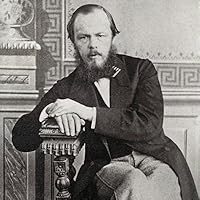
“It would be interesting to know what it is men are most afraid of. Taking a new step, uttering a new word is what they fear most.”
― Crime and Punishment
― Crime and Punishment
“Everything in life is a metaphor.”
― Kafka on the Shore
― Kafka on the Shore

“Should we be mindful of dreams?" Joseph asked. "Can we interpret them?"
The Master looked into his eyes and said tersely: "We should be mindful of everything, for we can interpret everything.”
― The Glass Bead Game
The Master looked into his eyes and said tersely: "We should be mindful of everything, for we can interpret everything.”
― The Glass Bead Game
 Pewdiepie Book Review 2025
— 389 members
— last activity Dec 26, 2025 03:53PM
Pewdiepie Book Review 2025
— 389 members
— last activity Dec 26, 2025 03:53PM
***UNOFFICIAL GROUP*** Video: https://www.youtube.com/watch?v=yfQAnBol6Jw Link to official Google forms sign-up: https://docs.google.com/forms/d/e/1F ...more

Sam’s 2025 Year in Books
Take a look at Sam’s Year in Books, including some fun facts about their reading.
Sam hasn't connected with their friends on Goodreads, yet.
Favorite Genres
Polls voted on by Sam
Lists liked by Sam
