
Discover new books on Goodreads
Meet your next favorite book




My classmates were going out for sushi. I stocked canned sardines and saltine crackers in my dorm room. The town of Tempe, the Phoenix suburb where ASU’s main campus sits, had spent hundreds of millions of dollars to construct a
...more


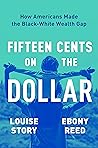
“Some Black Americans who were accused of crimes during the Jim Crow era were thrown into work camps while in prison. There they labored decades after slavery had been abolished. People in convict work camps in Atlanta are known to have helped construct buildings that still exist today, like the federal penitentiary and homes in the upscale neighborhood Inman Park. That legacy in Atlanta is tied to a former mayor from the 1880s, James W. English. He owned the Chattahoochee Brick factory, among other businesses, and according to a book by the journalist Douglas Blackmon, English’s companies managed 1,206 of Georgia’s 2,881 convict laborers, who made bricks, among other manual jobs. English’s “great personal wealth was inextricably linked to the enslavement of thousands of men” decades after slavery had been outlawed, Blackmon wrote. In addition to the convict-staffed brick factory, English owned a bank that merged into Wachovia, which is now part of Wells Fargo. From these businesses, his descendants had money and opportunities to build more wealth: a great-grandson, James D. Robinson III, went on to serve for twenty years as the chief executive of American Express, and then he had wealth and connections to help his son, James IV, found a venture capital firm in 1994. That firm, RRE Ventures, became one of the most successful and lucrative venture capital firms in the world. Robinson III referred our question about the era of convict leasing to a relative by marriage, who told us, “It was a black mark, and history is messy.”
― Fifteen Cents on the Dollar: How Americans Made the Black-White Wealth Gap – From Tulsa's Black Wall Street to Greenwood Banking and Racial Justice
― Fifteen Cents on the Dollar: How Americans Made the Black-White Wealth Gap – From Tulsa's Black Wall Street to Greenwood Banking and Racial Justice

“I also worried about her morale. During Linda’s first season working for Amazon, she had seen up close the vast volume of crap Americans were buying and felt disgusted. That experience had planted a seed of disenchantment. After she left the warehouse, it continued to grow. When she had downsized from a large RV to a minuscule trailer, Linda had also been reading about minimalism and the tiny house movement. She had done a lot of thinking about consumer culture and about how much garbage people cram into their short lives. I wondered where all those thoughts would lead. Linda was still grappling with them. Weeks later, after starting work in Kentucky, she would post the following message on Facebook and also text it directly to me: Someone asked why do you want a homestead? To be independent, get out of the rat race, support local businesses, buy only American made. Stop buying stuff I don’t need to impress people I don’t like. Right now I am working in a big warehouse, for a major online supplier. The stuff is crap all made somewhere else in the world where they don’t have child labor laws, where the workers labor fourteen- to sixteen-hour days without meals or bathroom breaks. There is one million square feet in this warehouse packed with stuff that won’t last a month. It is all going to a landfill. This company has hundreds of warehouses. Our economy is built on the backs of slaves we keep in other countries, like China, India, Mexico, any third world country with a cheap labor force where we don’t have to see them but where we can enjoy the fruits of their labor. This American Corp. is probably the biggest slave owner in the world. After sending that, she continued: Radical I know, but this is what goes through my head when I’m at work. There is nothing in that warehouse of substance. It enslaved the buyers who use their credit to purchase that shit. Keeps them in jobs they hate to pay their debts. It’s really depressing to be there. Linda added that she was coping”
― Nomadland: Surviving America in the Twenty-First Century
― Nomadland: Surviving America in the Twenty-First Century
“Racial tensions had long been simmering when, in 1863, Irish immigrants in Manhattan mounted one of the most violent anti-Black insurrections in American history. Angered by a law drafting them to fight in the Civil War—ostensibly to free slaves who might then take their jobs—rioters filled the streets, lynching Black people and burning down the Colored Orphan Asylum on Fifth Avenue as 233 children escaped out the back.”
― Invisible Child: Poverty, Survival, and Hope in an American City
― Invisible Child: Poverty, Survival, and Hope in an American City
“We are nicked and chipped, bruised and battered. Like my grandmother’s glass figurines, we position ourselves to hide our defects. We learn how to move forward.”
― Three Girls from Bronzeville: A Uniquely American Memoir of Race, Fate, and Sisterhood
― Three Girls from Bronzeville: A Uniquely American Memoir of Race, Fate, and Sisterhood
“In 2014—one year after Dasani competed in a track competition at the Pratt Institute—Spike Lee stood onstage there during Black History Month, delivering a rant against gentrification. “Then comes motherfuckin’ Christopher Columbus Syndrome,” fumed Lee. “You can’t discover this! We been here.” He went on to compare Fort Greene Park to the Westminster Dog Show, “with twenty thousand dogs running around,” while lamenting how his father, a jazz musician who had purchased his home in 1968, was playing acoustic bass when his new neighbors, in 2013, called the police. “You just can’t come in where people have a culture that’s been laid down for generations and you come in and now shit gotta change because you’re here?” The same forces are reshaping Bed-Stuy, the historic neighborhood where Dasani’s great-grandfather June first landed and where her teacher, Miss Hester, still lives. Around the corner from her basement rental, a trendy café now sells $4 espressos. Miss Hester resents the neighborhood’s white transplants, walking around “as if I am the outsider, and I’m like, ‘Excuse me I was born here!’ ”
― Invisible Child: Poverty, Survival, and Hope in an American City
― Invisible Child: Poverty, Survival, and Hope in an American City

Reese ’s 2025 Year in Books
Take a look at Reese ’s Year in Books, including some fun facts about their reading.

1,074 books
|
16 friends

617 books
|
41 friends

274 books
|
22 friends

26 books
|
5 friends

1 book
|
27 friends

107 books
|
11 friends

113 books
|
4 friends
0 books
|
21 friends
More friends…


Polls voted on by Reese
Lists liked by Reese