
Discover new books on Goodreads
Meet your next favorite book





“Any conception of socialism defined in national terms, within so extreme and predatory an oppressor nation as the US, is a view that leads in practice to a fight for particular privileged interest and is a very dangerous ideology. Active combat against empire is the only foundation for socialist revolution in the oppressor nation.”
― Prairie Fire: The Politics of Revolutionary Anti-imperialism
― Prairie Fire: The Politics of Revolutionary Anti-imperialism
“What, then, is the solution to this moral schizophrenia we have about animals? According to Francione, we only have two choices: we either continue to treat animals as we are now, by inflicting suffering even for unnecessary ends and recognizing our commitment to humane treatment as a farce, or we can recognize that animals have a morally significant interest in not being subjected to unnecessary suffering, and change how we approach conflicts of animal and human interests. To do the latter, however, requires that we apply the principle of equal consideration to animals. This, Francione argues, is stunningly simple: in its most basic terms, we need to treat like cases alike. Though animals and humans are clearly different, they are alike in the sense that they both suffer and are both sentient. For this reason, we should extend the principle of equal consideration to animals.”
― Making A Killing: The Political Economy of Animal Rights
― Making A Killing: The Political Economy of Animal Rights

“The very principle of democracy is founded on the possibility of making alternative choices. There is no longer a need for democracy, since ideology made the idea that "there is no alternative" acceptable. Adherence to a meta-social principle of superior rationality allows for the elimination of the necessity and possibility of choosing. The so-called principle of the rationality of "markets" exactly fills this function in the ideology of obsolescent capitalism. Democratic practice is thus emptied of all content in the way is open to what I have called "low-intensity democracy" - that is, to electoral buffooneries where parades of majorettes take the place of programs, to the society of the spectacle. Delegitimized by these practices, politics is undone, begins to drift and loses its potential power to give meaning and coherence to alternative societal projects.”
―
―

“The current ruling ontology denies any possibility of a social causation of mental illness. The chemico-biologization of mental illness is of course strictly commensurate with its depoliticization. Considering mental illness an individual chemico-biological problem has enormous benefits for capitalism. First, it reinforces Capital’s drive towards atomistic individualization (you are sick because of your brain chemistry). Second, it provides an enormously lucrative market in which multinational pharmaceutical companies can peddle their pharmaceuticals (we can cure you with our SSRIs). It goes without saying that all mental illnesses are neurologically instantiated, but this says nothing about their causation. If it is true, for instance, that depression is constituted by low serotonin levels, what still needs to be explained is why particular individuals have low levels of serotonin. This requires a social and political explanation; and the task of repoliticizing mental illness is an urgent one if the left wants to challenge capitalist realism.”
― Capitalist Realism: Is There No Alternative?
― Capitalist Realism: Is There No Alternative?
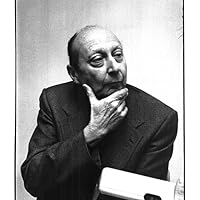
“Those who claim to be Marxists cannot confine themselves to condemning or deploring political acts; they have also to explain them. Regrets and wishes may help the people to endure their woes, but they do not help them either to perceive their causes or to struggle to get rid of them or to prevent their reemergence. By explaining the reasons for something that does indeed deserve condemnation from the standpoint of the interests of the working people, we can contribute, however, to causing political forces to evolve in such a way that the "regrettable" events do not recur.”
― Class Struggles in the USSR, First Period: 1917-1923
― Class Struggles in the USSR, First Period: 1917-1923

Klaas’s 2025 Year in Books
Take a look at Klaas’s Year in Books, including some fun facts about their reading.

1 book
|
17 friends

348 books
|
384 friends

1,259 books
|
125 friends

1,182 books
|
226 friends

1,092 books
|
47 friends

269 books
|
51 friends

229 books
|
207 friends

1,086 books
|
119 friends
More friends…


Favorite Genres
Polls voted on by Klaas
Lists liked by Klaas