Discover new books on Goodreads
Meet your next favorite book

eloise

Add friend
Sign in to Goodreads to learn more about eloise.


The Genealogy of ...
Rate this book
Clear rating

 
We Refuse: A Forc...
Rate this book
Clear rating

 
Hyperpolitics: Ex...
Rate this book
Clear rating

 
See all 192 books that eloise is reading…
Loading...
Annie Finch
“In what I have come to name a Goddess-oriented spirituality, the attitude toward the body is opposite to that in the mainstream Judeo-Christian tradition. Dirt, blood, sex, soul, earth, death, animal are not destined to be transcended; as direct embodiments of the immanent sacred, they by extension are sacred. The traditions of Christianity, Buddhism, and other religions may tell us mystically that God is present in everything (“I draw water, I carry wood; that is my prayer,” says the monk in one of my earliest favorite stories,) but the notion of the Goddess actually constitutes a physical presence. Not only is the Goddess of the world; the world is her manifestation. Though the transcendent god and the immanent goddess are complementary sides of the same human spiritual coin, their resonances are fundamentally different.”
― Annie Finch, The Body of Poetry: Essays on Women, Form, and the Poetic Self

Virginia Woolf
“It is only the recumbent who know what, after all, nature is at no pains to conceal—that she in the end will conquer; the heat will leave the world; stiff with frost we shall cease to drag our feet about the fields; ice will lie thick upon factory and engine; the sun will go out. Even so, when the whole earth is sheeted and slippery some undulation, some irregularity of surface will mark the boundary of an ancient garden, and there, thrusting its head up undaunted in the starlight, the rose will flower, the crocus will burn.”
― Virginia Woolf, On Being Ill

Naomi Alderman
“The castle’s chapel has been remade. The glass-and-gold chandelier still floats in the center of the room, the wires holding it up too thin to be seen by candlelight. All these electric miracles. The windows depicting the angels praising Our Lady have remained intact, as have the panels to Saint Theresa and Saint Jerome. The others—and the enameled paintings in the cupola—have been replaced and reimagined according to the New Scripture. There is the Almighty speaking to the Matriarch Rebecca in the form of a dove. There is the Prophet Deborah proclaiming the Holy Word to the disbelieving people. There—although she protested—is Mother Eve, the symbolic tree behind her, receiving the message from the Heavens and extending her hand filled with lightning. In the center of the cupola is the hand with the all-seeing eye at its heart. That is the symbol of God, Who watches over each of us, and Whose mighty hand is outstretched to both the powerful and the enslaved.”
― Naomi Alderman, The Power

Naomi Alderman
“Jews: look to Miriam, not Moses ... Muslims: look to Fatimah, not Muhammad. Buddhists: remember Tara, the mother of liberation. Christians: pray to Mary for your salvation.”
― Naomi Alderman, The Power

Adrienne Rich
“If we consider the possibility that all women–from the infant suckling her mother’s breast, to the grown woman experiencing orgasmic sensations while suckling her own child, perhaps recalling her mother’s milk-smell in her own; to two women, like Virginia Woolf’s Chloe and Olivia, who share a laboratory; to the woman dying at ninety, touched and handled by women–exist on a lesbian continuum, we can see ourselves as moving in and out of this continuum, whether we identify ourselves as lesbian or not. It allows us to connect aspects of woman-identification as diverse as the impudent, intimate girl-friendships of eight- or nine-year-olds and the banding together of those women of the twelfth and fifteenth centuries known as Beguines who “shared houses, rented to one another, bequeathed houses to their room-mates … in cheap subdivided houses in the artisans’ area of town,” who “practiced Christian virtue on their own, dressing and living simply and not associating with men,” who earned their livings as spinners, bakers, nurses, or ran schools for young girls, and who managed–until the Church forced them to disperse–to live independent both of marriage and of conventual restrictions. It allows us to connect these women with the more celebrated “Lesbians” of the women’s school around Sappho of the seventh century B.C.; with the secret sororities and economic networks reported among African women; and with the Chinese marriage resistance sisterhoods–communities of women who refused marriage, or who if married often refused to consummate their marriages and soon left their husbands–the only women in China who were not footbound and who, Agnes Smedley tells us, welcomed the births of daughters and organized successful women’s strikes in the silk mills. It allows us to connect and compare disparate individual instances of marriage resistance: for example, the type of autonomy claimed by Emily Dickinson, a nineteenth-century white woman genius, with the strategies available to Zora Neale Hurston, a twentieth-century black woman genius. Dickinson never married, had tenuous intellectual friendships with men, lived self-convented in her genteel father’s house, and wrote a lifetime of passionate letters to her sister-in-law Sue Gilbert and a smaller group of such letters to her friend Kate Scott Anthon. Hurston married twice but soon left each husband, scrambled her way from Florida to Harlem to Columbia University to Haiti and finally back to Florida, moved in and out of white patronage and poverty, professional success and failure; her survival relationships were all with women, beginning with her mother. Both of these women in their vastly different circumstances were marriage resisters, committed to their own work and selfhood, and were later characterized as “apolitical ”. Both were drawn to men of intellectual quality; for both of them women provided the ongoing fascination and sustenance of life.”
― Adrienne Rich, Compulsory Heterosexuality and Lesbian Existence

134058 Valancourt Books — 525 members — last activity Nov 10, 2026 10:11AM
Valancourt Books is an independent small press specializing in the rediscovery of rare, neglected, and out-of-print fiction. Horror & Supernatural, W ...more
3940 The Feminist Press — 344 members — last activity Jan 04, 2019 07:05AM
The Feminist Press is an independent nonprofit literary publisher that promotes freedom of expression and social justice. We aim to publish exciting w ...more
108 Horror Aficionados — 31289 members — last activity 3 hours, 3 min ago
If you love horror literature, movies, and culture, you're in the right place. Whether it's vampires, werewolves, zombies, serial killers, plagues, or ...more
183912 Joanna Newsom Book Club — 328 members — last activity Sep 07, 2017 07:21AM
A place for fans to read books that are recommended by Joanna Newsom, have inspired Joanna Newsom, remind us of Joanna Newsom, or help us understand J ...more
220 Goodreads Librarians Group — 350090 members — last activity 4 minutes ago
Goodreads Librarians are volunteers who help ensure the accuracy of information about books and authors in the Goodreads' catalog. The Goodreads Libra ...more
More of eloise’s groups…
year in books
zeynep
3,215 books | 498 friends

Errata ...
496 books | 115 friends

Beth
763 books | 102 friends

ToriBeth
4,608 books | 161 friends

Kelsey ...
1,415 books | 57 friends

emily
844 books | 79 friends

Jade
1,528 books | 443 friends

Kitty
2,669 books | 94 friends

More friends…
Utopia and Terror in the 20th Century by Vejas Gabriel LiuleviciusThe Apocalypse by Craig R. KoesterGreat Mythologies of the World by Grant L. Voth
Best Teaching Company Courses
43 books — 20 voters
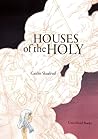
Houses of the Holy by Caitlin Skaalrud
Comics & Graphic Novels by Women
1,494 books — 1,386 voters

More…


Polls voted on by eloise

Lists liked by eloise