
Discover new books on Goodreads
Meet your next favorite book


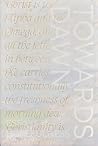


“sweetness on the tongue and a promise of scent on the night air. It was sensual in the best meaning of that word, saturating every sense at once, so that the flesh was known, finally, as a thing of such goodness that man blessed his Creator from morning to night for having made him. Here in this medieval town where once an extraordinary little fellow had burst forth with songs to God, as a passionate lover speaks to his bride, here the restoration of man to his own true home was no longer the dream of saints. It was the wedding feast. It was a word made flesh.”
― Father Elijah: An Apocalypse
― Father Elijah: An Apocalypse
“Assisi was like something, but like what? Like something one had always known, but never seen. Something perceived from afar, like a wind from the promised land that greeted the stranger and sojourner coming up out of bondage from Egypt. It was joy, no doubt about that. But a joy unlike any other joy he had ever experienced. Unexpected joy in a dark time. Curious joy. There was no other word that approximated it. A taste of sweetness like the fecundity of grape arbors in the terraces below,”
― Father Elijah: An Apocalypse
― Father Elijah: An Apocalypse
“That’s the sacramental worldview. It’s a worldview where heaven comes to earth, grace penetrates matter, and every individual’s story is part of the cosmic story of salvation history. It’s a worldview where everything has a meaning, everyone has a purpose, and every moment is accounted for in a Divine Plan. It is, ultimately, a worldview that says Sartre was wrong and Flannery O’Connor was right. Hell isn’t other people. Other people are Christs.1 Without the sacramental worldview, there would be no plays by Shakespeare or concertos by Bach, no stories by Chesterton or mythologies by Tolkien. There would be no St. Peter’s, no Notre Dame, no Sistine Chapel, no David, no university system, no scientific method. The sacramental worldview made all that and more possible as gifted men and women strove to convey in words, music, marble, and methods the divine splendor of the world in which they lived. Then, that stopped. The Modernist Prism”
― These Beautiful Bones: An Everyday Theology of the Body
― These Beautiful Bones: An Everyday Theology of the Body

“We are not the sum of our weaknesses and failures, we are the sum of the Father's love for us and our real capacity to become the image of His Son Jesus.”
―
―


Colleen’s 2025 Year in Books
Take a look at Colleen’s Year in Books, including some fun facts about their reading.

904 books
|
212 friends

1,380 books
|
151 friends

302 books
|
72 friends

1,258 books
|
22 friends

249 books
|
68 friends

515 books
|
182 friends

184 books
|
73 friends

527 books
|
59 friends
More friends…


Polls voted on by Colleen
Lists liked by Colleen