
Discover new books on Goodreads
Meet your next favorite book
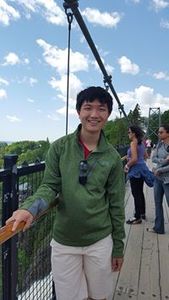
Eric Z
https://www.goodreads.com/eric-z





“She was so evidently the victim of the civilization which had produced her, that the links of her bracelet seemed like manacles chaining her to her fate.”
― The House of Mirth
― The House of Mirth

“Human speech is like a cracked kettle on which we tap crude rhythms for bears to dance to, while we long to make music that will melt the stars.”
― Madame Bovary
― Madame Bovary

“Reading these stories, it's tempting to think that
the arts to be learned are those of tracking, hunting,
navigating, skills of survival and escape. Even in the
everyday world of the present, an anxiety to survive
manifests itself in cars and clothes for far more rugged
occasions than those at hand, as though to express some
sense of the toughness of things and of readiness to face
them. But the real difficulties, the real arts of survival,
seem to lie in more subtle realms. There, what's called
for is a kind of resilience of the psyche, a readiness to
deal with what comes next. These captives lay out in a
stark and dramatic way what goes on in every life: the
transitions whereby you cease to be who you were. Seldom
is it as dramatic, but nevertheless, something of
this journey between the near and the far goes on in
every life. Sometimes an old photograph, an old friend,
an old letter will remind you that you are not who you
once were, for the person who dwelt among them, valued
this, chose that, wrote thus, no longer exists. Without
noticing it you have traversed a great distance; the
strange has become familiar and the familiar if not
strange at least awkward or uncomfortable, an outgrown
garment. And some people travel far more than
others. There are those who receive as birthright an adequate
or at least unquestioned sense of self and those
who set out to reinvent themselves, for survival or for
satisfaction, and travel far. Some people inherit values
and practices as a house they inhabit; some of us have to
burn down that house, find our own ground, build from scratch, even as a psychological metamorphosis.”
― A Field Guide to Getting Lost
the arts to be learned are those of tracking, hunting,
navigating, skills of survival and escape. Even in the
everyday world of the present, an anxiety to survive
manifests itself in cars and clothes for far more rugged
occasions than those at hand, as though to express some
sense of the toughness of things and of readiness to face
them. But the real difficulties, the real arts of survival,
seem to lie in more subtle realms. There, what's called
for is a kind of resilience of the psyche, a readiness to
deal with what comes next. These captives lay out in a
stark and dramatic way what goes on in every life: the
transitions whereby you cease to be who you were. Seldom
is it as dramatic, but nevertheless, something of
this journey between the near and the far goes on in
every life. Sometimes an old photograph, an old friend,
an old letter will remind you that you are not who you
once were, for the person who dwelt among them, valued
this, chose that, wrote thus, no longer exists. Without
noticing it you have traversed a great distance; the
strange has become familiar and the familiar if not
strange at least awkward or uncomfortable, an outgrown
garment. And some people travel far more than
others. There are those who receive as birthright an adequate
or at least unquestioned sense of self and those
who set out to reinvent themselves, for survival or for
satisfaction, and travel far. Some people inherit values
and practices as a house they inhabit; some of us have to
burn down that house, find our own ground, build from scratch, even as a psychological metamorphosis.”
― A Field Guide to Getting Lost

“But who can say what's best? That's why you need to grab whatever chance you have of happiness where you find it, and not worry about other people too much. My experience tells me that we get no more than two or three such chances in a life time, and if we let them go, we regret it for the rest of our lives.”
― Norwegian Wood
― Norwegian Wood
“When someone doesn't show up, the people who wait sometimes tell stories about what might have happened and come to half believe the desertion, the abduction, the accident. Worry is a way to pretend that you have knowledge or control over what you don't--and it surprises me, even in myself, how much we prefer ugly scenarios to the pure unknown. Perhaps fantasy is what you fill up maps with rather than saying that they too contain the unknown.”
― A Field Guide to Getting Lost
― A Field Guide to Getting Lost

Eric’s 2025 Year in Books
Take a look at Eric’s Year in Books, including some fun facts about their reading.

374 books
|
47 friends

749 books
|
26 friends

447 books
|
61 friends

819 books
|
243 friends

1,034 books
|
123 friends

1,015 books
|
169 friends

829 books
|
168 friends

282 books
|
160 friends
More friends…


Favorite Genres
Polls voted on by Eric
Lists liked by Eric