
Discover new books on Goodreads
Meet your next favorite book

Dudu
https://www.goodreads.com/du_117


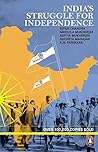




“The nationalist historians, especially the more recent ones, show an awareness of the exploitative character of colonialism, but on the whole they feel that the national movement was the result of the spread and realization of the idea or spirit of nationalism or liberty. They also take full cognizance of the process of India becoming a nation, and see the national movement as a movement of the people. Their major weakness, however, is that they tend to ignore or, at least, underplay the inner contradictions of Indian society both in terms of class and caste. They tend to ignore the fact that while the national movement represented the interests of the people or nation as a whole (that is, of all classes vis-a-vis colonialism) it only did so from a particular class perspective, and that, consequently, there was a constant struggle between different social, ideological perspectives for hegemony over the movement. They also usually take up the position adopted by the right wing of the national movement and equate it with the movement as a whole. Their treatment of the strategic and ideological dimensions of the movement is also inadequate.”
― India's Struggle for Independence
― India's Struggle for Independence
“The national movement, assert the writers of the imperialist school, was not a people’s movement but a product of the needs and interests of the elite groups who used it to serve either their own narrow interests or the interests of their prescriptive groups. Thus, the elite groups, and their needs and interests, provide the origin as well as the driving force of the idea, ideology and movement of nationalism. These groups were sometimes formed around religious or caste identities and sometimes through political connections built around patronage. But, in each case, these groups had a narrow, selfish interest in opposing British rule or each other. Nationalism, then, is seen primarily as a mere ideology which these elite groups used to legitimize their narrow ambitions and to mobilize public support. The national movement was merely an instrument used by the elite groups to mobilize the masses and to satisfy their own interests.”
― India's Struggle for Independence
― India's Struggle for Independence
“For them, the basic contradiction in Indian society in the colonial epoch was between the elite, both Indian and foreign, on the one hand, and the subaltern groups, on the other, and not between colonialism and the Indian people. They believe that the Indian people were never united in a common anti-imperialist struggle, that there was no such entity as the Indian national movement. Instead, they assert that there were two distinct movements or streams, the real anti-imperialist stream of the subalterns and the bogus national movement of the elite. The elite stream, led by the ‘official’ leadership of the Indian National Congress, was little more than a cloak for the struggle for power among the elite.”
― India's Struggle for Independence
― India's Struggle for Independence

“The assassination of Tsar Alexander II of Russia in March 1881 marked the beginning of an era of political assassinations that included the murders, in quick succession, of President Sadi Carnot of France in 1894; Spanish prime minister Canovas del Castillo in 1897; Empress Elizabeth of Austria and Queen of Hungary in 1898; King Humbert I of Italy in 1900; President William McKinley in 1901; and King Carlos I of Portugal and his heir apparent in 1908. And then, on June 28, 1914, at Sarajevo in Bosnia-Herzegovina, Serbian nationalists threw a bomb into the carriage of Archduke Franz Ferdinand, nephew and heir of Austria-Hungary’s Emperor Franz Joseph II, killing him and his young wife, Sophia.11 The scene was set for a world war.”
― Flawed Diplomacy: The United Nations & the War on Terrorism
― Flawed Diplomacy: The United Nations & the War on Terrorism
“As a mass movement, the Indian national movement was able to tap the diverse energies, talents and capacities of a large variety of people. It had a place for all — old and young, rich and poor, women and men, the intellectuals and the masses. People participated in it in varied ways: from jail-going Satyagraha and picketing to participation in public meetings and demonstrations, from going on hartals and strikes to cheering the jathas of Congress volunteers from the sidelines, from voting for nationalist candidates in municipal, district, provincial and central elections to participating in constructive programmes, from becoming 4-anna (25 paise ) members of the Congress to wearing khadi and a Gandhi cap, from contributing funds to the Congress to feeding and giving shelter to Congress agitators, from distributing and reading the Young India and the Harijan or the illegal”
― India's Struggle for Independence
― India's Struggle for Independence

Dudu’s 2025 Year in Books
Take a look at Dudu’s Year in Books, including some fun facts about their reading.

158 books
|
92 friends

1,393 books
|
84 friends

52 books
|
82 friends

153 books
|
34 friends

2 books
|
281 friends

2 books
|
75 friends

100 books
|
93 friends

27 books
|
109 friends
More friends…


Favorite Genres
Comics, Cookbooks, Crime, Fantasy, Fiction, Graphic novels, History, Horror, Mystery, Non-fiction, Paranormal, Psychology, Science, Science fiction, Sports, Thriller, Travel, and Young-adult
Polls voted on by Dudu
Lists liked by Dudu