
Discover new books on Goodreads
Meet your next favorite book
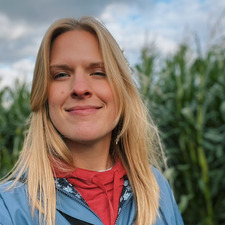
Jenny Herrera
https://www.goodreads.com/jennie_the_blonde





“How to die is a question of how to live, but how to live is a matter of knowing how to love: how to find a love that isn't haunted by fear, a love that is stronger than death - figuring out how to love rightly and live lightly with all the mortal beauties of creation without despising or resenting their mortality either...
The hope of eternal life does not efface the desire to live - it is the fulfillment of the desire to live, to live in a way that we can never lose what we love.”
― On the Road with Saint Augustine: A Real-World Spirituality for Restless Hearts
The hope of eternal life does not efface the desire to live - it is the fulfillment of the desire to live, to live in a way that we can never lose what we love.”
― On the Road with Saint Augustine: A Real-World Spirituality for Restless Hearts

“Self-respect is a discipline, a habit of mind that can never be faked but can be developed, trained, coaxed forth. It was once suggested to me that, as an antidote to crying, I put my head in a paper bag. As it happens, there is a sound physiological reason, something to do with oxygen, for doing exactly that, but the psychological effect alone is incalculable: it is difficult in the extreme to continue fancying oneself Cathy in Wuthering Heights with one’s head in a Food Fair bag. There is a similar case for all the small disciplines, unimportant in themselves; imagine maintaining any kind of swoon, commiserative or carnal, in a cold shower.”
―
―
“I think we are well advised to keep on nodding terms with
the people we used to be, whether we find them attractive
company or not. Otherwise they turn up unannounced and
surprise us, come hammering on the mind's door at 4 a.m.
of a bad night and demand to know who deserted them, who
betrayed them, who is going to make amends. We forget all
too soon the things we thought we could never forget. We
forget the loves and the betrayals alike, forget what we whispered
and what we screamed, forget who we were. I have
already lost touch with a couple of people I used to be.”
― Slouching Towards Bethlehem
the people we used to be, whether we find them attractive
company or not. Otherwise they turn up unannounced and
surprise us, come hammering on the mind's door at 4 a.m.
of a bad night and demand to know who deserted them, who
betrayed them, who is going to make amends. We forget all
too soon the things we thought we could never forget. We
forget the loves and the betrayals alike, forget what we whispered
and what we screamed, forget who we were. I have
already lost touch with a couple of people I used to be.”
― Slouching Towards Bethlehem

“Quiet desperation is another name for the human condition.”
― Angle of Repose
― Angle of Repose

“I was the lion who forced you to join with Aravis. I was the cat who comforted you among the houses of the dead. I was the lion who drove the jackals from you while you slept. I was the lion who gave the Horses the new strength of fear for the last mile so that you should reach King Lune in time. And I was the lion you do not remember who pushed the boat in which you lay, a child near death, so that it came to shore where a man sat, wakeful at midnight, to receive you.”
― The Horse and His Boy
― The Horse and His Boy


Jenny’s 2025 Year in Books
Take a look at Jenny’s Year in Books, including some fun facts about their reading.

584 books
|
87 friends

310 books
|
67 friends

197 books
|
170 friends

358 books
|
37 friends

871 books
|
27 friends

1,318 books
|
26 friends

596 books
|
187 friends

372 books
|
22 friends
More friends…


Polls voted on by Jenny
Lists liked by Jenny