
Discover new books on Goodreads
Meet your next favorite book



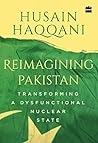


“There is robust debate in American society over the extent to which the US lives up to its goals, but no one considers such debate as a threat to America’s current existence. The evolution of America from a slave-owning society that limited franchise only to white men of European origin to a diverse, multi-ethnic nation is a result of argument and deliberation.”
― Reimagining Pakistan: Transforming a Dysfunctional Nuclear State
― Reimagining Pakistan: Transforming a Dysfunctional Nuclear State
“A narrative of persecution also runs through the psyche of Pakistan as a whole,’ he wrote. ‘The public, whipped up by the military and mullahs, is led to believe that the nation’s problems are the work of “hidden hands”. I noticed how often leaders blamed conspiracies by India, Israel and America—that is to say, Hindus, Jews and Christians—for undermining the country, rather than owning up to social and economic ills of Pakistan’s own creation.’8”
― Reimagining Pakistan: Transforming a Dysfunctional Nuclear State
― Reimagining Pakistan: Transforming a Dysfunctional Nuclear State

“There are two Ghalibs,’ you said once, ‘one of them is a Seljuq Turk, who consorts with badshahs, and the other is homeless and humiliated, weighed down by debt.”
― Dozakhnama: Conversations in Hell
― Dozakhnama: Conversations in Hell
“Dilli, which was the chosen city of this world, Which the finest people on earth made their home, Has now been ravaged by time and left in ruins This devastated city is where I come from You’re laughing, Manto bhai?”
― Dozakhnama: Conversations in Hell
― Dozakhnama: Conversations in Hell
“According to the Munir Commission, no one who had ‘given serious thought to the introduction of a religious State in Pakistan’ had failed to realize ‘the tremendous difficulties with which any such scheme must be confronted’. It pointed out that before Partition ‘even Maulana Abul Ala Maududi of Jamaat-i-Islami was of the view that the form of Government in the new Muslim State, if it ever came into existence, could only be secular’.45 Although a consensus has been imposed with the help of the military over the last several decades that Pakistan must be an Islamic state, the issue remains, ‘which version of Islam should the state adopt in becoming Islamic?”
― Reimagining Pakistan: Transforming a Dysfunctional Nuclear State
― Reimagining Pakistan: Transforming a Dysfunctional Nuclear State

Ali Fehmi’s 2025 Year in Books
Take a look at Ali Fehmi’s Year in Books, including some fun facts about their reading.

12 books
|
35 friends

228 books
|
42 friends

1 book
|
409 friends

2 books
|
26 friends

3 books
|
57 friends

1 book
|
25 friends

26 books
|
65 friends

10 books
|
13 friends
More friends…

Polls voted on by Ali Fehmi
Lists liked by Ali Fehmi