
 Sign in with Facebook


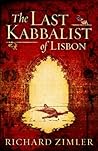
of my

I am not
a big fan of historical novels. Though, like millions of other folk, I read and
enjoyed Wolf Hall, I was bored stiff by Margaret Yourcenar and Mary Renault. If
a friend had not recommended this global best-seller to me, I would certainly never
have read it.
Apparently the manuscript was rejected by US
publishers, and I can't say I'm surprised.For a start, it cuts across
several genres: historical,whodunit,magic realism and at several
points, veers towards the gay lit genre. All in all, a marketing executive's
nightmare - and he or she seems to be the key (or sole) decision-maker in
major publishing houses these days. It was finally published in Portugal in
1996, subsequently becoming a worldwide best-seller (at least according to the
blurb).
The whodunit is set against the background of
the 1506 massacre of some 2000 of Lisbon's Jewish and "New Christian"
(i.e. convert) minority by an Inquisition-inspired mob, looking for a scapegoat
for the plague and famine ravaging the country at the time. In places, it makes
extremely painful reading. The central character is a member of a network of
students of the Kabbalah, whose uncle and mentor is murdered during the
pogrom,but in circumstances that suggest he was not a random victim of
the mob. We follow the young man's trail in pursuit of clues to the identity of
the murderer,in the process encountering the spectrum of responses to the
terror, from resistance to submission to collaboration. The novel touches on a
number of themes: intolerance of course, but also the nature of faith and the
supernatural, and the phenomenon of resilience in the face of suffering, a
highly topical theme right now.
Although
the hero is somewhat implausibly strong in mind and body and his mute Muslim
friend (or lover?) just as implausibly endowed with Solomonic wisdom, the other
characters are far more believable. The writing style is mostly
excellent,though there are one or two places where it could have
benefitted from more vigilant editing.
Credibility
is, for me at least, a major issue with historical novels. Establishing the
facts is not easy, but that is by no means the hardest part. The hardest
problem is always how to represent the mindset of our ancestors. In the present
case, how did 16th century (“early modern”) man and woman see the
world? The only thing we can say for sure is that they didn’t see it as we see
it. In particular, religion and faith were far more central to both society and
the individual in those days than they are today. The success or failure of a
historical novel depends crucially on how convincingly the author manages to
recreate this mindset.
Zimler quite
subtly finesses the issue. His hero never really addresses any of the
philosophical questions – why is his god allowing these awful things to happen?
Should religious freedom be a right? Does the supernatural exist alongside the
everyday world? – and I suspect this is how ordinary folk, all but the deepest
thinkers, lived their lives in those days, without ever reflecting too deeply
on why things are the way they are. Maybe that’s how most of the population of
the world’s theocracies live their lives to the present day. The hero of this
novel implicitly believes in ritual, but not in the faith that underlies it.
The whole thrust of the novel is that, instead of counting on the revenge of
heaven, he goes after the killer himself. (In any case, “Vengeance is mine,
saith the Lord” is New, not Old Testament.)
All in
all, I found the plot convincing enough to provide a very satisfying, if
uncomfortable reading experience, one I would wholeheartedly recommend.

· Flag
Laurence Copeland

Laurence’s 2025 Year in Books
Take a look at Laurence’s Year in Books, including some fun facts about their reading.

6 books
|
26 friends

2 books
|
3 friends

275 books
|
6 friends
3 books
|
26 friends
35 books
|
17 friends
2 books
|
20 friends
1 book
|
11 friends

247 books
|
31 friends
More friends…
Favorite Genres
Polls voted on by Laurence
Lists liked by Laurence
