
Discover new books on Goodreads
Meet your next favorite book
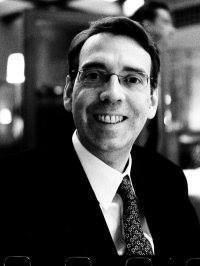
Lawrence Alan Kellogg


“The point was that the world of music—its language, beauty, and mystery—was already urging itself on me. Some shift had already begun. Music was no longer a metaphor for the real world somewhere out there. It was becoming the opposite. The “out there” stuff was the metaphor and the real part was, and is to this day, the music.”
― Words Without Music: A Memoir
― Words Without Music: A Memoir

“Slung on a stage over the gunwale of an old felucca, the Peri. A storm had just passed, rushing away toward the land in a great slope of clouds; already turning yellowish from the desert. The sea there is the color of Damascus plums; and how quiet. Sun was going down; not a beautiful sunset, more a gradual darkening of the air and that storm’s mountainside. The Peri had been damaged, we hove to alongside and hailed her master. No reply. Only the sailor—I never saw his face—one of your fellahin who abandon the land like a restless husband and then grumble for the rest of their term afloat. It’s the strongest marriage in the world. This one wore a kind of loincloth and a rag round his head for the sun which was almost gone. After we’d shouted in every dialect we had among us, he replied in Tuareg: ‘The master is gone, the crew is gone, I am here and I am painting the ship.’ It was true: he was painting the ship. She’d been damaged, not a load line in sight, and a bad list. ‘Come aboard,’ we told him, ‘night is nearly on us and you cannot swim to land.’ He never answered, merely continued dipping the brush in his earthen jar and slapping it smoothly on the Peri’s creaking sides. What color? It looked gray but the air was dark. This felucca would never again see the sun. Finally I told the helmsman to swing our ship round and continue on course. I watched the fellah until it was too dark: becoming smaller, inching closer to the sea with every swell but never slackening his pace. A peasant with all his uptorn roots showing, alone on the sea at nightfall, painting the side of a sinking ship.”
― V.
― V.

“A few years ago, the wire services reported that, on account of a defective latch, the cargo door on a DC-10 opened, in flight. A coffin fell out. A lady at work in her flower garden saw what she took to be a coffin fall from the sky into a neighboring field. Having been recently widowed, the lady made the obvious inference. She put down her trowel, drove to the nearest state asylum, and committed herself. When reporters reached her, to tell her the thing had really happened, and to ask her reaction to it, the lady said she preferred to stay right where she was.”
― Speedboat
― Speedboat
“She finds the door wide open and the place empty, another failed dotcom joining the officescape of the time—tarnished metallic surfaces, shaggy gray soundproofing, Steelcase screens and Herman Miller workpods—already beginning to decompose, littered, dust gathering . . . Well, almost empty. From some distant cubicle comes a tinny electronic melody Maxine recognizes as “Korobushka,” the anthem of nineties workplace fecklessness, playing faster and faster and accompanied by screams of anxiety. Ghost vendor indeed. Has she entered some supernatural timewarp where the shades of office layabouts continue to waste uncountable person-hours playing Tetris? Between that and Solitaire for Windows, no wonder the tech sector tanked.”
― Bleeding Edge
― Bleeding Edge
“In the scene when Belle begs La Bête for permission to visit her father, La Bête, moved by her plea, decides to let her go, but requires her, at the cost of his own life, to return in a week. He explains to her that his magic exists by the force of five power objects—the rose, the key, the mirror, the glove, and the horse. These five are the root of La Bête’s creativity and magic. The point is, if a young artist were to ask Cocteau directly what he would need to pursue the life and work of an artist, these five elements would be the answer. The rose represents beauty. The key represents technique—literally, the means by which the “door” to creativity is opened. The horse represents strength and stamina. The mirror represents the path itself, without which the dream of the artist cannot be accomplished. The meaning of the glove eluded me for a long time, but finally, and unexpectedly, I understood that the glove represents nobility. By this symbol Cocteau asserts that the true nobility of mankind are the artist-magician creators. This scene, which leads directly to the resolution of the fairy tale, is framed as the most significant moment of the film and is the message we are meant to take away with us: Cocteau is teaching about creativity in terms of the power of the artist, which we now understand to be the power of transformation.”
― Words Without Music: A Memoir
― Words Without Music: A Memoir
 Divine Comedy + Decameron
— 269 members
— last activity Nov 07, 2020 01:07PM
This group is for those interested in reading either or both Dante's Divine Comedy or Boccaccio's Decameron in 2014. Each read will be non-concurrent ...more

Lawrence Alan Kellogg’s 2025 Year in Books
Take a look at Lawrence Alan Kellogg’s Year in Books, including some fun facts about their reading.

12 books
|
65 friends

150 books
|
136 friends

125 books
|
39 friends

181 books
|
30 friends

143 books
|
99 friends

3 books
|
58 friends

616 books
|
63 friends

0 books
|
34 friends
More friends…


Polls voted on by Lawrence Alan Kellogg
Lists liked by Lawrence Alan Kellogg