
Discover new books on Goodreads
Meet your next favorite book

Sari Graham
https://www.goodreads.com/sarigraham


“A therapist once said to me, “If you face the choice between feeling guilt and resentment, choose the guilt every time.” It is wisdom I have passed on to many others since. If a refusal saddles you with guilt, while consent leaves resentment in its wake, opt for the guilt. Resentment is soul suicide. Negative thinking allows us to gaze unflinchingly on our own behalf at what does not work.
We have seen in study after study that compulsive positive thinkers are more likely to develop disease and less likely to survive. Genuine positive thinking — or, more deeply, positive being — empowers us to know that we have nothing to fear from truth. “Health is not just a matter of thinking happy thoughts,” writes the molecular researcher Candace Pert. “Sometimes the biggest impetus to healing can come from jump-starting the immune system with a burst of long-suppressed anger.” Anger, or the healthy experience of it, is one of the seven A’s of healing. Each of the seven A’s addresses one of the embedded visceral beliefs that predispose to illness and undermine healing.”
― When the Body Says No: The Cost of Hidden Stress
We have seen in study after study that compulsive positive thinkers are more likely to develop disease and less likely to survive. Genuine positive thinking — or, more deeply, positive being — empowers us to know that we have nothing to fear from truth. “Health is not just a matter of thinking happy thoughts,” writes the molecular researcher Candace Pert. “Sometimes the biggest impetus to healing can come from jump-starting the immune system with a burst of long-suppressed anger.” Anger, or the healthy experience of it, is one of the seven A’s of healing. Each of the seven A’s addresses one of the embedded visceral beliefs that predispose to illness and undermine healing.”
― When the Body Says No: The Cost of Hidden Stress

“We tell ourselves our beliefs are persecuted despite being overrepresented in government, and this is especially tone-deaf when compared to the actual persecution and marginalization of people of color, women, and immigrants.”
― The Wondering Years: How Pop Culture Helped Me Answer Life’s Biggest Questions
― The Wondering Years: How Pop Culture Helped Me Answer Life’s Biggest Questions
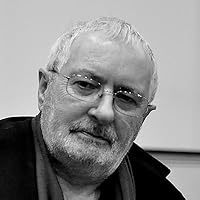
“Imagine someone holding forth on biology whose only knowledge of the subject is 'The Book of British Birds,' and you have a rough idea of what it feels like to read Richard Dawkins on theology.”
―
―

“Believe in truth. To abandon facts is to abandon freedom. If nothing is true, then no one can criticize power, because there is no basis upon which to do so. If nothing is true, then all is spectacle. The biggest wallet pays for the most blinding lights.”
―
―
“The president is a nationalist, which is not at all the same thing as a patriot. A nationalist encourages us to be our worst, and then tells us that we are the best. A nationalist, 'although endlessly brooding on power, victory, defeat, revenge,' wrote Orwell, tends to be 'uninterested in what happens in the real world.' Nationalism is relativist, since the only truth is the resentment we feel when we contemplate others. As the novelist Danilo Kiš put it, nationalism 'has no universal values, aesthetic or ethical.'
A patriot, by contrast, wants the nation to live up to its ideals, which means asking us to be our best selves. A patriot must be concerned with the real world, which is the only place where his country can be loved and sustained. A patriot has universal values, standards by which he judges his nation, always wishing it well—and wishing that it would do better.”
― On Tyranny: Twenty Lessons from the Twentieth Century
A patriot, by contrast, wants the nation to live up to its ideals, which means asking us to be our best selves. A patriot must be concerned with the real world, which is the only place where his country can be loved and sustained. A patriot has universal values, standards by which he judges his nation, always wishing it well—and wishing that it would do better.”
― On Tyranny: Twenty Lessons from the Twentieth Century

Sari’s 2025 Year in Books
Take a look at Sari’s Year in Books, including some fun facts about their reading.

1,018 books
|
169 friends

617 books
|
233 friends

193 books
|
84 friends

0 books
|
36 friends

1 book
|
250 friends

4 books
|
30 friends

0 books
|
14 friends

0 books
|
37 friends
More friends…


Polls voted on by Sari
Lists liked by Sari