
Discover new books on Goodreads
Meet your next favorite book

Kelley Tedd
http://www.teddism.com


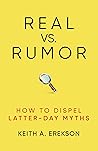
“It never ceases to amaze me,” President Harold B. Lee observed, “how gullible some of our Church members are in broadcasting sensational stories, or dreams, or visions, or purported patriarchal blessings, or quotations, or supposedly from
...more

“He developed a simple method for handling rage, an “anger drawer” in his desk into which he dropped slips of paper with the names of people he was angry at. Once in the drawer, the grievance was banished from thought.”
― Three Days in January: Dwight Eisenhower's Final Mission – The #1 National Bestseller on Principled Leadership and Ike's Warning to America
― Three Days in January: Dwight Eisenhower's Final Mission – The #1 National Bestseller on Principled Leadership and Ike's Warning to America

“Everyday Encounter:
Believing in Teenagers Many American adults assume that teenagers are rebellious, lazy, and shallow. However, in the past, humans between the ages of thirteen and nineteen accomplished marvelous things—Joan of Arc led her nation to victory at age thirteen, Louis Braille invented a way for blind people to read at age fifteen, Alexander the Great established his first colony at age sixteen, and Malala Yousafzai won the Nobel Peace Prize at age seventeen. In the scriptures we read of Mormon being asked to keep the plates at age ten, seeing Jesus at age fifteen,”
― Real vs. Rumor: How to Dispel Latter-Day Myths
Believing in Teenagers Many American adults assume that teenagers are rebellious, lazy, and shallow. However, in the past, humans between the ages of thirteen and nineteen accomplished marvelous things—Joan of Arc led her nation to victory at age thirteen, Louis Braille invented a way for blind people to read at age fifteen, Alexander the Great established his first colony at age sixteen, and Malala Yousafzai won the Nobel Peace Prize at age seventeen. In the scriptures we read of Mormon being asked to keep the plates at age ten, seeing Jesus at age fifteen,”
― Real vs. Rumor: How to Dispel Latter-Day Myths
“and becoming a general at age sixteen. Joseph Smith received an answer to his prayer at age fourteen. What happened? How did young people change from being responsible to reckless? The current stereotypical assumption of teenagers was invented in the United States after World War II. In the early 1900s, large cities sprouted up in which youth experienced crime, child labor, and emotional stress. To protect children from these ills, reformers pushed for mandatory schooling, which pooled young people together for the first time. In the early 1940s, the word “teen-ager” was coined, and after the war an explosion of births produced the largest number of youths in history in the baby boomer generation. Economic stability after the war gave American families more disposable income, and to attract more of that money, advertisers began to market things directly to teenagers—cars, music, clothing, magazines, and movies.11 The idea of a “rebellious teenager” was thus invented in the 1950s and 1960s and sold (literally) to the baby boomer generation of youngsters, who grew up and passed this invented “tradition” down to their children, grandchildren, and now great-grandchildren in the twenty-first century. If we assume young men and women will act rebelliously, then when they do, they are simply meeting our expectations! In rebellion against my cultural surroundings and in support of the divine nature and potential of my children, I frequently tell them that “I don’t believe in teenagers!”
― Real vs. Rumor: How to Dispel Latter-Day Myths
― Real vs. Rumor: How to Dispel Latter-Day Myths
“I always cringe when I hear people say something like “I know such-and-such through science or reason, but the rest I’ll have to take on faith.” This statement suggests that faith is not about evidence—after all of the evidence is gathered and found wanting, then a person turns reluctantly to something called “faith” to patch the holes. Elder Neil L. Andersen explained that faith “is not something ethereal, floating loosely in the air.” Instead, our scriptures teach “faith is the substance of things hoped for, the evidence of things not seen” (Heb. 11:1; emphasis added). Joseph Smith changed the word “substance” to “assurance” in his inspired translation, and the underlying Greek word, hypostasis, may also be translated as “confidence.” “Assurance comes in ways that aren’t always easy to analyze,” Sharon Eubank observed, “but there is light in our darkness.” Thus, faith is not the absence of certitude, positive thinking, or a weak foundation of flimsy evidence. To have faith, Alma taught, means to “hope for things which are not seen, which are true” (Alma 32:21). Anne C. Pingree described it as a “spiritual ability to be persuaded of promises that are seen ‘afar off.’”6 Faith develops through our relationship with God our Father, by His communications with us through the Holy Ghost. Faith is a type of evidence that can be strengthened by observations, reports, and inferences, but it also exists independent of them.”
― Real vs. Rumor: How to Dispel Latter-Day Myths
― Real vs. Rumor: How to Dispel Latter-Day Myths

“Victory has a hundred fathers and defeat is an orphan, so goes an old saying President John F. Kennedy invoked after the Bay of Pigs fiasco. Few Democrats were running around claiming paternity of the political wipeout that was the 2024 campaign. No one thought that the Harris campaign had been without error. But for the most knowledgeable Democratic officials and donors, and for top members of the Harris campaign, there was no question about the father of this election calamity: It was Joe Biden.”
― Original Sin: President Biden's Decline, Its Cover-Up, and His Disastrous Choice to Run Again
― Original Sin: President Biden's Decline, Its Cover-Up, and His Disastrous Choice to Run Again

Kelley’s 2025 Year in Books
Take a look at Kelley’s Year in Books, including some fun facts about their reading.

899 books
|
152 friends

298 books
|
70 friends

83 books
|
171 friends

351 books
|
90 friends

1 book
|
90 friends

200 books
|
93 friends

692 books
|
82 friends

1 book
|
27 friends
More friends…


Favorite Genres
Polls voted on by Kelley
Lists liked by Kelley