
Discover new books on Goodreads
Meet your next favorite book
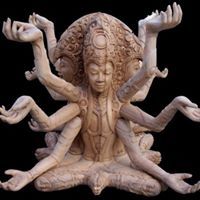







“Ultimate Reality is not a certain state of consciousness, no matter how wonderful or blissful. Reality is the ground of all being, unborn and undying eternity. It is as present in one experience or state of consciousness as in any other. Reality, or Truth, is that which is ultimately true in all states, at all times, in all locations.”
― The Way of Liberation: A Practical Guide to Spiritual Enlightenment
― The Way of Liberation: A Practical Guide to Spiritual Enlightenment
“If we’re willing to look in a deep way underneath the appearances, what we expect to discover—or perhaps hope to discover—is some great, shining image. Most people, deep in their unconscious, want to find an idea of themselves, an image of themselves, that’s really good, quite wonderful, quite worthy of admiration and approval. Yet, when we start to peer underneath our image, we find something quite surprising—maybe even a bit disturbing at first. We begin to find no image. If you look right at this moment, underneath your idea of yourself, and you don’t insert another idea or another image, but if you just look under however you define yourself and you see it’s just an image, it’s just an idea, and you peer underneath it, what you find is no image, no idea of yourself. Not a better image, not a worse image, but no image. Because this is so unexpected, most people will move away from it almost instinctively. They’ll move right back into a more positive image. But if we really want to know who we are, if we want to get to the bottom of this particular way in which we suffer, arising from believing ourselves to be something we’re not, then we have to be willing to look underneath the image, underneath the idea that we have of each other, and most specifically of ourselves.”
― Falling Into Grace
― Falling Into Grace

“Whenever we begin to feel any discrepancy or conflict between our actions and the teachings, we immediately interpret the situation in such a way that the conflict is smoothed over. The interpreter is ego in the role of spiritual adviser. The situation is like that of a country where church and state are separate. If the policy of the state is foreign to the teachings of the church, then the automatic reaction of the king is to go to the head of the church, his spiritual adviser, and ask his blessing. The head of the church then works out some justification and gives the policy his blessing under the pretense that the king is the protector of the faith. In an individual’s mind, it works out very neatly that way, ego being both king and head of the church.”
― Cutting Through Spiritual Materialism
― Cutting Through Spiritual Materialism
“Meditation is neither a means to an end nor something to perfect. Meditation done correctly is an expression of Reality, not a path to it. Meditation done incorrectly is a perfect mirror of how you are resisting the present moment, judging it, or attaching to it.”
― The Way of Liberation: A Practical Guide to Spiritual Enlightenment
― The Way of Liberation: A Practical Guide to Spiritual Enlightenment
“Such grace is never held in abeyance, never earned or deserved. It is not given to some and not to others. Grace is ever present; it is only our openness to it that comes and goes. In one sense, The Way of Liberation is a means of opening up to grace.”
― The Way of Liberation: A Practical Guide to Spiritual Enlightenment
― The Way of Liberation: A Practical Guide to Spiritual Enlightenment

Scott A Ingram’s 2025 Year in Books
Take a look at Scott A Ingram’s Year in Books, including some fun facts about their reading.

109 books
|
84 friends

74 books
|
165 friends

0 books
|
261 friends

85 books
|
156 friends

162 books
|
291 friends

36 books
|
72 friends

116 books
|
174 friends

17 books
|
602 friends
More friends…

Favorite Genres
Polls voted on by Scott A Ingram
Lists liked by Scott A Ingram