
Discover new books on Goodreads
Meet your next favorite book
Scott
https://www.goodreads.com/scottm124


to-read
(256)
currently-reading (4)
read (713)
did-not-finish (1)
favorites (351)
nonfiction (251)
orthodox-christianity (245)
fantasy (200)
general-fiction (168)
general-philosophy (156)
general-christianity (136)
classics (103)
currently-reading (4)
read (713)
did-not-finish (1)
favorites (351)
nonfiction (251)
orthodox-christianity (245)
fantasy (200)
general-fiction (168)
general-philosophy (156)
general-christianity (136)
classics (103)
science-fiction
(70)
history (47)
action (46)
commentary (34)
religion (32)
psychology (30)
culture (25)
prayer (25)
buddhism (19)
workrelated (10)
poetry (9)
dystopia (8)
history (47)
action (46)
commentary (34)
religion (32)
psychology (30)
culture (25)
prayer (25)
buddhism (19)
workrelated (10)
poetry (9)
dystopia (8)
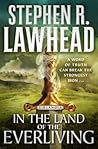




“True understanding is unattainable without both love and detachment, and we can only learn to view anything with detachment by comparing it with other things which are both like and unlike it. We cannot understand the present without a knowledge of the past, our native land without having spent some time in a foreign country, our mother-tongue without a working knowledge of at least two other languages. Without such knowledge, our love of ourselves at the present moment, of our country, of our language, remains an ignorant idolatry, exemplified by the Frenchman who said: “The great advantage of the French language is that in it the words occur in the order in which one thinks them.” In”
― History in English Words
― History in English Words

“The three men walked on and were met by ever more new saints. The saints were not exactly moving or even speaking, but the silence and immobility of the dead were not absolute. There was, under the ground, a motion that was not completely usual, and a particular sort of voices rang out without disturbing the sternness and repose. The saints spoke using words from psalms and lines from the lives of saints that Arseny remembered well from childhood. When they drew the candles closer, shadows shifted along dried faces and brown, half-bent hands. The saints seemed to raise their heads, smile, and beckon, barely perceptibly, with their hands. A city of saints, whispered Ambrogio, following the play of the shadow. They present us the illusion of life. No, objected Arseny, also in a whisper. They disprove the illusion of death.”
― Laurus
― Laurus
“Towards the end of the Seventh Step of The Ladder of Divine Ascent, St. John of Sinai says that we shall not be condemned for not having performed miracles, nor for not having been great theologians or contemplatives. We shall, however, need to give an account for not having mourned sufficiently over our sins, our state of corruption, and our imperfections. For we know very well (and the prayers of our Church confirm it) that no man can live a single day upon earth without sin. This being the case, we must do our utmost to keep ourselves from sin by cultivating the new tree of the spiritual paradise which has taken root inside our bosom, and by watering it with the streams of our tears. And the One Who would be enthroned within our hearts will show Himself to be stronger than the one that rules over this world (cf. 1 John 4:4). In other words, the presence of God must become active within us that the enemy, the possessor of this world and tormentor of our souls, be overcome.”
― The Hidden Man of the Heart (1 Peter 3:4): The Cultivation of the Heart in Orthodox Christian Anthropology
― The Hidden Man of the Heart (1 Peter 3:4): The Cultivation of the Heart in Orthodox Christian Anthropology
“You know, O friend, any meeting is surely more than parting. There is emptiness before meeting someone, just nothing, but there is no longer emptiness after parting. After having met someone once, it is impossible to part completely. A person remains in the memory, as a part of the memory. The person created that part and that part lives, sometimes coming into contact with its creator. Otherwise, how would we sense those dear to us from a distance?”
― Laurus
― Laurus
“The soul has need of a divine lamp, even of the Holy Ghost, who sets in order the darkened house. It needs the bright Sun of righteousness, which enlightens and rises upon the heart, as an instrument to win the battle. That woman who lost the piece of silver, first lighted the lamp, and then set the house in order, and thus, the house being set in order and the lamp lit, the piece of silver was found, buried in dirt and filth and earth. So now the soul cannot of itself find its own thoughts and disengage them; but when the divine lamp is lit, it lights up the darkened house, and then the soul beholds its thoughts how they lie buried in the filth and mire of sin.”
― The Hidden Man of the Heart (1 Peter 3:4): The Cultivation of the Heart in Orthodox Christian Anthropology
― The Hidden Man of the Heart (1 Peter 3:4): The Cultivation of the Heart in Orthodox Christian Anthropology

 Goodreads Librarians Group
— 350253 members
— last activity 0 minutes ago
Goodreads Librarians are volunteers who help ensure the accuracy of information about books and authors in the Goodreads' catalog. The Goodreads Libra ...more

Scott’s 2025 Year in Books
Take a look at Scott’s Year in Books, including some fun facts about their reading.

2,278 books
|
674 friends

619 books
|
129 friends

1,049 books
|
370 friends

202 books
|
50 friends

852 books
|
52 friends

591 books
|
116 friends

510 books
|
135 friends

603 books
|
13 friends
More friends…


Polls voted on by Scott
Lists liked by Scott