David

Add friend
Sign in to Goodreads to learn more about David.


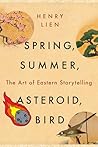
Crossings: A Whit...
Rate this book
Clear rating

progress: 
 
  (page 290 of 480)
10 hours, 44 min ago

 
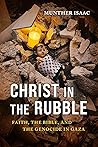
If I Must Die: Po...
Rate this book
Clear rating

progress: 
 
  (page 71 of 288)
Dec 28, 2025 06:36AM

 
Crazy for God: Ho...
Rate this book
Clear rating

progress: 
 
  (77%)
Feb 10, 2025 07:06PM

 
See all 12 books that David is reading…
Loading...
Wendell Berry
“Those who will not learn
in plenty to keep their place
must learn it by their need
when they have had their way
and the fields spurn their seed.
We have failed Thy grace.
Lord, I flinch and pray,
send Thy necessity.
"We Who Prayed and Wept", p. 211.”
Wendell Berry, The Collected Poems, 1957-1982

Wendell Berry
“Prayer is like lying awake at night, afraid, with your head under the cover, hearing only the beating of your own heart. It is like a bird that has blundered down the flue and is caught indoors and flutters at the windowpanes. It is like standing a long time on a cold day, knocking at a shut door.”
Wendell Berry, Jayber Crow

T.S. Eliot
“We shall not cease from exploration
And the end of all our exploring
Will be to arrive where we started
And know the place for the first time.
Through the unknown, remembered gate
When the last of earth left to discover
Is that which was the beginning;
At the source of the longest river
The voice of the hidden waterfall
And the children in the apple-tree
Not known, because not looked for
But heard, half-heard, in the stillness
Between two waves of the sea.

—T.S. Eliot, from “Little Gidding,” Four Quartets (Gardners Books; Main edition, April 30, 2001) Originally published 1943.”
T.S. Eliot, Four Quartets

Wendell Berry
“That we can prescribe the terms of our own success, that we can live outside or in ignorance of the Great Economy are the greatest errors. They condemn us to a life without a standard, wavering in inescapable bewilderment from paltry self-satisfaction to paltry self-dissatisfaction. But since we have no place to live but in the Great Economy, whether or not we know that and act accordingly is the critical question, not about economy merely, but about human life itself.

It is possible to make a little economy, such as our present one, that is so short-sighted and in which accounting is of so short a term as to give the impression that vices are necessary and practically justifiable. When we make our economy a little wheel turning in opposition to what we call “nature,” then we set up competitiveness as the ruling principle in our explanation of reality and in our understanding of economy; we make of it, willy-nilly, a virtue. But competitiveness, as a ruling principle and a virtue, imposes a logic that is extremely difficult, perhaps impossible, to control. That logic explains why our cars and our clothes are shoddily made, why our “wastes” are toxic, and why our “defensive” weapons are suicidal; it explains why it is so difficult for us to draw a line between “free enterprise” and crime. If our economic ideal is maximum profit with minimum responsibility, why should we be surprised to find our corporations so frequently in court and robbery on the increase? Why should we be surprised to find that medicine has become an exploitive industry, profitable in direct proportion to its hurry and its mechanical indifference? People who pay for shoddy products or careless services and people who are robbed outright are equally victims of theft, the only difference being that the robbers outright are not guilty of fraud.”
Wendell Berry, What Matters?: Economics for a Renewed Commonwealth

Wendell Berry
“Christ did not descend from the cross except into the grave. And why not otherwise? Wouldn’t it have put fine comical expressions on the faces of the scribes and chief priests and the soldiers if at that moment He had come down in power and glory? Why didn’t He do it? Why hasn’t He done it at any one of a thousand good times between then and now?
I knew the answer. I knew it a long time before I could admit it, for all the suffering of the world is in it. He didn’t, He hasn’t, because from the moment He did, He would be the absolute tyrant of the world and we would be His slaves. Even those who hated Him and hated one another and hated their own souls would have to believe in Him then. From that moment the possibility that we might be bound to Him and He to us and us to one another by love forever would be ended.
And so, I thought, He must forebear to reveal His power and glory by presenting Himself as Himself, and must be present only in the ordinary miracle of the existence of His creatures. Those who wish to see Him must see Him in the poor, the hungry, the hurt, the wordless creatures, the groaning and travailing beautiful world.”
Wendell Berry, Jayber Crow

97 Great African Reads — 4168 members — last activity 13 hours, 0 min ago
Here is an overview of the group reads & activities: Regional reads Nominations and Book discussions. Buddy Reads Find someone to read along with!. Sh ...more
220 Goodreads Librarians Group — 309224 members — last activity 0 minutes ago
Goodreads Librarians are volunteers who help ensure the accuracy of information about books and authors in the Goodreads' catalog. The Goodreads Libra ...more
year in books
Len
Len
56,301 books | 235 friends

Lorrain...
2,373 books | 32 friends

Nicolas...
3,055 books | 86 friends

Emile K...
191 books | 179 friends

S.E. Ne...
362 books | 1,824 friends

Maureen...
4 books | 32 friends

Judy Mc...
164 books | 55 friends

Clara
75 books | 107 friends

More friends…
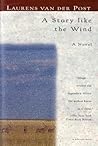
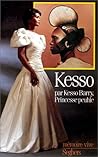
A Story Like the Wind by Laurens van der PostA Far-Off Place by Laurens van der PostKesso, princesse peuhle (Mémoire vive) by Kesso Barry
Africa (fiction and nonfiction)
1,765 books — 1,647 voters


Polls voted on by David

Lists liked by David