
Tanja

Add friend
Sign in to Goodreads to learn more about Tanja.

https://www.goodreads.com/coolbritanja

Footnotes in Gaza
Tanja is currently reading
bookshelves: currently-reading
Rate this book
Clear rating

 
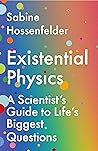
Existential Physi...
Rate this book
Clear rating

 
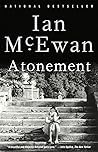
The Stone Reader:...
Rate this book
Clear rating

 
See all 16 books that Tanja is reading…
Book cover for Everything I Know About Love
I blame my high expectations for love on two things: the first is that I am the child of parents who are almost embarrassingly infatuated with each other; the second is the films I watched in my formative years.
Lucia Sobekova liked this
Loading...
Yuval Noah Harari
“most cherished desires of present-day Westerners are shaped by romantic, nationalist, capitalist and humanist myths that have been around for centuries. Friends giving advice often tell each other, ‘Follow your heart.’ But the heart is a double agent that usually takes its instructions from the dominant myths of the day, and the very recommendation to ‘follow your heart’ was implanted in our minds by a combination of nineteenth-century Romantic myths and twentieth-century consumerist myths. The Coca-Cola Company, for example, has marketed Diet Coke around the world under the slogan ‘Diet Coke. Do what feels good.’ Even what people take to be their most personal desires are usually programmed by the imagined order. Let’s consider, for example, the popular desire to take a holiday abroad. There is nothing natural or obvious about this. A chimpanzee alpha male would never think of using his power in order to go on holiday into the territory of a neighbouring chimpanzee band. The elite of ancient Egypt spent their fortunes building pyramids and having their corpses mummified, but none of them thought of going shopping in Babylon or taking a skiing holiday in Phoenicia. People today spend a great deal of money on holidays abroad because they are true believers in the myths of romantic consumerism. Romanticism tells us that in order to make the most of our human potential we must have as many different experiences as we can. We must open ourselves to a wide spectrum of emotions; we must sample various kinds of relationships; we must try different cuisines; we must learn to appreciate different styles of music. One of the best ways to do all that is to break free from our daily routine, leave behind our familiar setting, and go travelling in distant lands, where we can ‘experience’ the culture, the smells, the tastes and the norms of other people. We hear again and again the romantic myths about ‘how a new experience opened my eyes and changed my life’. Consumerism tells us that in order to be happy we must consume as many products and services as possible. If we feel that something is missing or not quite right, then we probably need to buy a product (a car, new clothes, organic food) or a service (housekeeping, relationship therapy, yoga classes). Every television commercial is another little legend about how consuming some product or service will make life better. 18. The Great Pyramid of Giza. The kind of thing rich people in ancient Egypt did with their money. Romanticism, which encourages variety, meshes perfectly with consumerism. Their marriage has given birth to the infinite ‘market of experiences’, on which the modern tourism industry is founded. The tourism industry does not sell flight tickets and hotel bedrooms. It sells experiences. Paris is not a city, nor India a country – they are both experiences, the consumption of which is supposed to widen our horizons, fulfil our human potential, and make us happier. Consequently, when the relationship between a millionaire and his wife is going through a rocky patch, he takes her on an expensive trip to Paris. The trip is not a reflection of some independent desire, but rather of an ardent belief in the myths of romantic consumerism. A wealthy man in ancient Egypt would never have dreamed of solving a relationship crisis by taking his wife on holiday to Babylon. Instead, he might have built for her the sumptuous tomb she had always wanted. Like the elite of ancient Egypt, most people in most cultures dedicate their lives to building pyramids. Only the names, shapes and sizes of these pyramids change from one culture to the other. They may take the form, for example, of a suburban cottage with a swimming pool and an evergreen lawn, or a gleaming penthouse with an enviable view. Few question the myths that cause us to desire the pyramid in the first place.”
Yuval Noah Harari, Sapiens: A Brief History of Humankind

Julian Barnes
“There is a German word, Sehnsucht, which has no English equivalent; it means 'the longing for something'. It has Romantic and mystical connotations; C.S. Lewis defined it as the 'inconsolable longing' in the human heart for 'we know not what'. It seems rather German to be able to specify the unspecifiable. The longing for something - or, in our case, for someone.”
Julian Barnes, Levels of Life

“The city overwhelmed me. Every day I’d walk by hundreds of strangers, compete for space in crowded coffee shops, and stand shoulder to shoulder on packed subway cars. I’d scan profiles, learning that the woman waiting for the N enjoyed thrash-hop, and the barista at my local coffee shop loved salted caramel. I’d had a couple fleeting relationships, but mostly I’d spend weekends going to bars and sleeping with people who knew little more than my username. It all made me want to turn off my layers, go back to the old days, and stay disconnected. But you do that and you become another old guy buried in an e-reader, complaining about how no one sends emails anymore.”
Alexander Weinstein, Children of the New World

Julian Barnes
“There are two essential kinds of loneliness: that of not having found someone to love, and that of having been deprived of the one you did love. The first kind is worse. Nothing can compare to the loneliness of the soul in adolescence.”
Julian Barnes, Levels of Life

Gabrielle Zevin
“It’s so funny you should say this, because if you were one of my students, you’d be wearing your pain like a badge of honor. This generation doesn’t hide anything from anyone. My class talks a lot about their traumas. And how their traumas inform their games. They, honest to God, think their traumas are the most interesting thing about them. I sound like I’m making fun, and I am a little, but I don’t mean to be. They’re so different from us, really. Their standards are higher; they call bullshit on so much of the sexism and racism that I, at least, just lived with. But that’s also made them kind of, well, humorless. I hate people who talk about generational differences like it’s an actual thing, and here I am, doing it. It doesn’t make sense. How alike were you to anyone we grew up with, you know?”
Gabrielle Zevin, Tomorrow, and Tomorrow, and Tomorrow

179584 Our Shared Shelf — 223039 members — last activity Feb 04, 2026 04:05AM
OUR SHARED SHELF IS CURRENTLY DORMANT AND NOT MANAGED BY EMMA AND HER TEAM. Dear Readers, As part of my work with UN Women, I have started reading ...more
189072 EVERYONE Has Read This but Me - The Catch-Up Book Club — 28410 members — last activity 3 hours, 16 min ago
Click HERE for the latest group announcements. "It reminded me of ____ but in space." "I read ____ in high school, and actually liked it." "It's ...more
year in books
Solar
3,571 books | 20 friends

Stefan
355 books | 15 friends

Linzany
1,950 books | 97 friends

Kate Jane
554 books | 38 friends

Miki
1,875 books | 143 friends

Michele...
685 books | 91 friends

Stephanie
1,218 books | 57 friends

Fanny C...
972 books | 14 friends

More friends…


Polls voted on by Tanja

Lists liked by Tanja
