
Discover new books on Goodreads
Meet your next favorite book
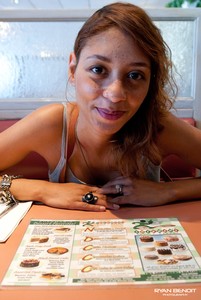
Chantal
http://thehorticult.com


“There is a distinct difference between "suspense" and "surprise," and yet many pictures continually confuse the two. I'll explain what I mean.
We are now having a very innocent little chat. Let's suppose that there is a bomb underneath this table between us. Nothing happens, and then all of a sudden, "Boom!" There is an explosion. The public is surprised, but prior to this surprise, it has seen an absolutely ordinary scene, of no special consequence. Now, let us take a suspense situation. The bomb is underneath the table and the public knows it, probably because they have seen the anarchist place it there. The public is aware the bomb is going to explode at one o'clock and there is a clock in the decor. The public can see that it is a quarter to one. In these conditions, the same innocuous conversation becomes fascinating because the public is participating in the scene. The audience is longing to warn the characters on the screen: "You shouldn't be talking about such trivial matters. There is a bomb beneath you and it is about to explode!"
In the first case we have given the public fifteen seconds of surprise at the moment of the explosion. In the second we have provided them with fifteen minutes of suspense. The conclusion is that whenever possible the public must be informed. Except when the surprise is a twist, that is, when the unexpected ending is, in itself, the highlight of the story.”
―
We are now having a very innocent little chat. Let's suppose that there is a bomb underneath this table between us. Nothing happens, and then all of a sudden, "Boom!" There is an explosion. The public is surprised, but prior to this surprise, it has seen an absolutely ordinary scene, of no special consequence. Now, let us take a suspense situation. The bomb is underneath the table and the public knows it, probably because they have seen the anarchist place it there. The public is aware the bomb is going to explode at one o'clock and there is a clock in the decor. The public can see that it is a quarter to one. In these conditions, the same innocuous conversation becomes fascinating because the public is participating in the scene. The audience is longing to warn the characters on the screen: "You shouldn't be talking about such trivial matters. There is a bomb beneath you and it is about to explode!"
In the first case we have given the public fifteen seconds of surprise at the moment of the explosion. In the second we have provided them with fifteen minutes of suspense. The conclusion is that whenever possible the public must be informed. Except when the surprise is a twist, that is, when the unexpected ending is, in itself, the highlight of the story.”
―

“We are now ready to tackle Dickens. We are now ready to embrace Dickens. We are now ready to bask in Dickens. [...] If it were possible I would like to devote fifty minutes of every class meeting to mute meditation, concentration, and admiration of Dickens. However, my job is to direct and rationalize those meditations, that admiration. All we have to do when reading Bleak House is to relax and let our spines take over. Although we read with our minds, the seat of artistic delight is between the shoulder blades. That little shiver behind is quite certainly the highest form of emotion that humanity has attained when evolving pure art and pure science. Let us worship the spine and its tingle.”
―
―

“Most New Yorkers spent their lives somewhere between the fruit cart and the fifth floor. To see the city from a few hundred feet above the riffraff was pretty celestial. We gave the moment its due.”
― Rules of Civility
― Rules of Civility

“The sweet creature! She would look it up in her big Dante when she got home. What a woman!”
― More Pricks Than Kicks
― More Pricks Than Kicks
“He approaches a cockroach in only one respect: his coloration is brown. That is all. Apart from this he has a tremendous convex belly divided into segments and a hard rounded back suggestive of wing cases. In beetles these cases conceal flimsy little wings that can be expanded and then may carry the beetle for miles and miles in a blundering flight. Curiously enough, Gregor the beetle never found out that he had wings under the hard covering of his back. (This is a very nice observation on my part to be treasured all your lives. Some Gregors, some Joes and Janes, do not know that they have wings.)”
― Lectures on Literature
― Lectures on Literature
 Of Wolves and Pipe-makers
— 4 members
— last activity Jan 19, 2016 04:09PM
Of Wolves and Pipe-makers
— 4 members
— last activity Jan 19, 2016 04:09PM
This group is for anyone associated with the Warren Wilson MFA Program for Writers who wants to keep tabs on what people are reading.
 The Mookse and the Gripes
— 2288 members
— last activity 9 hours, 7 min ago
The Mookse and the Gripes
— 2288 members
— last activity 9 hours, 7 min ago
Forum for spirited and convivial discussion of fiction from around the world, with particular though not exclusive focus on 20th and 21st century fict ...more

Chantal’s 2025 Year in Books
Take a look at Chantal’s Year in Books, including some fun facts about their reading.

480 books
|
282 friends

1,569 books
|
79 friends

2,761 books
|
633 friends

1,916 books
|
174 friends

1,041 books
|
65 friends

206 books
|
50 friends

860 books
|
764 friends

350 books
|
213 friends
More friends…


Polls voted on by Chantal
Lists liked by Chantal