
Discover new books on Goodreads
Meet your next favorite book

Savanah Gray
https://www.goodreads.com/stitched_savage


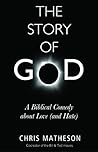
God had never thought of female homosexuality before. In truth, he didn’t think of female anything that much. Women were hidden, strange, untrustworthy. He didn’t like them, quite frankly. But maybe they were homosexuals too—they probably
...more


“What is self and what is other may be a question of the person's 'biology,' but it is equally a question of the person's 'philosophy': what is the subject-object relationship the person has become in the world?
That question suggests at least two things...First, subject-object relations become; they are not static; their study is the study of a motion. Second, subject-object relations live in the world; they are not simply abstractions, but take form in actual human relations and social contexts.”
― The Evolving Self: Problem and Process in Human Development
That question suggests at least two things...First, subject-object relations become; they are not static; their study is the study of a motion. Second, subject-object relations live in the world; they are not simply abstractions, but take form in actual human relations and social contexts.”
― The Evolving Self: Problem and Process in Human Development
“American culture quite naturally provides these ideological supports to those it favors and elects as fellow participants in the social and psychological institutions which regulate its established arrangements. Essentially, these favored persons have been middle-class white men. A middle-class white man's evolution out of embeddedness in the interpersonal is not a moving spectacle in our culture precisely because there is no spectacle - you cannot watch it (unless you look closely at a given individual over time". It will stand out in the private relations of the person's immediate network but it does not stand out as figure on the cultural ground precisely because it is embedded in the tacit ideology of the culture. This is one reason the tacit ideology is so powerful and insidious for those it excludes: it cannot be seen; it is not held up for examination. What may be the most important consequence of the upheavals of the last fifteen years - largely through the attention these upheavals brought to the arrangements between blacks and whites (the 'civil rights' movement'), men and women (the 'women's movement'), and the government and the governed (the 'anti-war movement') is that the ideological nature of American life was made explicit. (Evolutionarily, if I were to apply my scheme to the culture at large, I should have to say the upheavals of the sixties and early seventies represented the transitional angst of the emergences out of 'institutional' embeddedness; of course, from the point of view of the old world not yet left behind, this same upheaval must look like a collapse of our basic institutions, which is just what popular analyses says.) For persons excluded from the tacit culture of ideology to make this move, it is necessary for them to construct their own ideological support which will necessarily stand out. Whether the ideology is feminism or black power or gay rights, it will have common features which serve the absolutely crucial function of supporting the evolution of meaning. It holds and recognizes the group-extensiveness of the new differentiation ('black pride,' 'I am woman') and protects against reabsorption into the old embeddedness (whether by moratoria from intimate relations with men, say, or turning to women - one's comrades - for intimate relations; or the adoption of a strident language which can be as much an effort to hold off an old self as it is an address to others).”
― The Evolving Self: Problem and Process in Human Development
― The Evolving Self: Problem and Process in Human Development
“The struggle of the sexes to know each other, to see each other, and to communicate deeply - a struggle which may be more a feature of adult life in the West than at any time in the past - may rest in the capacity of men and women to learn the universal language they share, an evolutionary esperanto, the dialectical context in which these two poles are joined. It may rest in their recognition that neither differentiation nor integration is prior, but that each is a part of the reality of being alive.”
― The Evolving Self: Problem and Process in Human Development
― The Evolving Self: Problem and Process in Human Development
“All transitions involve leaving a consolidated self behind before any new self can take its place. At the 4-5 shift this means abandoning - or somehow operating without reliance upon - the form, the group, standard, or convention. For some this leads to feelings of being 'beyond good and evil,' which phenomenologically amounts to looking at that beyondness from the view of the old self, and thus involves strong feelings of evil. Ethical relativism - the belief that there is no (nonarbitrary) basis for considering one thing more right than another - is, on the one hand, the father of tolerance; it stands against the condemning judgment; but it must also stand against the affirming judgment, and so is vulnerable to cynicism. Every transition involves to some extent the killing off of the old self.”
― The Evolving Self: Problem and Process in Human Development
― The Evolving Self: Problem and Process in Human Development
“Depression characterized by the 'threat-to' orientation lodges itself in one side of the proposition. Doing so does not eliminate doubt, it only places it in the world. The world has become doubtful; what I doubt is my capacity to continue living in such a world. I doubt whether I can make it given how things are. I experience a kind of shrinking, or diminution of my self; but what remains clear - what I am most wanting to hold clear - is who it is that is doing the doubting, who 'I' am. As it seems to 'me,' what 'I' doubt is whether, in the face of the way the world has become, 'I' can keep myself together, my self together. From the point of view of our paradigm, that which 'I' say means: I doubt whether I can keep it together, this balance. What is being doubted, really, from our point of view, is the capacity to continue knowing, which, phenomenologically, from the view of the self, entails the capacity to continue being.”
― The Evolving Self: Problem and Process in Human Development
― The Evolving Self: Problem and Process in Human Development
 Read Women
— 6321 members
— last activity 2 hours, 49 min ago
Read Women
— 6321 members
— last activity 2 hours, 49 min ago
A group for readers of all genders to discover and share their passion for books by women authors. We enjoy monthly book discussions, challenges, budd ...more
 Human Origins—Explorations and Discussions in Anthropology, Biology, Archaeology, and Geology
— 675 members
— last activity Nov 27, 2024 11:08AM
Human Origins—Explorations and Discussions in Anthropology, Biology, Archaeology, and Geology
— 675 members
— last activity Nov 27, 2024 11:08AM
An informal on-line “bulletin-board” resource for readers interested in staying abreast of the current state-of-knowledge and the latest books, techni ...more

Savanah’s 2025 Year in Books
Take a look at Savanah’s Year in Books, including some fun facts about their reading.

1,628 books
|
85 friends

54 books
|
101 friends

86 books
|
41 friends

629 books
|
1,095 friends

625 books
|
158 friends

336 books
|
7 friends

164 books
|
111 friends

12 books
|
61 friends
More friends…


Favorite Genres
Polls voted on by Savanah
Lists liked by Savanah