
Discover new books on Goodreads
Meet your next favorite book



“humans tend to gravitate quickly from the observation of what exists to the presumption that an existing state of affairs is normal and thus must embody a certain ethical necessity. When upheavals or disruptions occur, they quickly adapt to the new circumstances, assigning to them the same normative quality they had perceived in the prior order of things.168”
― The Sleepwalkers: How Europe Went to War in 1914
― The Sleepwalkers: How Europe Went to War in 1914
“Those who argue for more government funding of science, or of anything else, should never forget the cost of government money, namely the taxes that impoverish society to enable government to impose its particular, narrow, harsh vision of a modern university.”
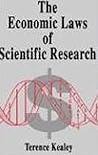
― The Economic Laws of Scientific Research
― The Economic Laws of Scientific Research
“The dream of a planned, fair, moral, ethical, cash-free society remains strong, particularly among socialists and liberals. It clearly represents a fundamental human instinct. But feudalism just did not work very well, if only because powerful people will not always obey moral imperatives.”
― The Economic Laws of Scientific Research
― The Economic Laws of Scientific Research
“MITI, far from being a uniquely brilliant leader of government/industrial partnership, has been wrong so often that the Japanese themselves will concede that much of their growth derives from industry's rejection of MITI’s guidance. MITI, incredibly, opposed the development of the very areas where Japan has been successful: cars, electronics and cameras. MITI has, moreover, poured vast funds into desperately wasteful projects. Thanks to MITI, Japan has a huge overcapacity in steel - no less than three times the national requirement. This, probably the most expensive mistake Japan ever made in peacetime, was a mistake of genius, because Japan has no natural resources: it has to import everything; the iron ore, the coal, the gas, the limestone and the oil to make its unwanted steel. Undaunted, MITI then invested in giant, loss-making (£400 million losses by 1992) 5th generation supercomputers at the precise moment that the market opened for the small personal computer; and MITI' s attempts at dominating the world's pharmaceutical and telecommunications industries have each failed. Nor is this just anecdote. In a meticulous study of MITI’s interventions into the Japanese economy between 1955 and 1990, Richard Beason of Alberta University and David Weinterin of Harvard showed that, across the 13 major sectors of the economy, surveying hundreds of different companies, Japan's bureaucrats almost invariably picked and supported the losers.”
― The Economic Laws of Scientific Research
― The Economic Laws of Scientific Research
“Neither Gladstone nor any other British politician did support science to any significant extent during the nineteenth century – yet that did not prevent Britain from growing into the richest and most industrialised country in the world nor from producing scientists such as Davy, Kelvin, Maxwell, Lyell and Darwin. Curiously, nineteenth century France and Germany, whose governments did fund science expansively, trailed behind.”
― The Economic Laws of Scientific Research
― The Economic Laws of Scientific Research

Peter’s 2025 Year in Books
Take a look at Peter’s Year in Books, including some fun facts about their reading.

31 books
|
12 friends

79 books
|
22 friends

334 books
|
34 friends

164 books
|
162 friends

257 books
|
140 friends

157 books
|
32 friends

46 books
|
40 friends

1 book
|
61 friends
More friends…


Polls voted on by Peter
Lists liked by Peter