
Discover new books on Goodreads
Meet your next favorite book

Matthew Page
http://www.matthewjpage.com


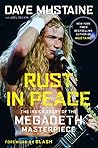
DAVE MUSTAINE: His girlfriend was really bad. She was very controlling. She once made him dump a gram of heroin into the carpet. Too bad he didn’t know that if you blew up a balloon and rubbed it over the carpet, all the heroin would stick
...more


“There is no shame in what you are feeling, Harry,” said Dumbledore’s voice. “On the contrary . . . the fact that you can feel pain like this is your greatest strength.”
― Harry Potter and the Order of the Phoenix
― Harry Potter and the Order of the Phoenix
“If you want to know what a man’s like, take a good look at how he treats his inferiors, not his equals.”
― Harry Potter and the Goblet of Fire
― Harry Potter and the Goblet of Fire
“Oh, well, if Won-Won thinks that, you’d better do it,” she said, flaring up at once. “After all, when has Won-Won’s judgment ever been faulty?”
― Harry Potter and the Half-Blood Prince
― Harry Potter and the Half-Blood Prince

“The fifth edition simplifies and rationalizes D&D in key ways. Breaking down a door is a great example: When Angela wanted to throw her weight around, Willi asked for her strength score—and figured it was high enough to get the job done. “The idea is if you are not rushed, and there’s really no danger, we simply look at it and say anyone with a strength of fifteen or above can open it,” Willi said. “If you are being chased by a horde of goblins and it’s important to get in the door in a rush, then I might make you roll. But generally, it’s the DM’s prerogative.” Compare that to the 3.5 edition rules, which are rather more complicated. First, the player may attempt to smash the door open with a Strength check. They roll a d20 and add their strength bonus. Then the DM checks a table5 that lists different kinds of doors (simple wooden, good wooden, strong wooden, stone, iron, wooden portcullis, iron portcullis) and determines the door’s breaking point. If the player scored higher than that number, they’re through. If not, they’ve got a long way to go. Next, the DM figures out the door’s armor class (10, plus a modifier based on its size, and minus 2 because it’s an inanimate object). Then the player has to fight the door like it’s an opposing monster. They attack, and if the attack roll is higher than the door’s AC, they do damage—but not before the DM goes back to his tables and figures out the door’s hardness. Hardness reduces damage, so if you hit for 9 points of damage against a stone door with a hardness of 8, you really only do 1 point of damage . . . and at that rate, you’ll have to hit the door another sixty times before you eventually smash the thing to pieces. Or, more likely, you toss the stupid rule book under the couch and go play video games instead.”
― Of Dice and Men: The Story of Dungeons & Dragons and The People Who
― Of Dice and Men: The Story of Dungeons & Dragons and The People Who

“When you sit, you are not allowing your impulses to translate into action. For the time being, at least, you are just watching them. Looking at them, you quickly see that all impulses in the mind arise and pass away, that they have a life of their own, that they are not you but just thinking, and that you do not have to be ruled by them. Not feeding or reacting to impulses, you come to understand their nature as thoughts directly. This process actually burns up destructive impulses in the fires of concentration and equanimity and non-doing. At the same time, creative insights and creative impulses are no longer squeezed out so much by the more turbulent, destructive ones. They are nourished as they are perceived and held in awareness. Mindfulness can thereby refashion the links in the chain of actions and consequences, and in doing so it unchains us, frees us, and opens up new directions for us through the moments we call life. Without mindfulness, we are all too easily stuck in the momentum coming out of the past, with no clue to our own imprisonment, and no way out. Our dilemma always seems to be the other person’s fault, or the world’s fault, so our own views and feelings are always justified. The present moment is never a new beginning because we keep it from becoming one.”
― Wherever You Go, There You Are
― Wherever You Go, There You Are

Matthew’s 2025 Year in Books
Take a look at Matthew’s Year in Books, including some fun facts about their reading.

2,253 books
|
187 friends

344 books
|
50 friends

542 books
|
40 friends

150 books
|
22 friends

35 books
|
51 friends

33 books
|
50 friends

387 books
|
209 friends

63 books
|
1 friend
More friends…

Favorite Genres
Polls voted on by Matthew
Lists liked by Matthew