Discover new books on Goodreads
Meet your next favorite book
Deborah Maccoby
Add friend
Block Deborah Maccoby?
This will prevent Deborah from sending you messages, friend request or from viewing your profile. They will not be notified. Comments on discussion boards from them will be hidden by default.
Deborah Maccoby
rated a book did not like it
Error rating book. Refresh and try again.
Rate this book
Clear rating
Deborah Maccoby said:
"
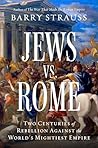
Barry Strauss writes on page 2 of this book: “It is my hope that the history of this period, these people and these struggles, will offer context for the clash of civilizations we are witnessing today and forge a deeper understanding of the forces th Barry Strauss writes on page 2 of this book:
“It is my hope that the history of this period, these people and these struggles, will offer context for the clash of civilizations we are witnessing today and forge a deeper understanding of the forces that propel them.”
Of course, the modern world is built upon the ancient world, and illuminating connections can be made between them. But the danger of writing ancient history in the light of modern times is that the modern historian will distort ancient history in terms of his or her political bias (some unconscious bias is of course always to be expected). Jews v. Rome seems to me to fall into this pit of the politicization of ancient history. Indeed – ironically in view of the book’s celebration of anti-imperial revolts -- the very term “clash of civilizations” invokes the right-wing, confrontational and imperialistic worldview of the US neoconservatives.
My problems with the book started with an Author’s Note on the very first page, and a map a few pages later. Here is the Author’s Note:
“Judea, sometimes spelled Judaea, has several different meanings. On the one hand, it refers either to a country that was first an independent kingdom and then a province in the Roman Empire. On the other hand, it refers to a region within that country, namely the region of Jerusalem and its hinterland. To avoid confusion, I refer to the province and kingdom as Judea and to the region as Judah. Both are the same word in Hebrew, Yehudah, or in Latin, Judaea.”
A few pages later, we are given a map that shows an area between Lebanon/Syria and Egypt in ancient times that up till recent years, as a matter of accepted scholarly usage, has been named as “Palestine”. Strauss’s term “country” in the quotation above implies that the kingdom and later province of Judea covered the whole area; and the map confirms this implication, because this map of the whole area between Syria/Lebanon and Egypt is headed: ”Judea”.
In recent years, there has been a tendency among scholars of the time-period covered in the book – the mid-first century BCE to the early second century CE -- not to use the name “Palestine”. The justification usually given is that the term has nowadays become politically sensitive because it is linked to the “delegitimization” of the State of Israel. But it seems to me that the trend towards abolition of the previously generally recognized name “Palestine” is itself driven by the political agenda of Israel apologists, who want to eliminate mention of Palestine and imply misleadingly that the whole land in ancient times belonged to the Jews.
The change in scholarly usage in recent years is well illustrated by two different translations that I possess of Josephus’s The Jewish War. The first translation, in the Penguin Classics series, was first published in 1959; there were two revised editions, in 1970 and 1981. In all three editions, a map of the area in Josephus’s time (the first century CE) is headed: “Palestine”. But in a recent translation of The Jewish War, published in 2017 in the Oxford World’s Classics series, a map of the area in Josephus’s time is headed: “Judea and its environs”.
But the three words “and its environs” are very significant, because they concede that the term “Judea” does not cover the whole land. As Strauss has pointed out, the name “Judea” refers to three entities: a) a small area around Jerusalem where the Jews settled after their return from Babylon; b) a Hasmonean/Herodian kingdom, which varied in extent over the years, depending on conquests, defeats, acquisitions and losses of neighbouring territories, but which never – even when it reached its greatest extent during the reign of Herod the Great, when it covered most of the land -- incorporated the whole land; c) a Roman province ( which, initially at least, was technically, as Strauss points out on page 44, a kind of sub-province of the wider Roman province of Syria), that again varied in extent over the years, but again never encompassed the whole land (the province was always much smaller than Herod’s kingdom and in its early stages consisted of only three small areas: Judea, Samaria and Idumea).
Strauss’s refusal to use the name “Palestine” for the whole land and insistence on calling it “Judea” lead him into all kinds of confusions, contradictions, errors, inconsistencies and sleights-of-hand. To list some of these:
a) As I have already set out, Strauss wrongly implies that the word “Judea” covers the whole “country”. On page 3, Strauss writes “In the Roman era, the country was commonly called Judea.” There is no footnote here and he presents no evidence for this claim.
b) So far from avoiding confusion by calling the small area around Jerusalem “Judah” instead of the accepted scholarly name “Judea” (so as not to confuse the small area with the erroneous name of the whole land), Strauss introduces more historical confusion, since “Judah” is the accepted scholarly term for the Jewish kingdom that was destroyed centuries earlier by the Babylonians.
c) Strauss erroneously suggests on page 25 that the Kingdom of Nabataea in the south of Palestine was part of Herod’s kingdom; whereas much later in the book, on page 261, he admits that Nabataea was independent.
d) On page 143, Strauss is finally forced to use the word “Palestine” when he mentions the Greek city of Pella, which was one of ten autonomous Greek cities in Palestine; he writes: “Pella was one of the Greek cities of Palestine, located in the foothills of the Jordan River, about twenty miles south of the Sea of Galilee.”
e) Most confusingly of all, on page 4 Strauss repeats the Zionist myth that the name “Palestine” was only given to the land by the Emperor Hadrian in the second century CE, as a punishment for the Jews after the crushing of the Bar Kokhba Revolt: “As if to add insult to injury, the Romans changed the name of the country from Judea (‘land of the Jews’) to Syria Palaestina or simply Palestine (‘land of the Philistines’).” Strauss gets into all kinds of contortions in connection with this Zionist myth, because, even while trying to repeat it again on page 271, he is forced to concede that “Greek authors such as Herodotus and Aristotle used the name ‘Palestine’ to refer to Canaan more broadly”. This is the only mention of the word “Canaan” in the book; Strauss admits that the whole land is broader than just “Judea”, whereas he has been implying throughout the book that Judea covered the whole land. He tries to suggest that Hadrian was lobbied by Greeks, because of their cultural rivalry with the Jews, to call the whole land Syria Palaestina; but it is far more likely that Hadrian simply used the name that had been current for centuries.
After all the obfuscation, Strauss finally makes it clear on page 271 that “Judea” and “Israel” (clearly the name he would have liked to use throughout the book, but he does not dare to) were only the Jewish names for the whole land, not the names commonly in use among other peoples: “Palestine was not a new name, but it was not a name used by Jews, who referred to their country as Judea, the Land of Israel, or simply Israel.” The implication even here, however, is that only the Jews matter.
I have gone into so much detail on what might seem a small point because the recent trend of abolishing the name “Palestine” in books about Jewish ancient history has become so prevalent that I think a stand should be made against this politically motivated tendency.
To return to the beginning of the book: summing up its message on page 4, Strauss writes:
“There is a holy fire, burning in the hearts of warriors, that leads to glory or oblivion. For two centuries it burned in the hearts of the nation that is the subject of this book, the Jewish people…. It was left to the Romans to drown the blaze in rivers of blood. Only then did a new generation of rabbis emerge from the ruins and turn the fire into light…. The Jewish people survived, learning how to become a religion without a state. Then, twenty centuries later, they created a sovereign state in their ancestral homeland, Israel.”
In other words, Strauss’s main argument goes like this: During the two centuries spanned by his book, Judaism was a warrior religion, inspiring a warrior people who fought bravely to defend their Temple and State. After the final crushing of the last rebellion, however, Judaism turned into a religion of rabbis, peace and moral and spiritual values, which enabled Judaism to survive in exile for two thousand years, but also left Jews vulnerable to persecution and ultimately extermination. After two thousand years, however, with the birth of Zionism and Israel, the ancient warrior spirit of the Jewish people has reawakened – and this time has succeeded, because of its strategic know-how, where the ancient rebels failed.
At the end of Chapter 11, about the Bar Kokhba Revolt -- the last chapter in the book before the Epilogue -- Strauss repeats this message:
“After the failure of Bar Kokhba, the rabbis would come into their own as the leaders of their people. They did everything they could to put the Jewish rebel spirit to sleep. But it woke up again" (p. 273).
And in the Epilogue, Strauss writes:
“Spiritual armour preserved the Jewish soul, but it left many, many Jewish bodies unprotected…. Jewish history shows that the spirit is the most important thing, but it is not the only thing. To survive, a people also needs a sword. Not only that; it needs a strategy. The heroism of the rebels against Rome fired the heart even when it didn’t save the state. Zionism, the very model of a national liberation movement, has finally achieved what eluded Simon son of Giora and Simon Bar Kokhba” (p. 286).
Linked to Strauss’s main argument is a recurrent theme in the book that, during these two ancient warrior centuries in Judea, the Temple was all-important in Judaism. On page 4, Strauss writes:
“Rome destroyed the Jewish capital, Jerusalem, and its crowning glory, the Temple. Rome ended the daily sacrifices that marked the heart of Judaism and ruined the priesthood who carried them out.”
And on page 63, Strauss writes: “The Temple was everything. For the Jews it was not only the chief religious site, but the chief political site as well.”
Strauss’s argument that it was only after the crushing of the Bar Kokhba Revolt that the Rabbis became of primary importance in Judaism makes no historical or logical sense. If the Temple had indeed been “everything”, its destruction would have meant the end of Judaism. The reason that Judaism survived was precisely that the Temple had become by this time a kind of façade. It was still revered and its destruction was of course mourned by the Jews, but for centuries real authority had resided with the Rabbis, who were the heirs of the Prophets.
Even before the destruction of the First Temple in the early 6th century BCE, the Prophets had inveighed against those who regarded the ritual sacrifices in the Temple as more important than morality. See Isaiah 1: 11-17: "To what purpose is the multitude of your sacrifices unto me? saith the Lord.... Your new moons and your appointed feasts my soul hateth.... Learn to do well, seek judgment, relieve the oppressed, judge the fatherless, plead for the widow." Or see Micah 6: 7-8: “Will the Lord be pleased with thousands of rams or with ten thousand rivers of oil?... what doth the Lord require of thee but to do justly, and to love mercy, and to walk humbly with thy God?”
(Incidentally, while discussing on page 45 the problem that the census of Quirinius -- described in the Gospel of Luke, 2: 2-4, as the reason that Mary and Joseph travelled to Bethlehem from Nazareth for the birth of Jesus -- took place ten years later, Strauss omits mention of the prophecy in Micah 5: 2 that the Messiah would be born in Bethlehem; and Strauss speculates on page 33 that Herod the Great might indeed have perpetrated the Massacre of the Innocents -- despite no reference to this by any ancient historian -- but omits mention of the very similar legend surrounding the birth of Moses.)
During the Babylonian exile, after the destruction of the First Temple, the Jews, who had taken with them into exile the rudiments of the Bible, including Prophetic writings, preserved their identity as a community by editing and expanding the Bible. It is thought by many scholars that synagogues began in Babylon; and after the return from exile, Rabbis (initially called Hasidim and later Pharisees) emerged. The Jews rebuilt the Temple, but the Temple was only important to them because its ritual was set out in the Torah, the first five books of the Bible.
Furthermore, Strauss’s dichotomy between a warrior Judaism centred round the Temple during the two centuries of revolt and a later stateless Judaism of pacifist rabbis centred round the Torah makes no sense in view of the close involvement of the Pharisee rabbis in the 66CE Jewish War and the Bar Kokhba Revolt. The rabbis had always been highly antagonistic to the Hasmonean and Herodian kings; and the Pharisee movement was at the heart of the resistance to the Roman Occupation; the Zealots were the militant wing of the Pharisees. Unlike Strauss, the Pharisee rabbis did not glorify war; but they did rebel against tyranny. The early rebel leader Judas of Galilee is thought to have been a Pharisee; and also many scholars believe Jesus of Nazareth to have been a Pharisee rabbi who claimed to be the Messiah and led a resistance movement against Rome (Strauss in contrast supports, on pages 50-51, the unconvincing view of Geza Vermes that Jesus never claimed to be the Messiah but was simply a wonder-working faith-healer who was crucified by the Romans only because he attracted a following and so was seen as a trouble-maker).
In Chapter 11, Strauss over-emphasizes Bar Kokhba’s links to the Temple and underplays the role of the rabbis in the Bar Kokhba Revolt, which many scholars regard as mainly Pharisee-directed; many scholars believe that Bar Kokhba himself was a Pharisee (this is backed up by the cache of his letters found in a cave in 1953).
Strauss’s dichotomy between the warrior Temple Judaism of Judea -- revived after two thousand years by Zionism and Israel -- and the pacifist Rabbis’ Torah Judaism of exile thus seems to me to be another Zionist myth.
But the most troubling message of the book is its claim that Zionism and Israel have succeeded where the ancient rebels failed. True, Zionism succeeded in establishing a state. But, despite its undoubted achievements, Israel has proved to be infinitely more of a failure than the movements led by Simon ben Giora and Simon Bar Kokhba. They and their followers were brave men and women who went down fighting for freedom. Israel has turned into a replica of the worst of the oppressors of the Jews, having committed the worst of crimes: genocide.
The book's last four sentences are:
"The Jews have returned to Jerusalem. Their state prospers, but it struggles to find acceptance by its neighbours. Israel is a small state fighting for its place among much larger states and empires, east and west. After so many changes in history, some constants remain" (p. 287).
Israel would find acceptance by its neighbours if it stopped bombing them and withdrew to its internationally accepted legal borders. Its attempts to eradicate the Palestinians from historical Palestine are mirrored on a literary level by the current effort to eliminate the name “Palestine” from history books. The weirdest thing about Jews vs. Rome is that it celebrates revolts against the Roman Empire, the arch-superpower of the ancient world; yet the book tries to draw a parallel between these anti-imperial revolts and an apartheid, genocidal, nuclear-armed regional bully that is supported by the arch-superpower of the modern world.
My ultimate verdict is that this book is Zionist propaganda, not history. ...more "
Deborah’s 2025 Year in Books
Take a look at Deborah’s Year in Books, including some fun facts about their reading.
Deborah hasn't connected with her friends on Goodreads, yet.
Favorite Genres
Polls voted on by Deborah
Lists liked by Deborah