138 books
—
20 voters
Discover new books on Goodreads
Meet your next favorite book
Mark Gannon
is currently reading
Reading for the 2nd time
read in October 2021
Mark Gannon said:
"
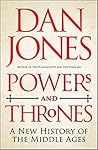
Wow- just, wow. What an achievement. To cram a thousand years of history into a book this size, while retaining all the important details and not coming across as a boring academic lecture, is an achievement. Five stars easily earned- an achievement
...more
"
“It is a feeling of relief, almost of pleasure, at knowing yourself at last genuinely down and out. You have talked so often of going to the dogs — and well, here are the dogs, and you have reached them, and you can stand it. It takes off a lot of anxiety.”
― Down and Out in Paris and London
“When I look back on all the worries, I remember the story of the old man who said on his deathbed that he had a lot of trouble in his life, most of which never happened.”—Winston Churchill”
― AWOL on the Appalachian Trail
“When you attempt to capture the highlights without burdening yourself with the tedium, the highlights lose the foundation that elevates them to the status of “highlight.”
― AWOL on the Appalachian Trail
“It does not do to dwell on dreams and forget to live.”
― Harry Potter and the Sorcerer's Stone
“It is worth saying something about the social position of beggars, for when one has consorted with them, and found that they are ordinary human beings, one cannot help being struck by the curious attitude that society takes towards them. People seem to feel that there is some essential difference between beggars and ordinary 'working' men. They are a race apart--outcasts, like criminals and prostitutes. Working men 'work', beggars do not 'work'; they are parasites, worthless in their very nature. It is taken for granted that a beggar does not 'earn' his living, as a bricklayer or a literary critic 'earns' his. He is a mere social excrescence, tolerated because we live in a humane age, but essentially despicable.
Yet if one looks closely one sees that there is no ESSENTIAL difference between a beggar's livelihood and that of numberless respectable people. Beggars do not work, it is said; but, then, what is WORK? A navvy works by swinging a pick. An accountant works by adding up figures. A beggar works by standing out of doors in all weathers and getting varicose veins, chronic bronchitis, etc. It is a trade like any other; quite useless, of course--but, then, many reputable trades are quite useless. And as a social type a beggar compares well with scores of others. He is honest compared with the sellers of most patent medicines, high-minded compared with a Sunday newspaper proprietor, amiable compared with a hire-purchase tout--in short, a parasite, but a fairly harmless parasite. He seldom extracts more than a bare living from the community, and, what should justify him according to our ethical ideas, he pays for it over and over in suffering. I do not think there is anything about a beggar that sets him in a different class from other people, or gives most modern men the right to despise him.
Then the question arises, Why are beggars despised?--for they are despised, universally. I believe it is for the simple reason that they fail to earn a decent living. In practice nobody cares whether work is useful or useless, productive or parasitic; the sole thing demanded is that it shall be profitable. In all the modem talk about energy, efficiency, social service and the rest of it, what meaning is there except 'Get money, get it legally, and get a lot of it'? Money has become the grand test of virtue. By this test beggars fail, and for this they are despised. If one could earn even ten pounds a week at begging, it would become a respectable profession immediately. A beggar, looked at realistically, is simply a businessman, getting his living, like other businessmen, in the way that comes to hand. He has not, more than most modem people, sold his honour; he has merely made the mistake of choosing a trade at which it is impossible to grow rich.”
― Down and Out in Paris and London
Goodreads Ireland
— 2206 members
— last activity Nov 13, 2026 04:20PM

Welcome to Goodreads Ireland, a bookgroup for people from, or just interested in Ireland and Irish literature. Please introduce yourself in the Introd ...more
Mark’s 2025 Year in Books
Take a look at Mark’s Year in Books, including some fun facts about their reading.
More friends…
Favorite Genres
Polls voted on by Mark
Lists liked by Mark