Jacob V.

Add friend
Sign in to Goodreads to learn more about Jacob.

https://www.goodreads.com/jacobverville

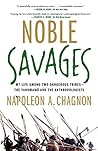
Noble Savages: My...
Rate this book
Clear rating

 
Straw Dogs: Thoug...
Rate this book
Clear rating

 
The Practical Ana...
Rate this book
Clear rating

progress: 
 
  (page 187 of 303)
Dec 19, 2024 11:42PM

 
See all 12 books that Jacob is reading…
Book cover for The Philokalia
Without anger a man cannot attain purity: he has to feel angry with all that is sown in him by the enemy. When Job felt this anger he reviled his enemies, calling them 'dishonourable men of no repute, lacking everything good, whom I would ...more
Loading...
“For this reason we should not try, through contempt or arrogant zeal, to attain this kind of contemplative knowledge prematurely; rather we should practice the commandments of Christ in due order and proceed undistracted through the various stages of contemplation previously discussed. Once we have purified the soul through patient endurance and with tears of fear and inward grief, and have reached the state of seeing the true nature of things, then - initiated spiritually by the angels - the intellect spontaneously attains this contemplative knowledge. But if a person is presumptuous and tries to reach the second stage before having reached the first, then not only will he fail to conform to God's purpose, but he will provoke many battles against himself, particularly through speculating about the nature of man, as we have learnt in the case of Adam. Those still subject to the passions gain nothing by attempting to act or think as if they were dispassionate: solid food is not good for babies, even though it is excellent for the mature (cf. Heb. 5:14). Rather they should exercise discrimination, yearning to act and think like the dispassionate, but holding back, as being unworthy. Yet when grace comes they should not reject it out of despair or laziness, neither should they presumptuously demand something prematurely, lest by seeking what has its proper time before that time has come, as St John Klimakos says, they fail to attain it in its proper time, and fall into delusion, perhaps beyond the help of man or the Scriptures.”
St. Peter of Damascus

“To give free rein to the senses is to shackle the soul, to shackle the senses is to liberate it.”
Theoleptos

“We should look on man with wonder, conscious that his intellect, being infinite, is the image of the invisible God; and that even if it is for a time limited by the body, as St Basil says, it can embrace all form, just as God's providence embraces the whole universe. For the intellect has the ability to transform itself into everything, and is dyed with the form of the object it apprehends. But when it is taken up into God, who is formless and imageless, it becomes formless and imageless itself. Then we should marvel at how the intellect can preserve any thought or idea, and how an earlier thought need not be modified by later thoughts, or a later thought injured by earlier ones. On the contrary, the mind like a treasure-house tirelessly stores all thoughts. And these thoughts, whether new or long held in store, the intellect when it wishes can express in language; yet although words are always coming from it, it is never exhausted.”
St. Peter of Damascus

“The greater one's purity, the more clearly one sees how much one sins; and the more one sins, the more benighted one is, even though one may appear to be pure. Again, the more knowledge one has, the more one thinks oneself ignorant; and the more one is ignorant of one's ignorance and of the shortcomings in one's spiritual knowledge, the more one thinks one knows. The more the spiritual contestant endures afflictions, the more he will defeat the enemy; and, lastly, the more one tries for one day to do something good, the more one is a debtor all the days of one's life, as St Mark has said; for even if the ability and desire to do good are one's own the grace to do it comes from God. It is only because of this grace that we are able to do anything good; when we do it, then, what have we to boast about?”
St. Peter of Damascus

“If this pious ardor which consumed the prince had its dangers, in that it quickly led to intolerance and persecution, yet it was not without grandeur; since the progress of civilization always follows evangelization.”
John Bagnell Bury, A History of the Eastern Roman Empire - Book I of III

220 Goodreads Librarians Group — 309439 members — last activity 0 minutes ago
Goodreads Librarians are volunteers who help ensure the accuracy of information about books and authors in the Goodreads' catalog. The Goodreads Libra ...more
53597 Seoul Book Club Hosted by Barry Welsh — 349 members — last activity Jan 07, 2026 11:12AM
This is a book club for discussing Korea-related books. Everyone is welcome.
126457 The Creative Writer's Toolbelt — 263 members — last activity Jan 21, 2024 12:17PM
The Creative Writers Toolbelt podcast gives you practical, accessible advice, with examples, that you can apply to your writing immediately. You can ...more
1211381 Seoul Film Society — 68 members — last activity Apr 05, 2023 10:46PM
Film-related book discussions
year in books
Barry W...
6,189 books | 1,809 friends

Annie S...
241 books | 23 friends

Joel
372 books | 35 friends

Fredric...
436 books | 1,152 friends

Dave Ga...
150 books | 51 friends

Matthew...
315 books | 26 friends

Damien ...
152 books | 74 friends

Don Baker
134 books | 28 friends

More friends…


Polls voted on by Jacob

Lists liked by Jacob