
Discover new books on Goodreads
Meet your next favorite book



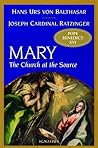
The purpose of this constant training in the naked faith Mary will need under the Cross is often insufficiently understood; people are astonished and embarrassed by the way in which Jesus treats his Mother, whom he addresses both in Cana
...more


“Maybe the knowledge is too great and maybe men are growing too small,’ said Lee. ‘Maybe, kneeling down to atoms, they’re becoming atom-sized in their souls. Maybe a specialist is only a coward afraid to look out of his little cage. And think what any specialist misses - the whole world over his fence.”
―
―
“I think perhaps Liza accepted the world as she accepted the Bible, with all of its paradoxes and its reverses. She did not like death but she knew it existed, and when it came it did not surprise her.
Samuel may have thought and played and philosophized about death, hut he did not really believe in it. His world did not have death as a member. He, and all around him, was immortal. When real death came it was an outrage, a denial of the immortality he deeply felt, and the one crack in his wall caused the whole structure to crash. I think he had always thought he could argue himself out of death. It was a personal opponent and one he could lick.
To Liza it was simply death—the thing promised and expected. She could go on and in her sorrow put a pot of beans in the oven, bake six pies, and plan to exactness how much food would be necessary properly to feed the funeral guests. And she could in her sorrow see that Samuel had a clean white shirt and that his black broadcloth was brushed and free of spots and his shoes blacked. Perhaps it takes these two kinds to make a good marriage, riveted with several kinds of strengths.”
― East of Eden
Samuel may have thought and played and philosophized about death, hut he did not really believe in it. His world did not have death as a member. He, and all around him, was immortal. When real death came it was an outrage, a denial of the immortality he deeply felt, and the one crack in his wall caused the whole structure to crash. I think he had always thought he could argue himself out of death. It was a personal opponent and one he could lick.
To Liza it was simply death—the thing promised and expected. She could go on and in her sorrow put a pot of beans in the oven, bake six pies, and plan to exactness how much food would be necessary properly to feed the funeral guests. And she could in her sorrow see that Samuel had a clean white shirt and that his black broadcloth was brushed and free of spots and his shoes blacked. Perhaps it takes these two kinds to make a good marriage, riveted with several kinds of strengths.”
― East of Eden

“The Spiritual life which is in God from all eternity, and which made the whole natural universe, is Zoe. Bios has, to be sure, a certain shadowy or symbolic resemblance to Zoe: but only the sort of resemblance there is between a photo and a place, or a statue which changed from being a carved stone to being a real man. And that is precisely what Christianity is about. This world is a great sculptor’s ship. We are the statues and there is a rumor going round the shop that some of us are some day going to come to life.”-C.S. Lewis”
―
―
“He wants them to learn to walk and must therefore take away His hand; and if only the will to walk is really there He is pleased even with their stumbles.”
― The Screwtape Letters
― The Screwtape Letters
“Give up yourself, and you will find your real self. Lose your life and you will save it. Submit to death, death of your ambitions and favorite wishes every day and death of your whole body in the end submit with ever fiber of your being, and you will find eternal life. Keep back nothing. Nothing that you have not given away will be really yours. Nothing in you that has not died will ever be raised from the dead. Look for yourself, and you will find in the long run only hatred, loneliness, despair, rage, ruin, and decay. But look for Christ and you will find Him, and with Him everything else thrown in.”
― Mere Christianity
― Mere Christianity

Zoe Clare’s 2025 Year in Books
Take a look at Zoe Clare’s Year in Books, including some fun facts about their reading.

801 books
|
30 friends

1,934 books
|
198 friends

1,419 books
|
124 friends

675 books
|
31 friends

2,172 books
|
81 friends

1,012 books
|
243 friends

660 books
|
36 friends

352 books
|
83 friends
More friends…
Favorite Genres
Polls voted on by Zoe Clare
Lists liked by Zoe Clare