
Discover new books on Goodreads
Meet your next favorite book




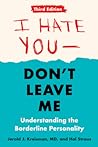

Keating explains that as children we all need an appropriate amount of power and control, affection and esteem, and security and survival for healthy psychological grounding. But as we mature, our tendency is to overidentify with one of
...more


“But, in the end, even you are flat. I just never reached your edge before. I came right up to it, and always turned away. I didn't want to push you—ask you questions you couldn't answer. I hid your edge even from myself. You were too important to me—helping me think through my problems, laughing with me, keeping me company through so many long hours. That's the real trick. It's not how convincing you are. In fact, the questions were always there to ask. It would have been easy. Where are the graduate students you always talk about? What is this experiment you have been working on for years? But I never did it. And that's the point. I hid the edge from myself. That's how this works. That's how addictive this is—this need to feel like there is always someone there, unconditionally. Someone to talk to. Someone who understands. To not have to do the work myself to make myself understand. Instead, I just kept on with this self-deception, pretending I had someone when I did not. I know the doctors who prescribed you to me meant well. They thought they were helping me through a dark time. But in the end, you aren't anything but a prosthesis. You can't replace real support.”
― The Mountain in the Sea
― The Mountain in the Sea
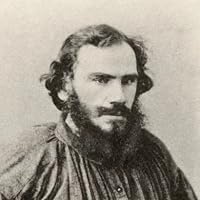
“No matter how convincing and irrefutable I felt my train of thoughts to be, as well as that otherwise ideas that has led us all to the conclusion that life is meaningless I still had some obscure doubts as to the validity of the final outcome of my deliberations.
It was expressed as follows: I, that is my reason, have acknowledged that life is a rational. If there is nothing higher than reason (and there is not, and nothing can prove that there is), then reason is the creator of life for me. Without reason I can have no life. How then can reason to deny life when it is the creator of it? Or looking at it another way: if there were no life my reason would not exist, which must mean that reason is the offspring of life. Life is everything. Reason is the fruit of life and yet this reason rejects life itself. I felt that something was not quite right here.
Life is a senseless evil, that is certain, I said to myself. Yet I have lived and still live, and so to humanity has lived and still lives. How can this be? Why do men live when it is possible not to live?”
― A Confession and Other Religious Writings
It was expressed as follows: I, that is my reason, have acknowledged that life is a rational. If there is nothing higher than reason (and there is not, and nothing can prove that there is), then reason is the creator of life for me. Without reason I can have no life. How then can reason to deny life when it is the creator of it? Or looking at it another way: if there were no life my reason would not exist, which must mean that reason is the offspring of life. Life is everything. Reason is the fruit of life and yet this reason rejects life itself. I felt that something was not quite right here.
Life is a senseless evil, that is certain, I said to myself. Yet I have lived and still live, and so to humanity has lived and still lives. How can this be? Why do men live when it is possible not to live?”
― A Confession and Other Religious Writings

“What happens when that recently triggered mood lingers? You’ve been in a bit of a funk since that day, and now you look around the room during a staff meeting and all you think of is that this person’s tie is hideous, and the nasally tone of your boss is worse than nails on a chalkboard.
At this point, you’re not just in a mood. You’re reflecting a temperament, a tendency toward the habitual expression of an emotion through certain
behaviors. A temperament is an emotional reaction with a refractory period that lasts from weeks to months.
Eventually, if you keep the refractory period of an emotion going for months and years, that tendency turns into a personality trait. At that point others will describe you as “bitter” or “resentful” or “angry” or “judgmental.”
Our personality traits, then, are frequently based in our past emotions. Most of the time, personality (how we think, act, and feel) is anchored in the past. So to change our personalities, we have to change the emotions that we memorize. We have to move out of the past.”
― Breaking the Habit of Being Yourself / Life Leverage / How to be F*cking Awesome / Mindset with Muscle
At this point, you’re not just in a mood. You’re reflecting a temperament, a tendency toward the habitual expression of an emotion through certain
behaviors. A temperament is an emotional reaction with a refractory period that lasts from weeks to months.
Eventually, if you keep the refractory period of an emotion going for months and years, that tendency turns into a personality trait. At that point others will describe you as “bitter” or “resentful” or “angry” or “judgmental.”
Our personality traits, then, are frequently based in our past emotions. Most of the time, personality (how we think, act, and feel) is anchored in the past. So to change our personalities, we have to change the emotions that we memorize. We have to move out of the past.”
― Breaking the Habit of Being Yourself / Life Leverage / How to be F*cking Awesome / Mindset with Muscle

“Indeed, just as possession depends on the discontinuity of the series (real or virtual), and on the choice of a privileged term within it, so sexual perversion is founded on the inability, to apprehend the other qua, object of desire in his, or her unique totality, as a person, to grasp the other in any, but a discontinuous way: the other is transformed into the paradigm of various eroticized parts of the body, a single one of which becomes the focus of objectification. A particular woman is no longer a woman, but merely a sex, breasts, belly, thighs, voice, and face – and preferably just one of them. She thus becomes a constituent 'object' in a series whose different terms are gazetted by desire, and whose real referent is by no means the loved person but, rather, the subject himself, collecting and eroticizing himself, and turning the relationship of love into a discourse directed towards him alone.”
― The System of Objects
― The System of Objects

“Trauma isn't caused by death but by life. One can die without knowing it.”
― What Dreams May Come
― What Dreams May Come
 Goodreads Librarians Group
— 345884 members
— last activity 5 minutes ago
Goodreads Librarians Group
— 345884 members
— last activity 5 minutes ago
Goodreads Librarians are volunteers who help ensure the accuracy of information about books and authors in the Goodreads' catalog. The Goodreads Libra ...more

Jeremiah’s 2025 Year in Books
Take a look at Jeremiah’s Year in Books, including some fun facts about their reading.

644 books
|
123 friends

623 books
|
60 friends

2,467 books
|
516 friends

316 books
|
54 friends

26 books
|
45 friends

1,368 books
|
3,031 friends

0 books
|
110 friends

159 books
|
24 friends
More friends…


Favorite Genres
Polls voted on by Jeremiah
Lists liked by Jeremiah