
Discover new books on Goodreads
Meet your next favorite book



“It is our suffering that brings us together. It is not love. Love does not obey the mind, and turns to hate when forced. The bond that binds us is beyond choice. We are brothers. We are brothers in what we share. In pain, which each of us must suffer alone, in hunger, in poverty, in hope, we know our brotherhood. We know it, because we have had to learn it. We know that there is no help for us but from one another, that no hand will save us if we do not reach out our hand. And the hand that you reach out is empty, as mine is. You have nothing. You possess nothing. You own nothing. You are free. All you have is what you are, and what you give.”
― The Dispossessed: An Ambiguous Utopia
― The Dispossessed: An Ambiguous Utopia
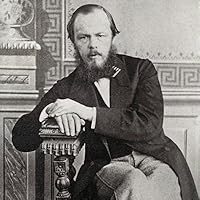
“And I proclaim that Shakespeare and Raphael are higher than the emancipation of the serfs, higher than nationality, higher than socialism, higher than the younger generation, higher than chemistry, higher than almost all mankind, for they are already the fruit, the real fruit of all mankind, and maybe the highest fruit there ever may be! A form of beauty already achieved, without the achievement of which I might not even consent to live...”
― Demons
― Demons
“For we each of us deserve everything, every luxury that was ever piled in the tombs of the dead kings, and we each of us deserve nothing, not a mouthful of bread in hunger. Have we not eaten while another starved? Will you punish us for that? Will you reward us for the virtue of starving while others ate? No man earns punishment, no man earns reward. Free your mind of the idea of deserving, the idea of earning, and you will begin to be able to think.”
― The Dispossessed: An Ambiguous Utopia
― The Dispossessed: An Ambiguous Utopia

“…man never regards what he possesses as so much his own, as what he does; and the labourer who tends a garden is perhaps in a truer sense its owner, than the listless voluptuary who enjoys its fruits…In view of this consideration, it seems as if all peasants and craftsman might be elevated into artists; that is, men who love their labour for its own sake, improve it by their own plastic genius and inventive skill, and thereby cultivate their intellect, ennoble their character, and exalt and refine their pleasures. And so humanity would be ennobled by the very things which now, though beautiful in themselves, so often serve to degrade it…But, still, freedom is undoubtedly the indispensable condition, without which even the pursuits most congenial to individual human nature, can never succeed in producing such salutary influences. Whatever does not spring from a man’s free choice, or is only the result of instruction and guidance, does not enter into his very being, but remains alien to his true nature; he does not perform it with truly human energies, but merely with mechanical exactness…
…we may admire what he does, but we despise what he is.”
―
…we may admire what he does, but we despise what he is.”
―

“I hate the indifferent. I believe that living means taking sides. Those who really live cannot help being a citizen and a partisan. Indifference and apathy are parasitism, perversion, not life. That is why I hate the indifferent.
The indifference is the deadweight of history. The indifference operates with great power on history. The indifference operates passively, but it operates. It is fate, that which cannot be counted on. It twists programs and ruins the best-conceived plans. It is the raw material that ruins intelligence. That what happens, the evil that weighs upon all, happens because the human mass abdicates to their will; allows laws to be promulgated that only the revolt could nullify, and leaves men that only a mutiny will be able to overthrow to achieve the power. The mass ignores because it is careless and then it seems like it is the product of fate that runs over everything and everyone: the one who consents as well as the one who dissents; the one who knew as well as the one who didn’t know; the active as well as the indifferent. Some whimper piously, others curse obscenely, but nobody, or very few ask themselves: If I had tried to impose my will, would this have happened?
I also hate the indifferent because of that: because their whimpering of eternally innocent ones annoys me. I make each one liable: how they have tackled with the task that life has given and gives them every day, what have they done, and especially, what they have not done. And I feel I have the right to be inexorable and not squander my compassion, of not sharing my tears with them.
I am a partisan, I am alive, I feel the pulse of the activity of the future city that those on my side are building is alive in their conscience. And in it, the social chain does not rest on a few; nothing of what happens in it is a matter of luck, nor the product of fate, but the intelligent work of the citizens. Nobody in it is looking from the window of the sacrifice and the drain of a few. Alive, I am a partisan. That is why I hate the ones that don’t take sides, I hate the indifferent.”
―
The indifference is the deadweight of history. The indifference operates with great power on history. The indifference operates passively, but it operates. It is fate, that which cannot be counted on. It twists programs and ruins the best-conceived plans. It is the raw material that ruins intelligence. That what happens, the evil that weighs upon all, happens because the human mass abdicates to their will; allows laws to be promulgated that only the revolt could nullify, and leaves men that only a mutiny will be able to overthrow to achieve the power. The mass ignores because it is careless and then it seems like it is the product of fate that runs over everything and everyone: the one who consents as well as the one who dissents; the one who knew as well as the one who didn’t know; the active as well as the indifferent. Some whimper piously, others curse obscenely, but nobody, or very few ask themselves: If I had tried to impose my will, would this have happened?
I also hate the indifferent because of that: because their whimpering of eternally innocent ones annoys me. I make each one liable: how they have tackled with the task that life has given and gives them every day, what have they done, and especially, what they have not done. And I feel I have the right to be inexorable and not squander my compassion, of not sharing my tears with them.
I am a partisan, I am alive, I feel the pulse of the activity of the future city that those on my side are building is alive in their conscience. And in it, the social chain does not rest on a few; nothing of what happens in it is a matter of luck, nor the product of fate, but the intelligent work of the citizens. Nobody in it is looking from the window of the sacrifice and the drain of a few. Alive, I am a partisan. That is why I hate the ones that don’t take sides, I hate the indifferent.”
―

Alaa Eddine’s 2025 Year in Books
Take a look at Alaa Eddine’s Year in Books, including some fun facts about their reading.

139 books
|
46 friends

104 books
|
127 friends

187 books
|
16 friends

575 books
|
13 friends

212 books
|
17 friends

176 books
|
100 friends

822 books
|
52 friends

283 books
|
179 friends
More friends…


Favorite Genres
Polls voted on by Alaa Eddine
Lists liked by Alaa Eddine