This will prevent Tom from sending you messages, friend request or from viewing your profile. They will not be notified. Comments on discussion boards from them will be hidden by default.
In Celtic wisdom the sacred is as present on earth as it is in heaven, as immanent as it is transcendent, as human as it is divine, as physical as it is spiritual. The sacred can be breathed in, tasted, touched, heard, and seen as much inIn Celtic wisdom the sacred is as present on earth as it is in heaven, as immanent as it is transcendent, as human as it is divine, as physical as it is spiritual. The sacred can be breathed in, tasted, touched, heard, and seen as much in the body of the earth and the body of another living being as in the body of religion. It is the true essence of all life....more
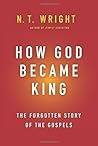
“Power, after all, is frequently held and wielded not by elected officials and politicians, but by well-positioned lobbying groups, on the one hand, and the media, on the other. They will say in their defense that their mandate—sometimes given theoretical justification, more often just quietly assumed—is to hold the elected officials to account (the media) and to remind them of the real needs and interests of their constituents (the lobbyists). There is no doubt a grain of truth in that, but it is almost completely hidden under a ton of unscrutinized agendas. Official oppositions sometimes provide genuine critique, but often they don’t. Journalists sometimes do, but often simply reflect their own equally distorted agendas. We should not assume that our systems are automatically the best we could possibly have. This is where those who believe in the victory of the cross have something to say—quite literally. As Christians, our role in society is not to wring our hands at the corruption of power or simply to pick a candidate that supports one or another supposedly Christian policy. The Christian role, as part of naming the name of the crucified and risen Jesus on territory presently occupied by idols, is to speak the truth to power and especially to speak up for those with no power at all. —The Day the Revolution Began 400”
―
N.T. Wright,
On Earth as in Heaven: Daily Wisdom for Twenty-First Century Christians
“To an unusual extent, early American politics was played out in print—one reason the founding generation of politicians was so literate. Publications were avowedly partisan and made no pretense of objectivity. It was a golden age for wielding words as rapier-sharp political weapons. The penchant for writing essays under Roman pseudonyms, designed to underscore the writer’s republican virtues, lent a special savagery to journalism, freeing authors from any obligation to tone down their rhetoric.”
―
Ron Chernow,
Washington: A Life
“America tells a story about itself. It’s a story based on freedom, equality, opportunity, and fairness. These imagined values spin a narrative that America is the place where the divine story uniquely comes together with the human story and unfolds as divine providence. We could call it the myth of American exceptionalism. Together, these notions serve as a location for the American dream. This false narrative has become, to many people, a real place. But the place they imagine is formless. Western minds think of “the land of the free” in terms of all land: a vague place, a nostalgic and fuzzy landscape. America, according to the American dream, is the place where all these wonderful traits are sewn into the national story—and not in any one place, but rather “from sea to shining sea.” When Americans think of land in the abstract realm, it becomes universalized, meaning “all land.” But all land, which is concretely inconceivable, means no land. So land becomes not a real place but an abstract reality. American exceptionalism—and its progeny, the American dream—contains an ethic of extreme competition, to the point where Americans believe we must fight (read “kill others”) to be free and retain our divinely bestowed values. Native Americans were killed by the millions to create this myth. And yet the greatest leaders of all time—Jesus, Buddha, Guru Nanak, Black Kettle, Mahatma Gandhi, Dorothy Day, Martin Luther King Jr., and others—call us to peace through very different narratives. Each had the ability to observe the worst of life but tell a story that makes us better. Each told a better story. How do we hear a better story to replace the half-truths of history? We listen to people with a different view who tell another side of history. The fact remains that we live our lives according to our myths—our narratives. We find what fits in such a myth, and we make that part of our own personal story. We leave out the histories that don’t fit our myths, like genocide and ecocide. But when we leave out any part of the story, we distort reality. America has taught people to live against each other and against nature and has justified and even glorified these actions. We have a long way to go to counteract the American myth and reverse the tide. We have a long way to go to accept our reality.”
―
Randy Woodley,
Becoming Rooted: One Hundred Days of Reconnecting with Sacred Earth
Book/Kindle Worms
— 10 members
— last activity Nov 14, 2016 07:44AM
Hey Ladies and Gentlemen,
This is our brand new Goodreads book club. I don't know yet, what we can do with it, but I'm gonna explore a bit :)
Until Hey Ladies and Gentlemen,
This is our brand new Goodreads book club. I don't know yet, what we can do with it, but I'm gonna explore a bit :)
Until then, stay tooned on our Facebook page :)...more









 Book/Kindle Worms
— 10 members
— last activity Nov 14, 2016 07:44AM
Book/Kindle Worms
— 10 members
— last activity Nov 14, 2016 07:44AM



