
Discover new books on Goodreads
Meet your next favorite book

Sloan
https://www.goodreads.com/sloanstewart




The prisoner of Auschwitz, in the first phase of shock, did not fear death. Even the gas chambers lost their horrors for him after the first few days—after all, they spared him the act of committing suicide.



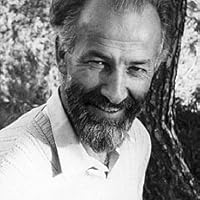
“The world-picture, with man in it, is flattened and neutralized, stripped of all sacred or spiritual qualities, of all hierarchical differentiation, and spread out before the human observer like a blank chart on which nothing can be registered except what is capable of being measured. For Newton, the celestial spheres are a machine, for Descartes, animals are machines, for Hobbes, society is a machine, for La Mettrie, the human body is a machine, eventually for Pavlov and his successors human behaviour is like that of a machine. There is nothing that is not reduced either to phenomenon (fact) or to mathematical hypothesis (or, in less polite language, fiction). The whole physical world is regarded as no more than so much inanimate dead matter whose chemical changes are mechanical processes based upon the so-called law of the conservation of mass. Everything, including the mind of man," is aligned on the model of a machine constructed out of dissections, analyses and calculations.”
― The Rape of Man & Nature: An Inquiry Into the Origins and Consequences of Modern Science
― The Rape of Man & Nature: An Inquiry Into the Origins and Consequences of Modern Science
“Modern science, then, ignoring the sacred aspect of nature as a condition of its own genesis and development, tries to fill the vacuum it has created by producing mathematical schemes whose only function is to help us to manipulate and ‘dominate’ matter on its own plane, which is that of quantity alone. The physical world, regarded as so much dead stuff, becomes the scene of man’s uncurbed exploitation for purely practical, utilitarian or acquisitive ends. It is treated as a de-incarnate world of phenomena that are without interest except in so far as they subserve statistics or fill test-tubes in order to satisfy the curiosity of the scientific mind, or are materially useful to man considered as a two-legged animal with no destiny beyond his earthly existence.”
― The Rape of Man & Nature: An Inquiry Into the Origins and Consequences of Modern Science
― The Rape of Man & Nature: An Inquiry Into the Origins and Consequences of Modern Science
“The result has been that theologians have largely failed to make any radical or effective critique of scientific epistemology, to elucidate the consequences of making the reason the supreme and sole instrument of knowledge, and to explain why this has meant a progressive falsification of our understanding both of ourselves and of the world about us. In view of this failure it is not surprising that so many students of our universities end up with no better ideology than some form of Marxist-Leninism, itself a translation into political terms of some of the most banal aspects of nineteenth century bourgeois scientific theory. When this same hotch-potch of rationalist-materialist constructs is taken over by—or, rather, takes possession of—the masses, then society is turned into a prison-camp in which everything that gives human life its value and dignity is systematically attacked and lacerated.”
― The Rape of Man & Nature: An Inquiry Into the Origins and Consequences of Modern Science
― The Rape of Man & Nature: An Inquiry Into the Origins and Consequences of Modern Science
“If efficient technical means for achieving something exist or can be produced, then these means must be put into action irrespective of what this thing is or of what the cost may be in human terms. Even those who were at first the victims of these processes—the industrial proletariat—have been seduced by their glamour and regard them as the magical talisman that will bring them all they need in life. As for the elite of our technocracy—those who manipulate its inexhaustible gadgetry of machines, devices, techniques, the computers and cybernated systems, the simulation and gaming processes, the market and motivational research, the immense codifications necessary to sustain and enlarge their empire of sterilized artificiality—their prestige is virtually unassailable because on them the whole edifice depends for its survival and prosperity. Moreover, if they are readers of Teilhard de Chardin, they can add ideological grist to their pragmatic mill, for he will have taught them that it is through the consolidation of the ‘noosphere’, that level of existence permanently dominated by the mind of man and its planning, that our species will execute its God-given task and fulfill its destiny.”
― The Rape of Man & Nature: An Inquiry Into the Origins and Consequences of Modern Science
― The Rape of Man & Nature: An Inquiry Into the Origins and Consequences of Modern Science
“He has more or less eliminated the idea of God-manhood from his mind. Having rejected the understanding that his life and activity are significant only in so far as they incarnate, reflect and radiate that transcendent spiritual reality which is the ground and centre of his own being, he is condemned to believe that he is the autocratic and omnipotent ruler of his own affairs and of the world about him, which it is his right and duty to subdue, organize, investigate and exploit to serve his profane mental curiosity or his acquisitive material appetites. The deification of man as a fallen mortal entity has led, as we are only too well aware, to the most extreme forms of cruelty and rapacity, forms which deny the unique and absolute value of the human person and of every other created reality. The assertion that man is merely human has resulted in a dehumanization possibly without parallel in the history of the world.”
―
―
 Goodreads Librarians Group
— 343974 members
— last activity 0 minutes ago
Goodreads Librarians Group
— 343974 members
— last activity 0 minutes ago
Goodreads Librarians are volunteers who help ensure the accuracy of information about books and authors in the Goodreads' catalog. The Goodreads Libra ...more



Sloan’s 2025 Year in Books
Take a look at Sloan’s Year in Books, including some fun facts about their reading.

382 books
|
4 friends

575 books
|
55 friends

457 books
|
181 friends

307 books
|
96 friends

253 books
|
85 friends

183 books
|
9 friends


Favorite Genres
Polls voted on by Sloan
Lists liked by Sloan