
Discover new books on Goodreads
Meet your next favorite book


to-read
(321)
currently-reading (1)
read (154)
did-not-finish (0)
fiction (106)
sociology (63)
philosophy (57)
politics (36)
psychology (31)
anthropology (26)
economics (20)
spirituality (18)
currently-reading (1)
read (154)
did-not-finish (0)
fiction (106)
sociology (63)
philosophy (57)
politics (36)
psychology (31)
anthropology (26)
economics (20)
spirituality (18)
history
(17)
natural-sciences (13)
science (13)
political-science (12)
psychoanalysis (9)
religion (9)
anarchism (7)
technology (7)
feminism (6)
linguistics (6)
biographies (5)
communication (5)
natural-sciences (13)
science (13)
political-science (12)
psychoanalysis (9)
religion (9)
anarchism (7)
technology (7)
feminism (6)
linguistics (6)
biographies (5)
communication (5)
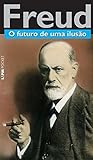
Nesse texto, Freud propõe uma teoria inovadora do aparelho psíquico, bem como os fundamentos da clínica psicanalítica, única capaz de revelar as formações, tramas e expressões do inconsciente, além da sintomatologia e do sofrimento que
...more


“It’s better to trust people than to doubt them.' She said that people aren’t born with kind hearts. When we’re born all we have are desires for food and material things. Selfish instincts, I guess. But she said that kindness is something that grows inside of each person’s body but it’s up to us to nurture that kindness in our hearts. That’s why kindness is different for each person. 'We’re all born with selfish desires, so we can all relate to those feelings in others. But kindness is something made individually by each person. So it’s easy to misunderstand when others are trying to be kind to you.' Mom taught me that people’s differences are something to celebrate. When I thought of all the different shapes of human kindness -- imagining them as round or square I got really excited… 'But Tohru…Tohru, believe in people. Doubting is easy -- anyone can do it. Tohru, be someone who can believe. I’m sure that will be your strength.”
― Fruits Basket: The Complete Collection
― Fruits Basket: The Complete Collection
“My mom said that when you become a parent you understand for the first time what a parent feels. But…but what you really need to understand what you really shouldn’t forget is what you felt like as a child. The first time you did a somersault, the first time someone got really mad at you…If you can really remember how you felt when you were a child even when you’re an adult or a parent, then you can understand each other. Even if it’s not 100% you can meet each other half-way…she said. Because thinking that way reminds you that life is fun.”
― Fruits Basket: The Complete Collection
― Fruits Basket: The Complete Collection

“[L]asting love is something a person has to decide to experience. Lifelong monogamous devotion is just not natural—not for women even, and emphatically not for men. It requires what, for lack of a better term, we can call an act of will. . . . This isn't to say that a young man can't hope to be seized by love. . . . But whether the sheer fury of a man's feelings accurately gauges their likely endurance is another question. The ardor will surely fade, sooner or later, and the marriage will then live or die on respect, practical compatibility, simple affection, and (these days, especially) determination. With the help of these things, something worthy of the label 'love' can last until death. But it will be a different kind of love from the kind that began the marriage. Will it be a richer love, a deeper love, a more spiritual love? Opinions vary. But it's certainly a more impressive love.”
― The Moral Animal: Why We Are the Way We Are - The New Science of Evolutionary Psychology
― The Moral Animal: Why We Are the Way We Are - The New Science of Evolutionary Psychology

“Os Estados Unidos e a Índia são profundamente diferentes entre si — na cultura, na tecnologia, na economia, na composição étnica. Apesar disso, muitas gerações atrás, havia diversos paralelos entre essas duas grandes terras férteis e cobiçadas, ambas protegidas por oceanos e governadas por britânicos. Tanto os Estados Unidos quanto a Índia adotavam hierarquias sociais e mantinham um grande fosso de distância entre quem estava na base e quem estava no topo. Os dois países foram conquistados por povos ditos arianos, chegando, num caso, pelo oceano Atlântico, e, no outro, pelo norte. Os considerados inferiores em cada país serviam aos considerados superiores. O país mais novo, os Estados Unidos, se tornaria a democracia mais poderosa do mundo. O país mais antigo, a Índia, a mais populosa. Suas respectivas hierarquias são profundamente diferentes. Apesar disso, como se operassem com o mesmo manual de instruções, traduzido para se adequar a suas diferentes culturas, esses dois países adotaram métodos similares para manter rígidos protocolos e linhas de demarcação. Ambos mantinham sua casta dominante separada, à parte e acima dos considerados inferiores. Ambos exilaram seus povos indígenas — os adivasis na Índia, os americanos nativos nos Estados Unidos — para terras distantes e margens invisíveis da sociedade. Ambos criaram um emaranhado de leis para confinar os grupos de status mais baixo — os dalits na Índia e os afro-americanos nos Estados Unidos — à base inferior, usando o terror e a força para mantê-los ali. “Talvez somente os judeus tenham uma história de sofrimentos por discriminação tão longa quanto a dos dalits”, escreveu o jornalista V. T. Rajshekar. “Mas, quando consideramos a natureza dos sofrimentos suportados pelos dalits, apenas o paralelo afro-americano de escravização, segregação e assimilação forçada é que vem à mente.”
― Casta: As origens de nosso mal-estar
― Casta: As origens de nosso mal-estar

“We are all connected; To each other, biologically. To the earth, chemically. To the rest of the universe atomically.”
―
―

Vinicius’s 2025 Year in Books
Take a look at Vinicius’s Year in Books, including some fun facts about their reading.

38 books
|
2 friends

171 books
|
51 friends

7 books
|
45 friends

62 books
|
194 friends

55 books
|
180 friends

148 books
|
148 friends

1 book
|
134 friends

69 books
|
94 friends
More friends…


Favorite Genres
Polls voted on by Vinicius
Lists liked by Vinicius