
Discover new books on Goodreads
Meet your next favorite book


“Or is it your reputation that's bothering you? But look at how soon we're all forgotten. The abyss of endless time that swallows it all. The emptiness of those applauding hands. The people who praise us; how capricious they are, how arbitrary. And the tiny region it takes place. The whole earth a point in space - and most of it uninhabited.”
― Meditations
― Meditations

“In our time, political speech and writing are largely the defense of the indefensible. Things like the continuance of British rule in India, the Russian purges and deportations, the dropping of atom bombs on Japan, can indeed be defended, but only by arguments which are too brutal for most people to face, and which do not square with the professed aims of political parties. Thus political language has to consist largely of euphemism, question-begging and sheer cloudy vagueness. Defenseless villages are bombarded from the air, the inhabitants driven out into the countryside, the cattle machine-gunned, the huts set on fire with incendiary bullets: this is called pacification. Millions of peasants are robbed of their farms and sent trudging along the roads with no more than they can carry: this is called transfer of population or rectification of frontiers. People are imprisoned for years without trial, or shot in the back of the neck or sent to die of scurvy in Arctic lumber camps: this is called elimination of unreliable elements.”
― A Collection of Essays
― A Collection of Essays
“Here one comes upon an all-important English trait: the respect for constituitionalism and legality, the belief in 'the law' as something above the state and above the individual, something which is cruel and stupid, of course, but at any rate incorruptible.
It is not that anyone imagines the law to be just. Everyone knows that there is one law for the rich and another for the poor. But no one accepts the implications of this, everyone takes for granted that the law, such as it is, will be respected, and feels a sense of outrage when it is not. Remarks like 'They can't run me in; I haven't done anything wrong', or 'They can't do that; it's against the law', are part of the atmosphere of England. The professed enemies of society have this feeling as strongly as anyone else. One sees it in prison-books like Wilfred Macartney's Walls Have Mouths or Jim Phelan's Jail Journey, in the solemn idiocies that take places at the trials of conscientious objectors, in letters to the papers from eminent Marxist professors, pointing out that this or that is a 'miscarriage of British justice'. Everyone believes in his heart that the law can be, ought to be, and, on the whole, will be impartially administered. The totalitarian idea that there is no such thing as law, there is only power, has never taken root. Even the intelligentsia have only accepted it in theory.
An illusion can become a half-truth, a mask can alter the expression of a face. The familiar arguments to the effect that democracy is 'just the same as' or 'just as bad as' totalitarianism never take account of this fact. All such arguments boil down to saying that half a loaf is the same as no bread. In England such concepts as justice, liberty and objective truth are still believed in. They may be illusions, but they are powerful illusions. The belief in them influences conduct,national life is different because of them. In proof of which, look about you. Where are the rubber truncheons, where is the caster oil?
The sword is still in the scabbard, and while it stays corruption cannot go beyond a certain point. The English electoral system, for instance, is an all but open fraud. In a dozen obvious ways it is gerrymandered in the interest of the moneyed class. But until some deep change has occurred in the public mind, it cannot become completely corrupt. You do not arrive at the polling booth to find men with revolvers telling you which way to vote, nor are the votes miscounted, nor is there any direct bribery. Even hypocrisy is powerful safeguard. The hanging judge, that evil old man in scarlet robe and horse-hair wig,whom nothing short of dynamite will ever teach what century he is living in, but who will at any rate interpret the law according to the books and will in no circumstances take a money bribe,is one of the symbolic figures of England. He is a symbol of the strange mixture of reality and illusion, democracy and privilege, humbug and decency, the subtle network of compromises, by which the nation keeps itself in its familiar shape.”
― Why I Write
It is not that anyone imagines the law to be just. Everyone knows that there is one law for the rich and another for the poor. But no one accepts the implications of this, everyone takes for granted that the law, such as it is, will be respected, and feels a sense of outrage when it is not. Remarks like 'They can't run me in; I haven't done anything wrong', or 'They can't do that; it's against the law', are part of the atmosphere of England. The professed enemies of society have this feeling as strongly as anyone else. One sees it in prison-books like Wilfred Macartney's Walls Have Mouths or Jim Phelan's Jail Journey, in the solemn idiocies that take places at the trials of conscientious objectors, in letters to the papers from eminent Marxist professors, pointing out that this or that is a 'miscarriage of British justice'. Everyone believes in his heart that the law can be, ought to be, and, on the whole, will be impartially administered. The totalitarian idea that there is no such thing as law, there is only power, has never taken root. Even the intelligentsia have only accepted it in theory.
An illusion can become a half-truth, a mask can alter the expression of a face. The familiar arguments to the effect that democracy is 'just the same as' or 'just as bad as' totalitarianism never take account of this fact. All such arguments boil down to saying that half a loaf is the same as no bread. In England such concepts as justice, liberty and objective truth are still believed in. They may be illusions, but they are powerful illusions. The belief in them influences conduct,national life is different because of them. In proof of which, look about you. Where are the rubber truncheons, where is the caster oil?
The sword is still in the scabbard, and while it stays corruption cannot go beyond a certain point. The English electoral system, for instance, is an all but open fraud. In a dozen obvious ways it is gerrymandered in the interest of the moneyed class. But until some deep change has occurred in the public mind, it cannot become completely corrupt. You do not arrive at the polling booth to find men with revolvers telling you which way to vote, nor are the votes miscounted, nor is there any direct bribery. Even hypocrisy is powerful safeguard. The hanging judge, that evil old man in scarlet robe and horse-hair wig,whom nothing short of dynamite will ever teach what century he is living in, but who will at any rate interpret the law according to the books and will in no circumstances take a money bribe,is one of the symbolic figures of England. He is a symbol of the strange mixture of reality and illusion, democracy and privilege, humbug and decency, the subtle network of compromises, by which the nation keeps itself in its familiar shape.”
― Why I Write
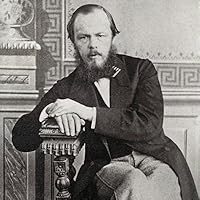
“To go wrong in one's own way is better than to go right in someone else's.”
― Crime and Punishment
― Crime and Punishment
“Do not waste what remains of your life in speculating about your neighbors, unless with a view to some mutual benefit. To wonder what so-and-so is doing and why, or what he is saying, or thinking, or scheming—in a word, anything that distracts you from fidelity to the ruler within you—means a loss of opportunity for some other task.”
―
―

Kalpesh’s 2025 Year in Books
Take a look at Kalpesh’s Year in Books, including some fun facts about their reading.

3 books
|
79 friends

1 book
|
85 friends

4 books
|
94 friends

6 books
|
71 friends

53 books
|
105 friends

16 books
|
83 friends

2 books
|
53 friends

4 books
|
92 friends
More friends…


Favorite Genres
Polls voted on by Kalpesh
Lists liked by Kalpesh