
 Sign in with Facebook



Josephus FromPlacitas
is currently reading
progress:
(page 64 of 496)
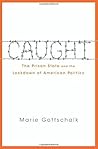
"I'm moving through this slowly, but it seems like a really important and thorough analysis. The examples of formalized inhumanity are harrowing, but it seems like a useful tool for future prison reform and prison abolition movement planners. It also seems extra urgent because I think we thoughtlessly tend to treat mass incarceration as the result of a single root cause, which limits our ability to fight it." — Sep 16, 2015 10:27AM
"I'm moving through this slowly, but it seems like a really important and thorough analysis. The examples of formalized inhumanity are harrowing, but it seems like a useful tool for future prison reform and prison abolition movement planners. It also seems extra urgent because I think we thoughtlessly tend to treat mass incarceration as the result of a single root cause, which limits our ability to fight it." — Sep 16, 2015 10:27AM
progress:
(page 25 of 200)
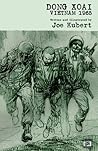
"Makes a John Wayne movie look like Chomsky. They clearly teach fantastic figure drawing and drafting at the Joe Kubert School, but the Political History department must be a ghost town." — Feb 23, 2015 07:44AM
"Makes a John Wayne movie look like Chomsky. They clearly teach fantastic figure drawing and drafting at the Joe Kubert School, but the Political History department must be a ghost town." — Feb 23, 2015 07:44AM


“The science, the art, the jurisprudence, the chief political and social theories, of the modern world have grown out of Greece and Rome—not by favour of, but in the teeth of, the fundamental teachings of early Christianity, to which science, art, and any serious occupation with the things of this world were alike despicable.”
― Agnosticism and Christianity and Other Essays
― Agnosticism and Christianity and Other Essays

“To speak behind others' backs is the ventilator of the heart.”
― Embroideries
― Embroideries

“I know of no American who starts from a higher level of aspiration than the journalist. . . . He plans to be both an artist and a moralist -- a master of lovely words and merchant of sound ideas. He ends, commonly, as the most depressing jackass of his community -- that is, if his career goes on to what is called a success.”
― Prejudices: First Series
― Prejudices: First Series

“The religion of one age is the literary entertainment of the next.”
―
―

“There has never been a just [war], never an honorable one--on the part of the instigator of the war. I can see a million years ahead, and this rule will never change in so many as half a dozen instances. The loud little handful--as usual--will shout for the war. The pulpit will--warily and cautiously--object--at first; the great, big, dull bulk of the nation will rub its sleepy eyes and try to make out why there should be a war, and will say, earnestly and indignantly, 'It is unjust and dishonorable, and there is no necessity for it.' Then the handful will shout louder. A few fair men on the other side will argue and reason against the war with speech and pen, and at first will have a hearing and be applauded; but it will not last long; those others will outshout them, and presently the anti-war audiences will thin out and lose popularity. Before long you will see this curious thing: the speakers stoned from the platform, and free speech strangled by hordes of furious men who in their secret hearts are still at one with those stoned speakers--as earlier--but do not dare say so. And now the whole nation--pulpit and all--will take up the war-cry, and shout itself hoarse, and mob any honest man who ventures to open his mouth; and presently such mouths will cease to open. Next the statesmen will invent cheap lies, putting the blame upon the nation that is attacked, and every man will be glad of those conscience-soothing falsities, and will diligently study them, and refuse to examine any refutations of them; and thus he will by and by convince himself the war is just, and will thank God for the better sleep he enjoys after this process of grotesque self-deception.”
― The Mysterious Stranger and Other Stories
― The Mysterious Stranger and Other Stories

Josephus’s 2025 Year in Books
Take a look at Josephus’s Year in Books, including some fun facts about their reading.

412 books
|
398 friends

227 books
|
25 friends

73 books
|
135 friends

1,020 books
|
193 friends

1,200 books
|
81 friends

25 books
|
418 friends

1,015 books
|
49 friends

748 books
|
97 friends
More friends…
Polls voted on by Josephus
Lists liked by Josephus
