
Discover new books on Goodreads
Meet your next favorite book
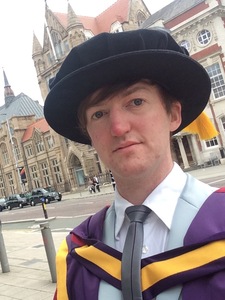
Jude Nonesuch
https://www.goodreads.com/judenonesuch





“I had never thought words erotic. Sometimes I really do like to talk more than fuck. Sentences. Buckets of this buckets of that and then buckets of this again. The trouble with words is that you can really talk yourself into a corner. Whereas you can’t fuck yourself into a corner.”
“That’s a man talking,” muttered Hana.”
― The English Patient
“That’s a man talking,” muttered Hana.”
― The English Patient
“It is true that snobisme may be urged against them; but it is at least snobisme in its most dynamic form, with a great deal of sound sense and energy behind it; and they are stricter with themselves than with any outsider.”
―
―
“Of course, we have never, as Imagists, claimed to have invented the moon.”
―
―

“The number of persons or institutions by whom the existence of gay people—never mind the existence of more gay people—is treated as a precious desideratum, a needed condition of life, is small, even compared to those who may wish for the dignified treatment of any gay people who happen already to exist. Advice on how to make sure your kids turn out gay, not to mention your students, your parishioners, your therapy clients, or your military subordinates, is less ubiquitous than you might think.”
―
―
“Then, on a left-hand curve 2.8 kilometres from the finish line, Marco delivers another cutting acceleration. Tonkov is immediately out of the saddle. The gap reaches two lengths. Tonkov fights his way back and is on Marco’s wheel when Marco, who is still standing on the pedals, accelerates again. Suddenly Tonkov is no longer there. Afterwards Tonkov would say he could no longer feel his hands and feet. ‘I had to stop. I lost his slipstream. I couldn’t go on.’ Marco told Romano Cenni he could taste blood. His performance on Montecampione was close to self-mutilation.
Seven hundred metres from the finish line, the TV camera on the inside of the final right-hand bend, looking down the hill, picks Marco up over two hundred metres from the line and follows him for fifty metres, a fifteen-second close-up, grainy, pallid in the late-afternoon light. A car and motorbike, diffused and ghostlike, pass between the camera and Marco, emerging out of the gloom. The image cuts to another camera, tight on him as he swings round into the finishing straight, a five-second flash before the live, wide shot of the stage finish: Marco, framed between ecstatic fans on either side, and the finish-line scaffolding adorned with race sponsors‘ logos; largest, and centrally, the Gazzetta dello Sport, surrounded by branding for iced tea, shower gel, telephone services.
Then we see it again in the super-slow-motion replay; the five seconds between the moment Marco appeared in the closing straight and the moment he crossed the finish line are extruded to fifteen strung-out seconds. The image frames his head and little else, revealing details invisible in real time and at standard resolution: a drop of sweat that falls from his chin as he makes the bend, the gaping jaw and crumpled forehead and lines beneath the eyes that deepen as Marco wrings still more speed from the mountain. As he rides towards victory in the Giro d‘Italia, Marco pushes himself so deeply into the pain of physical exertion that the gaucheness he has always shown before the camera dissolves, and — this must be the instant he crosses the line — he begins to rise out of his agony. The torso lifts to vertical, the arms spread out into a crucifix position, the eyelids descend, and Marco‘s face, altered by the darkness he has seen in his apnoea, lifts towards the light.”
―
Seven hundred metres from the finish line, the TV camera on the inside of the final right-hand bend, looking down the hill, picks Marco up over two hundred metres from the line and follows him for fifty metres, a fifteen-second close-up, grainy, pallid in the late-afternoon light. A car and motorbike, diffused and ghostlike, pass between the camera and Marco, emerging out of the gloom. The image cuts to another camera, tight on him as he swings round into the finishing straight, a five-second flash before the live, wide shot of the stage finish: Marco, framed between ecstatic fans on either side, and the finish-line scaffolding adorned with race sponsors‘ logos; largest, and centrally, the Gazzetta dello Sport, surrounded by branding for iced tea, shower gel, telephone services.
Then we see it again in the super-slow-motion replay; the five seconds between the moment Marco appeared in the closing straight and the moment he crossed the finish line are extruded to fifteen strung-out seconds. The image frames his head and little else, revealing details invisible in real time and at standard resolution: a drop of sweat that falls from his chin as he makes the bend, the gaping jaw and crumpled forehead and lines beneath the eyes that deepen as Marco wrings still more speed from the mountain. As he rides towards victory in the Giro d‘Italia, Marco pushes himself so deeply into the pain of physical exertion that the gaucheness he has always shown before the camera dissolves, and — this must be the instant he crosses the line — he begins to rise out of his agony. The torso lifts to vertical, the arms spread out into a crucifix position, the eyelids descend, and Marco‘s face, altered by the darkness he has seen in his apnoea, lifts towards the light.”
―

Jude’s 2025 Year in Books
Take a look at Jude’s Year in Books, including some fun facts about their reading.

3,669 books
|
178 friends

151 books
|
52 friends

242 books
|
75 friends
Favorite Genres
Polls voted on by Jude
Lists liked by Jude