
Owlseyes ’s Reviews > The Unknown God: Negative Theology in the Platonic Tradition : Plato to Eriugena > Status Update

Owlseyes
is on page 45 of 359

"The circled dot was used by the Pythagoreans and later Greeks to represent the first metaphysical being, the Monad or The Absolute."
FROM THE WIKI
— May 08, 2019 08:31AM
"The circled dot was used by the Pythagoreans and later Greeks to represent the first metaphysical being, the Monad or The Absolute."
FROM THE WIKI

Like flag
Owlseyes ’s Previous Updates
Owlseyes
is on page 67 of 359

"It is the hidden God who creates all things, by making them manifest he himself remains unmanifest, and hidden", "we cannot see him with our eyes"
Hermes Trismegistus c. 900 B.C
— May 10, 2019 09:45AM
"It is the hidden God who creates all things, by making them manifest he himself remains unmanifest, and hidden", "we cannot see him with our eyes"
Hermes Trismegistus c. 900 B.C
Owlseyes
is on page 45 of 359
“The monad and the dyad are gods, and from these 2 principles proceed numbers/ideas , soul and physical bodies”
So thought Xenocrates and Speusippus, according to Aristotle.
Xenocrates thought the first monad was Zeus.
— May 08, 2019 08:21AM
So thought Xenocrates and Speusippus, according to Aristotle.
Xenocrates thought the first monad was Zeus.
Owlseyes
is on page 27 of 359
“...of the gods we know nothing, neither of them nor of their names, whatever they may be, by which they call themselves”.
Socrates in Cratylus
— May 08, 2019 07:57AM
Socrates in Cratylus
Owlseyes
is on page 18 of 359
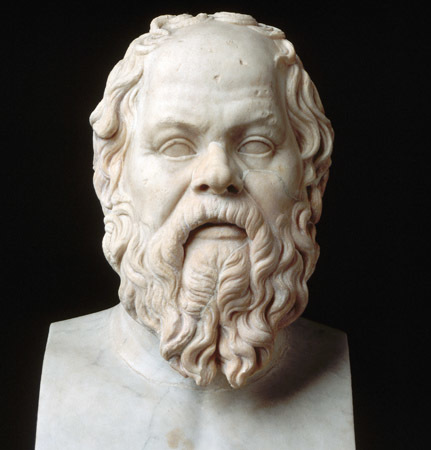
Socrates c. 470 – 399 BC
Socrates followed in the footsteps of Xenophantes. At his trial he was charged of "...[being guilty due to] refusing to recognize the gods recognized by the state, and of introducing other new divinities"
— May 07, 2019 11:48AM
Socrates c. 470 – 399 BC
Socrates followed in the footsteps of Xenophantes. At his trial he was charged of "...[being guilty due to] refusing to recognize the gods recognized by the state, and of introducing other new divinities"
Owlseyes
is on page 26 of 359
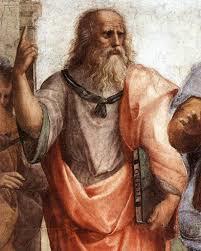
PLATO c. 428 B.C.E. – c. 348 B.C.E.
“To discover the maker and father of this universe is a task indeed, and having discovered him, to declare him to all men is an impossible thing”
Timaeus
— May 07, 2019 03:05AM
PLATO c. 428 B.C.E. – c. 348 B.C.E.
“To discover the maker and father of this universe is a task indeed, and having discovered him, to declare him to all men is an impossible thing”
Timaeus
Owlseyes
is on page 16 of 359
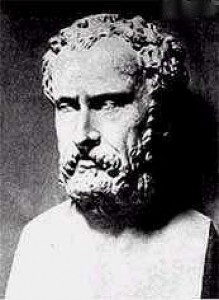
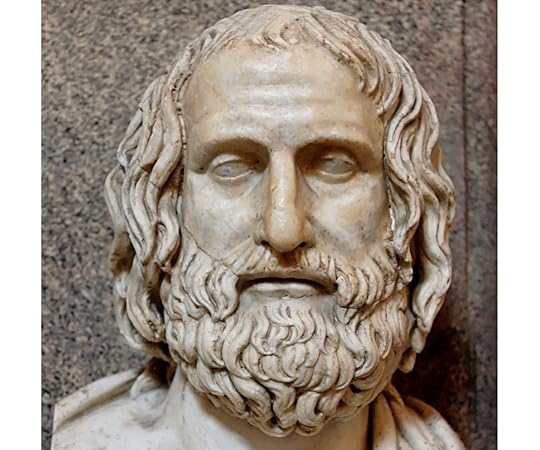
"No man knows, or ever will know, the truth about the gods and everything I speak of"
Xenophanes (c. 570-c. 478 B. C.)
— May 06, 2019 12:53PM
Xenophanes (c. 570-c. 478 B. C.)
Owlseyes
is on page 13 of 359
PART 1
GREEK APOPHASIS
Early Greek philosophy and Plato
Protagoras agnosticism was condemned by the authories; he was expelled from Athens; copies of his treatise were ordered to be destroyed.
— May 06, 2019 12:15PM
GREEK APOPHASIS
Early Greek philosophy and Plato
Protagoras agnosticism was condemned by the authories; he was expelled from Athens; copies of his treatise were ordered to be destroyed.
Owlseyes
is on page 4 of 359
Introduction
There's both Apophasis and Kataphasis.
God is both hidden and present, known and unknown, transcendent and immanent.
— May 06, 2019 12:08PM
There's both Apophasis and Kataphasis.
God is both hidden and present, known and unknown, transcendent and immanent.
Owlseyes
is on page 4 of 359
Introduction
"I pray to God to make me free of God"
Meister Eckhart
In the West there's been a tendency to favor affirmative Theology, unlike the negative tradition of Eriugena, Eckhart and Nicholas de Cusa.
— May 06, 2019 12:03PM
"I pray to God to make me free of God"
Meister Eckhart
In the West there's been a tendency to favor affirmative Theology, unlike the negative tradition of Eriugena, Eckhart and Nicholas de Cusa.