Goodreads helps you follow your favorite authors. Be the first to learn about new releases!
Start by following Pierre Broué.
Showing 1-4 of 4
“The [members of the German Social Democratic Party] remained in the same party, and lived in the same world, and this gave their disagreements a special complexion, because debates which are settled by compromises, and which lead to action, are more fruitful than dialogues of the deaf”
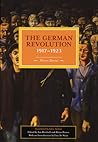
― The German Revolution, 1917-1923
― The German Revolution, 1917-1923
“The consequences of this double murder are incalculable. To be sure, despite the efforts of Jogiches and Levi, who devoted immense effort to the enquiry, no direct responsibility of any Social-Democratic leader can be established. But their moral responsibility is overwhelming. Two days before, Vorwärts had published what was nothing less than a call for the murder of ‘Karl, Rosa and partners, not one dead, not one, amongst the dead’. It was men gathered, armed, and in the end protected by Noske and the Social-Democratic ministers who carried out the assassinations. Scheidemann was to say: ‘You see how their own terrorist tactic has done for them themselves!’ After that, there was always the blood of Liebknecht and Luxemburg between German Social Democrats and Communists.
The young Communist Party was deprived simultaneously of its best political leader and its most prestigious spokesman. Luxemburg and Liebknecht were known to every German worker, and enjoyed high standing throughout the international movement. Alone of all the Communists outside Russia, they had the stature to discuss as equals with the Bolshevik leaders, and to have been a counterweight to their authority in the International that was soon to be founded. Moreover, the statements by Runge and particularly the declarations by Captain Pabst tended to cast terrible suspicions on Pieck, who was spared by the killers. These suspicions were to make necessary a Party enquiry, the conclusions of which are still being discussed.”
― The German Revolution, 1917-1923
The young Communist Party was deprived simultaneously of its best political leader and its most prestigious spokesman. Luxemburg and Liebknecht were known to every German worker, and enjoyed high standing throughout the international movement. Alone of all the Communists outside Russia, they had the stature to discuss as equals with the Bolshevik leaders, and to have been a counterweight to their authority in the International that was soon to be founded. Moreover, the statements by Runge and particularly the declarations by Captain Pabst tended to cast terrible suspicions on Pieck, who was spared by the killers. These suspicions were to make necessary a Party enquiry, the conclusions of which are still being discussed.”
― The German Revolution, 1917-1923
“En réalité la tragédie à venir en Allemagne est tout entière inscrite dans ce drame, dans le contraste entre la volonté d'action des jeunes travailleurs sous l'uniforme et l'incapacité des "chefs" écrasés par leurs responsabilités et convaincus que les problèmes qui concernent l'avenir de l'humanité se règlent en termes de cotisations, de sections locales et de discours dans les assemblées parlementaires.”
― The German Revolution, 1917-1923 (Historical Materialism) by Pierre Broue
― The German Revolution, 1917-1923 (Historical Materialism) by Pierre Broue
“Lenin doubted for a moment the veracity of the issue of Vorwärts which announced the vote, and considered that the German General Staff might have forged it. (…) We still lack documents today about the real motives of the Social-Democratic leaders, whether they expressed them or not, and about their intimate thoughts during this crucial week. Scheidemann has confessed that he was greatly impressed by the size of the chauvinist demonstrations in Berlin. A letter and notes by Ebert express his fear that the War and the eventual reawakening of the Russian workers’ movement would give new force to the plans of ‘the Rosa group’. It certainly seems that fear was the dominating sentiment. By the evening of 30 July, Ebert and Otto Braun had left for Switzerland with the Party’s treasury. In applying the state of siege, the military authorities had dictatorial powers. It seemed clear that, from one day to the next, they could destroy the gigantic edifice which had been so patiently built up, abolish the social conquests, destroy the organisations, and close the press, that they could arrest members and leaders, and with one stroke of the pen erase all the results of decades of Social-Democratic activity. (…) The turn was much more decisive than those people who submitted to ‘the Party’ believed it to be. The Social Democrats joined in the War, giving it their blessing. The falseness of their declarations about attachment to principles, the international solidarity of the workers, peace and socialism, assurances about the purely defensive character of the War, and the indignant denials that there would be any annexations, was now clear. Their words were exposed as a paltry rhetorical cover for a reality that consisted of shrapnel, bombs, machine guns, poison gas and imperialist aims. The Social-Democratic leaders soon became as ‘annexationist’ as the military and political chiefs. They assured the German workers that Wilhelm II’s army was defending the prospects of socialism and its future victory in Europe when it fought against Tsarism and British imperialism. In France, the Socialists in turn declared that German militarism and pan-German imperialism had to be destroyed if the possibility of socialism were to be ensured. The International died on 4 August 1914.”
― The German Revolution, 1917-1923
― The German Revolution, 1917-1923