Goodreads helps you follow your favorite authors. Be the first to learn about new releases!
Start by following William Barrett.

Showing 1-30 of 57
“Man's feeling of homelessness, of alienation has been intensified in the midst of a bureaucratized, impersonal mass society. He has come to feel himself an outsider even within his own human society. He is trebly alienated: a stranger to God, to nature, and to the gigantic social apparatus that supplies his material wants.
But the worst and final form of alienation, toward which indeed the others tend, is man's alienation from his own self. In a society that requires of man only that he perform competently his own particular social function, man becomes identified with this function, and the rest of his being is allowed to subsist as best it can - usually to be dropped below the surface of consciousness and forgotten.”
― Irrational Man: A Study in Existential Philosophy
But the worst and final form of alienation, toward which indeed the others tend, is man's alienation from his own self. In a society that requires of man only that he perform competently his own particular social function, man becomes identified with this function, and the rest of his being is allowed to subsist as best it can - usually to be dropped below the surface of consciousness and forgotten.”
― Irrational Man: A Study in Existential Philosophy
“If a man has learned to think, no matter what he may think about, he is always thinking of his own death. All philosophers were like that. And what truth can there be, if there is death?”
― Irrational Man: A Study in Existential Philosophy
― Irrational Man: A Study in Existential Philosophy
“If science could comprehend all phenomena so that eventually in a thoroughly rational society human beings became as predictable as cogs in a machine, then man, driven by this need to know and assert his freedom, would rise up and smash the machine.
What the reformers of the Enlightenment, dreaming of a perfect organization of society, had overlooked, Dostoevski saw all too plainly with the novelist's eye: namely, that as modern society becomes more organized and hence more bureaucratized it piles up at its joints petty figures like that of the Underground Man, who beneath their nondescript surface are monsters of frustration and resentment.”
―
What the reformers of the Enlightenment, dreaming of a perfect organization of society, had overlooked, Dostoevski saw all too plainly with the novelist's eye: namely, that as modern society becomes more organized and hence more bureaucratized it piles up at its joints petty figures like that of the Underground Man, who beneath their nondescript surface are monsters of frustration and resentment.”
―
“Not only do I not know what I believe, but also I cannot know for sure that I believe. How can I define precisely what my attitude is toward something it cannot conceivably grasp? Can I be said to be in the relation of "belief," in any usual sense of that term, toward something that I cheerfully and readily acknowledge to be absolutely incomprehensible to me?
(...)
No man can be sure that he is in faith; and we can say of no man with certainty that he has or does not have faith.
(...)
Not only does faith always carry its opposite uncertainty within itself, but also this faith is never a static condition that is -had-, but a movement toward... And toward what? In the nature of the case we cannot state this "what." We cannot make a flat assertion about our faith like a simple assertion that we have blue eyes or are six feet tall. More than this, the affirmation of our faith can never be made in the simple indicative mood at all. The statement "I believe" can only be uttered as a prayer.”
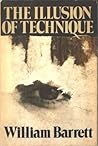
― The Illusion of Technique: A Search for Meaning in a Technological Civilization
(...)
No man can be sure that he is in faith; and we can say of no man with certainty that he has or does not have faith.
(...)
Not only does faith always carry its opposite uncertainty within itself, but also this faith is never a static condition that is -had-, but a movement toward... And toward what? In the nature of the case we cannot state this "what." We cannot make a flat assertion about our faith like a simple assertion that we have blue eyes or are six feet tall. More than this, the affirmation of our faith can never be made in the simple indicative mood at all. The statement "I believe" can only be uttered as a prayer.”
― The Illusion of Technique: A Search for Meaning in a Technological Civilization
“David Hume, in a moment of acute skepticism, felt panicky in the solitude of his study and had to go out and join his friends in the billiard room in order to be reassured that the external world was really there.”
― Irrational Man: A Study in Existential Philosophy
― Irrational Man: A Study in Existential Philosophy
“We exist within the question of God.”
―
―
“Positivist man is a curious creature who dwells in the tiny island of light composed of what he finds scientifically "meaningful," while the whole surrounding area in which ordinary men live from day to day and have their dealings with other men is consigned to the outer darkness of the "meaningless." Positivism has simply accepted the fractured being of modern man and erected a philosophy to intensify it.
Existentialism, whether successfully or not, has attempted instead to gather all the elements of human reality into a total picture of man. Positivist man and Existentialist man are no doubt offspring of the same parent epoch, but, somewhat as Cain and Abel were, the brothers are divided unalterably by temperament and the initial choice they make of their own being.”
― Irrational Man: A Study in Existential Philosophy
Existentialism, whether successfully or not, has attempted instead to gather all the elements of human reality into a total picture of man. Positivist man and Existentialist man are no doubt offspring of the same parent epoch, but, somewhat as Cain and Abel were, the brothers are divided unalterably by temperament and the initial choice they make of their own being.”
― Irrational Man: A Study in Existential Philosophy
“The bond that attaches us to the life outside ourselves is the same bond that holds us to our own life.”
― The Illusion of Technique: A Search for Meaning in a Technological Civilization
― The Illusion of Technique: A Search for Meaning in a Technological Civilization
“For the thinker, as for the artist, what counts in life is not the number of rare and exciting adventures he encounters, but the inner depth in that life, by which something great may be made out of even the paltriest and most banal of occurrences.”
― Irrational Man: A Study in Existential Philosophy
― Irrational Man: A Study in Existential Philosophy
“If science could comprehend all phenomena so that eventually in a thoroughly rational society human beings became as predictable as cogs in a machine, then man, driven by this need to know and assert his freedom, would rise up and smash the machine.”
― Irrational Man: A Study in Existential Philosophy
― Irrational Man: A Study in Existential Philosophy
“We have come to understand the phenomena of life only as an assemblage of the lifeless. We take the mechanistic abstractions of our technical calculation to be ultimately concrete and "fundamentally real," while our most intimate experiences are labelled "mere appearance" and something having reality only within the closet of the isolated mind.
Suppose however we were to invert this whole scheme, reverse the order in which it assigns abstract and concrete. What is central to our experience, then, need not be peripheral to nature. This sunset now, for example, caught within the network of bare winter branches, seems like a moment of benediction in which the whole of nature collaborates. Why should not these colours and these charging banners of light be as much a part of the universe as the atoms and molecules that make them up? If they were only "in my mind," then I and my mind would no longer be a part of nature. Why should the pulse of life toward beauty and value not be a part of things?
Following this path, we do not vainly seek to assemble the living out of configurations of dead stuff, but we descend downwards from more complex to simpler grades of the organic. From humans to trees to rocks; from "higher grade" to "lower grade" organisms. In the universe of energy, any individual thing is a pattern of activity within the flux, and thereby an organism at some level.”
― The Illusion of Technique: A Search for Meaning in a Technological Civilization
Suppose however we were to invert this whole scheme, reverse the order in which it assigns abstract and concrete. What is central to our experience, then, need not be peripheral to nature. This sunset now, for example, caught within the network of bare winter branches, seems like a moment of benediction in which the whole of nature collaborates. Why should not these colours and these charging banners of light be as much a part of the universe as the atoms and molecules that make them up? If they were only "in my mind," then I and my mind would no longer be a part of nature. Why should the pulse of life toward beauty and value not be a part of things?
Following this path, we do not vainly seek to assemble the living out of configurations of dead stuff, but we descend downwards from more complex to simpler grades of the organic. From humans to trees to rocks; from "higher grade" to "lower grade" organisms. In the universe of energy, any individual thing is a pattern of activity within the flux, and thereby an organism at some level.”
― The Illusion of Technique: A Search for Meaning in a Technological Civilization
“Truth and untruth weave the seamless web of human nature.”
― The Illusion of Technique: A Search for Meaning in a Technological Civilization
― The Illusion of Technique: A Search for Meaning in a Technological Civilization
“What you find in the mirror you will find in the reality it mirrors.”
― The Illusion of Technique: A Search for Meaning in a Technological Civilization
― The Illusion of Technique: A Search for Meaning in a Technological Civilization
“This capacity for living easily and familiarly at an extraordinary level of abstraction is the source of modern man's power. With it he has transformed the planet, annihilated space, and trebled the world's population. But it is also a power which has, like everything human, its negative side, in the desolating sense of rootlessness, vacuity, and the lack of concrete feeling that assails modern man in his moments of real anxiety.”
― Irrational Man: A Study in Existential Philosophy
― Irrational Man: A Study in Existential Philosophy
“There is no truth that does not ultimately rest upon what is evident to us in our own experience.”
― The Illusion of Technique: A Search for Meaning in a Technological Civilization
― The Illusion of Technique: A Search for Meaning in a Technological Civilization
“The Greek word for “I know,” oida, is the perfect of the verb “to see” and means “I have seen.”
― Irrational Man: A Study in Existential Philosophy
― Irrational Man: A Study in Existential Philosophy
“We must be free for the truth; and conversely, to be able to be open toward the truth may be our deepest freedom as human creatures.”
― The Illusion of Technique: A Search for Meaning in a Technological Civilization
― The Illusion of Technique: A Search for Meaning in a Technological Civilization
“To be rational is not the same as to be reasonable.”
― Irrational Man: A Study in Existential Philosophy
― Irrational Man: A Study in Existential Philosophy
“What emerges from these separate strands of (modern) history is an image of man himself that bears a new, stark, more nearly naked, and more questionable aspect. The contraction of man's horizons amounts to a denudation, a stripping down, of this being who has now to confront himself at the center of all his horizons. The labor of modern culture, whenever it has been authentic, has been a labor of denudation. A return to the sources; "to the things themselves," as Husserl puts it; toward a new truthfulness, the casting away of ready-made presuppositions and empty forms - these are some of the slogans under which this phase in history has presented itself. Naturally enough, much of this stripping down must appear as the work of destruction, as revolutionary or even "negative": a being who has become thoroughly questionable to himself must also find questionable his relation to the total past which in a sense he represents.”
― Irrational Man: A Study in Existential Philosophy
― Irrational Man: A Study in Existential Philosophy
“From what deep springs of character our personal philosophies issue, we cannot be sure. In philosophers themselves we seem always able to notice some deep internal correspondence between the man and his philosophy. Are our philosophies, then, merely the inevitable outcome of the body of fate and personal circumstance that is thrust upon each of us? Or are these beliefs the means by which we freely create ourselves as the persons we become? Here, at the very outset, the question of freedom already hovers in the background.”
― The Illusion of Technique: A Search for Meaning in a Technological Civilization
― The Illusion of Technique: A Search for Meaning in a Technological Civilization
“In teaching the young you have to satisfy the schoolchild in yourself and enter the region where all meanings start. That is where, in any case, the philosopher has perpetually to start.”
― The Illusion of Technique: A Search for Meaning in a Technological Civilization
― The Illusion of Technique: A Search for Meaning in a Technological Civilization
“Modern philosophy from Descartes onward has asked itself the question: How can the subject really know the object?”
―
―
“The nature of consciousness is to point beyond itself. It is a tending toward or pointing to... Since consciousness points beyond itself, it is in its very being a self-transcendence.”
― The Illusion of Technique: A Search for Meaning in a Technological Civilization
― The Illusion of Technique: A Search for Meaning in a Technological Civilization
“To discover one's own spiritual poverty is to achieve a positive conquest by the spirit.”
― Irrational Man: A Study in Existential Philosophy
― Irrational Man: A Study in Existential Philosophy
“The deflation, or flattening out, of values in Modern art does not necessarily indicate an ethical nihilism. Quite the contrary; in opening our eyes to the rejected elements of existence, art may lead us to a more complete and less artificial celebration of the world.”
― Irrational Man: A Study in Existential Philosophy
― Irrational Man: A Study in Existential Philosophy
“Our freedom is the way in which we are able to let the world open before us, and ourselves stand open within it.”
― The Illusion of Technique: A Search for Meaning in a Technological Civilization
― The Illusion of Technique: A Search for Meaning in a Technological Civilization
“Heidegger’s philosophy is neither atheism nor theism, but a description of the world from which God is absent.”
― Irrational Man: A Study in Existential Philosophy
― Irrational Man: A Study in Existential Philosophy
“A society coming apart at top and bottom, or passing over into another form, contains just as many possibilities for revelation as a society running along smoothly in its own rut. The individual is thrust out of the sheltered nest that society has provided. He can no longer hide his nakedness by the old disguises. he learns how much of what he has taken for granted was by its own nature neither eternal nor necessary but thoroughly temporal and contingent. He learns that the solitude of the self is an irreducible dimension of human life no matter how completely that self had seemed to be contained in its social milieu. In the end, he sees each man as solitary and unsheltered before his own death.
Admittedly, these are painful truths, but the most basic things are always learned with pain, since our inertia and complacent love of comfort prevent us from learning them until they are forced upon us. It appears that man is willing to learn about himself only after some disaster; after war, economic crisis, and political upheaval have taught him how flimsy is that human world in which he thought himself so securely grounded. What he learns has always been there, lying concealed beneath the surface of even the best-functioning societies; it is no less true for having come out of a period of chaos and disaster. But so long as man does not have to face up to such a truth, he will not do so.”
― Irrational Man: A Study in Existential Philosophy
Admittedly, these are painful truths, but the most basic things are always learned with pain, since our inertia and complacent love of comfort prevent us from learning them until they are forced upon us. It appears that man is willing to learn about himself only after some disaster; after war, economic crisis, and political upheaval have taught him how flimsy is that human world in which he thought himself so securely grounded. What he learns has always been there, lying concealed beneath the surface of even the best-functioning societies; it is no less true for having come out of a period of chaos and disaster. But so long as man does not have to face up to such a truth, he will not do so.”
― Irrational Man: A Study in Existential Philosophy
“The philosopher seeks a generality beyond the boundaries of science; he attempts to frame a comprehensive and coherent framework of ideas within which the partial results of science may become more intelligible.”
― The Illusion of Technique: A Search for Meaning in a Technological Civilization
― The Illusion of Technique: A Search for Meaning in a Technological Civilization
“To the other person, who looks at me from the outside, I seem an object, a thing; my subjectivity with its inner freedom escapes his gaze. Hence, his tendency is always to convert me into the object he sees. The gaze of the other penetrates the depths of my existence, freezes and congeals it. It is this, according to Sartre, that turns love and particularly sexual love into a perpetual tension and indeed warfare. The lover wishes to possess the beloved, by the freedom of the beloved (which is his or her human essence) cannot be possessed; hence, the lover tends to reduce the beloved to an object for the sake of possessing it. Love is menaced always by a perpetual oscillation between sadism and masochism: In sadism I reduce the other to a mere lump, to be beaten and manipulated as I choose, while in masochism I offer myself as an object, but in an attempt to entrap the other and undermine his freedom.”
― Irrational Man: A Study in Existential Philosophy
― Irrational Man: A Study in Existential Philosophy