
Find & Share Quotes with Friends
Reductionism Quotes
Quotes tagged as "reductionism"
Showing 1-30 of 44

“He that breaks a thing to find out what it is has left the path of wisdom.”
― The Fellowship of the Ring
― The Fellowship of the Ring
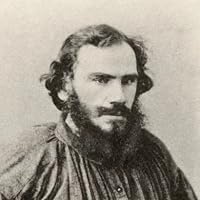
“Human science fragments everything in order to understand it, kills everything in order to examine it. ”
― War and Peace
― War and Peace

“Were these boys in their right minds? Here were two boys with good intellect, one eighteen and one nineteen. They had all the prospects that life could hold out for any of the young; one a graduate of Chicago and another of Ann Arbor; one who had passed his examination for the Harvard Law School and was about to take a trip in Europe,--another who had passed at Ann Arbor, the youngest in his class, with three thousand dollars in the bank. Boys who never knew what it was to want a dollar; boys who could reach any position that was to boys of that kind to reach; boys of distinguished and honorable families, families of wealth and position, with all the world before them. And they gave it all up for nothing, for nothing! They took a little companion of one of them, on a crowded street, and killed him, for nothing, and sacrificed everything that could be of value in human life upon the crazy scheme of a couple of immature lads.
Now, your Honor, you have been a boy; I have been a boy. And we have known other boys. The best way to understand somebody else is to put yourself in his place.
Is it within the realm of your imagination that a boy who was right, with all the prospects of life before him, who could choose what he wanted, without the slightest reason in the world would lure a young companion to his death, and take his place in the shadow of the gallows?
...No one who has the process of reasoning could doubt that a boy who would do that is not right.
How insane they are I care not, whether medically or legally. They did not reason; they could not reason; they committed the most foolish, most unprovoked, most purposeless, most causeless act that any two boys ever committed, and they put themselves where the rope is dangling above their heads....
Why did they kill little Bobby Franks?
Not for money, not for spite; not for hate. They killed him as they might kill a spider or a fly, for the experience. They killed him because they were made that way. Because somewhere in the infinite processes that go to the making up of the boy or the man something slipped, and those unfortunate lads sit here hated, despised, outcasts, with the community shouting for their blood.
. . . I know, Your Honor, that every atom of life in all this universe is bound up together. I know that a pebble cannot be thrown into the ocean without disturbing every drop of water in the sea. I know that every life is inextricably mixed and woven with every other life. I know that every influence, conscious and unconscious, acts and reacts on every living organism, and that no one can fix the blame. I know that all life is a series of infinite chances, which sometimes result one way and sometimes another. I have not the infinite wisdom that can fathom it, neither has any other human brain”
― Attorney for the Damned: Clarence Darrow in the Courtroom
Now, your Honor, you have been a boy; I have been a boy. And we have known other boys. The best way to understand somebody else is to put yourself in his place.
Is it within the realm of your imagination that a boy who was right, with all the prospects of life before him, who could choose what he wanted, without the slightest reason in the world would lure a young companion to his death, and take his place in the shadow of the gallows?
...No one who has the process of reasoning could doubt that a boy who would do that is not right.
How insane they are I care not, whether medically or legally. They did not reason; they could not reason; they committed the most foolish, most unprovoked, most purposeless, most causeless act that any two boys ever committed, and they put themselves where the rope is dangling above their heads....
Why did they kill little Bobby Franks?
Not for money, not for spite; not for hate. They killed him as they might kill a spider or a fly, for the experience. They killed him because they were made that way. Because somewhere in the infinite processes that go to the making up of the boy or the man something slipped, and those unfortunate lads sit here hated, despised, outcasts, with the community shouting for their blood.
. . . I know, Your Honor, that every atom of life in all this universe is bound up together. I know that a pebble cannot be thrown into the ocean without disturbing every drop of water in the sea. I know that every life is inextricably mixed and woven with every other life. I know that every influence, conscious and unconscious, acts and reacts on every living organism, and that no one can fix the blame. I know that all life is a series of infinite chances, which sometimes result one way and sometimes another. I have not the infinite wisdom that can fathom it, neither has any other human brain”
― Attorney for the Damned: Clarence Darrow in the Courtroom

“I would simply ask why so many critics, so many writers, so many philosophers take such satisfaction in professing that the experience of a work of art is ineffable, that it escapes by definition all rational understanding; why are they so eager to concede without a struggle the defeat of knowledge; and where does their irrepressible need to belittle rational understanding come from, this rage to affirm the irreducibility of the work of art, or, to use a more suitable word, its transcendence.”
― The Rules of Art: Genesis and Structure of the Literary Field
― The Rules of Art: Genesis and Structure of the Literary Field

“The calculative exactness of practical life which the money economy has brought about corresponds to the ideal of natural science: to transform the world by mathematical formulas. Only money economy has filled the days of so many people with weighing, calculating, with numerical determinations, with a reduction of qualitative values to quantitative ones.”
― The Sociology of Georg Simmel
― The Sociology of Georg Simmel

“It seemed a ruse that fear of death should be the sole motivation for living and, yet, to quell this fear made the prospect of living itself seem all the more absurd; to extend this further, the notion of living one’s life for the purposes of pondering the absurdity of living was an even greater absurdity in and of itself, which thus, by reductio ad absurdum, rendered the fear of death a necessary function of life and any lack thereof, a trifling matter rooted in self-inflicted incoherence.”
― Only the Deplorable
― Only the Deplorable
“We believe that religions are basically the same…they only differ on matters of creation, sin, heaven, hell, God, and salvation.”
― Up to date: Poems, 1968-1982
― Up to date: Poems, 1968-1982

“Someone with a fresh mind, one not conditioned by upbringing and environment, would doubtless look at science and the powerful reductionism that it inspires as overwhelmingly the better mode of understanding the world, and would doubtless scorn religion as sentimental wishful thinking. Would not that same uncluttered mind also see the attempts to reconcile science and religion by disparaging the reduction of the complex to the simple as attempts guided by muddle-headed sentiment and intellectually dishonest emotion?
...Religion closes off the central questions of existence by attempting to dissuade us from further enquiry by asserting that we cannot ever hope to comprehend. We are, religion asserts, simply too puny. Through fear of being shown to be vacuous, religion denies the awesome power of human comprehension. It seeks to thwart, by encouraging awe in things unseen, the disclosure of the emptiness of faith. Religion, in contrast to science, deploys the repugnant view that the world is too big for our understanding. Science, in contrast to religion, opens up the great questions of being to rational discussion, to discussion with the prospect of resolution and elucidation. Science, above all, respects the power of the human intellect. Science is the apotheosis of the intellect and the consummation of the Renaissance. Science respects more deeply the potential of humanity than religion ever can.”
― Nature's Imagination: The Frontiers of Scientific Vision
...Religion closes off the central questions of existence by attempting to dissuade us from further enquiry by asserting that we cannot ever hope to comprehend. We are, religion asserts, simply too puny. Through fear of being shown to be vacuous, religion denies the awesome power of human comprehension. It seeks to thwart, by encouraging awe in things unseen, the disclosure of the emptiness of faith. Religion, in contrast to science, deploys the repugnant view that the world is too big for our understanding. Science, in contrast to religion, opens up the great questions of being to rational discussion, to discussion with the prospect of resolution and elucidation. Science, above all, respects the power of the human intellect. Science is the apotheosis of the intellect and the consummation of the Renaissance. Science respects more deeply the potential of humanity than religion ever can.”
― Nature's Imagination: The Frontiers of Scientific Vision

“The ideal of the 11th/17th century physicists was to be able to explain all physical reality in terms of the movement of atoms. This idea was extended by people like Descartes who saw the human body itself as nothing but a machine. Chemists tried to study chemical reaction in this light and reduce chemistry to a form of physics, and biologists tried to reduce their science to simply chemical reactions and then finally to the movement of physical particles. The idea of reductionsm which is innate to modern science and which was only fortified by the tehory of evolution could be described as the reduction fo the spirit to the psyche, the psyche to biological activity, life to lifeless matter and lifeless matter to purely quantitative particles or bundles of energy whose movements can be measured and quantified.”
― A Young Muslim's Guide to the Modern World
― A Young Muslim's Guide to the Modern World

“The astonishing fact is that similar mathematics applies so well to planets and to clocks. It needn’t have been this way. We didn’t impose it on the Universe. That’s the way the Universe is. If this is reductionism, so be it.”
― The Demon-Haunted World: Science as a Candle in the Dark
― The Demon-Haunted World: Science as a Candle in the Dark

“I refuse to have my vagina photographed because I have no
interest in being desired on the basis of its appearance. It has
taken me decades to appreciate its power and beauty, and not
merely because it birthed a child. Responsive to tenderness and
the source of a luminous ecstasy, my vagina has enabled me to
transcend an otherwise limited sense of self. I feel no need to
make it conform to another’s aesthetic or have it applauded by
strangers.”
―
interest in being desired on the basis of its appearance. It has
taken me decades to appreciate its power and beauty, and not
merely because it birthed a child. Responsive to tenderness and
the source of a luminous ecstasy, my vagina has enabled me to
transcend an otherwise limited sense of self. I feel no need to
make it conform to another’s aesthetic or have it applauded by
strangers.”
―

“Reality has no arbitrary professional boundaries.”
― Neural Basis of Free Will: Criterial Causation
― Neural Basis of Free Will: Criterial Causation
“In the West, the great problem that was created for Christianity from the 17th century onward and even earlier during the Renaissance was that religion began to retreat from one domain after another in order to accommodate the forces of modernism and secularism. One can point to the Galileo trial, after which the Church ‘‘lost the cosmos.’’ In fact, the Church was right in many ways, because what Galileo was saying did not concern astronomy alone, but also theology, which was quite something else. As a consequence of this trial, the Church withdrew from its concern with the sciences of nature and no longer challenged what kind of science was developed, and suf- fered the results of accepting the reductionism and materialistic views of modern science. This process resulted in the complete secularization of nature and the cosmos.”
― در جستوجوی امر قدسی
― در جستوجوی امر قدسی
“Women deformed by the pornographic sexual template
perceive other women as masturbatory objects.”
―
perceive other women as masturbatory objects.”
―
“When questions arise of possible harmful effects of pesticides, the defenders of the products always try to narrow the scope of the inquiry to their most immediate, direct and measurable consequences and then downplay them, The critics of pesticides, on the other hand, urge that the ecosystem is strongly interconnected, highly variable and vulnerable. Thus debates around environmental impact become debates on the philosophy of nature: are things readily isolated or richly interacting? Is the average behavior of chemicals and organisms an adequate basis for decision making or must we be concerned with the unevenness of the world? Shall we "be realists" and stick to measurable costs and benefits, or shall we concern ourselves with all kinds of consequences of what we do? Gradually we see a confrontation of the world views of mechanistic reductionism and of dialectical materialism.”
― The Dialectical Biologist
― The Dialectical Biologist

“Melancholy pervades me every time I enter a souvenir shop. I have been to many of them around the world. I try not to buy anything for multiple reasons. One of them is because I find the way souvenir shops represent a country or a culture problematic, to say the least. The items you find there are almost always either much better or much worse than the way locals do things. Each item is glorified or trivialized – depending on the taste of the manufacturer and the demand of the buyers. They are always designed to give you a presumed idyllic and warm feeling about the country from which you buy them. In reality, many locals strive to get close to owning some of the items displayed in souvenir shops. Moreover, even if locals use items like those displayed, their daily lives are never as romantic and as smooth as the feeling you get in these shops. In a sense, then, souvenir shops are places where people and their cultures are objectified and romanticized par excellence. Their human joys are amplified. Their grand sorrows are downplayed or buried altogether. Their real histories are either erased or diluted at best. Nevertheless, I confess to you, I always end up buying honey. Perhaps because bees represent life to me. Perhaps because I find that healthy bees and wildlife speak volumes about the overall health of a place and its people?”
―
―


“Totalitarianism is the belief that human intellect can be the guiding principle in life and society. It aims to create a utopian, artificial society led by technocrats or experts who, based on their technical knowledge, will ensure that the machine of society runs flawlessly. In this view, the individual is completely subordinated to being a cog in the machine of society.”
― The Psychology of Totalitarianism
― The Psychology of Totalitarianism

“As Einstein once said, “It is the theory which decides what can be observed.” But I must add that prior to theory there is what we call “thinking”—a systematic form of consciousness deeply driven by the unconscious that enables understanding and experimental predictions The parallel is expressed in John 1:1, “In the beginning was the Word, and the Word was with God, and the Word was God” (KJV). For humans, all beginnings are in thought or reason. And in the reductionist search for reality, science can only identify mind, first in thing shopped for, then in the assurance of unseen evidence.”
― The Evidence of Things Not Seen: Reflections on Faith, Science, and Economics
― The Evidence of Things Not Seen: Reflections on Faith, Science, and Economics

“By resisting the urge to reduce, in order to subsequently destroy, we keep alive -- if only for a few seconds more -- the possibility of transformation.”
― George Saunders & Joshua Lutz: Orange Blossom Trail
― George Saunders & Joshua Lutz: Orange Blossom Trail

“Wisdom or enlightenment is not white, black or brown – it’s not christian, muslim, jew, hindu or atheist – it’s not homosexual or heterosexual – it’s not reductionist, empirical or sentimental – it’s not belief or disbelief. True enlightenment or wisdom or understanding or insight, whatever we call it, is beyond all opposites – it‘s beyond materialism and spiritualism – it’s beyond atheism and theism – it’s beyond all intellectualism and cynicism.”
― Mission Reality
― Mission Reality
“In brief, neuroscience is, to me, a science of systems in which first-order and local explanatory schemata are needed but not sufficient. Reductionism, by its nature, takes away the distributed interactions that underlie the global properties of systems. Theoretical approaches provide different means to simplify. We must thus learn to understand, rather than avoid complexity: simplicity and complexity often characterize less the object of study than our understanding of it. Maybe one day, neuroscience textbooks will finally start slimming down”
―
―

“What is the colour of things in the dark?’
‘I suppose, no colour at all.’
‘And what of their shape? Have you any notion of it save as what could be seen or touched, or what you could collect from many seeings and touchings?’
‘I don’t know that I have.’
‘Then do you not see how the giant has deceived you?’
‘Not quite clearly.’
‘He showed you by a trick what our inwards would look like if they were visible. That is, he showed you something that is not, but something that would be if the world were made all other than it is. but in the real world our inwards are invisible. They are not coloured shapes at all, they are feelings. The warmth in your limbs at this moment, the sweetness of your breath as you draw it in, the comfort in your belly because we breakfasted well, and your hunger for the next meal—these are the reality: all the sponges and tubes that you saw in the dungeon are the lie.’
‘But if I cut a man open I should see them in him.’ ‘
A man cut open is, so far, not a man: and if you did not sew him up speedily you would be seeing not organs, but death. I am not denying that death is ugly: but the giant made you believe that life is ugly.”
―
‘I suppose, no colour at all.’
‘And what of their shape? Have you any notion of it save as what could be seen or touched, or what you could collect from many seeings and touchings?’
‘I don’t know that I have.’
‘Then do you not see how the giant has deceived you?’
‘Not quite clearly.’
‘He showed you by a trick what our inwards would look like if they were visible. That is, he showed you something that is not, but something that would be if the world were made all other than it is. but in the real world our inwards are invisible. They are not coloured shapes at all, they are feelings. The warmth in your limbs at this moment, the sweetness of your breath as you draw it in, the comfort in your belly because we breakfasted well, and your hunger for the next meal—these are the reality: all the sponges and tubes that you saw in the dungeon are the lie.’
‘But if I cut a man open I should see them in him.’ ‘
A man cut open is, so far, not a man: and if you did not sew him up speedily you would be seeing not organs, but death. I am not denying that death is ugly: but the giant made you believe that life is ugly.”
―
“Vi blir lätt stötta om vår egen personlighet och vårt sätt att vara beskrivs som typiskt för vår kultur eftersom det inte gör rättvisa åt oss som individer: vi betraktar inte vårt eget beteende som typiskt, utan som uttryck för vår egen identitet och våra personliga val. Det här är trots allt något som vi lätt glömmer bort när vi vänder blicken mot andra: de andra beskrivs ofta utgående från vad som anses typiskt för deras kultur.”
― Kultur, människa, möte - ett humanistiskt perspektiv
― Kultur, människa, möte - ett humanistiskt perspektiv

“Trying to understand the meaning of life in terms of the human brain's activities is like trying to understand the ocean by going to the shore and scooping out a bucket of water and analyzing it.”
― There Is No God and He Is Always with You: A Search for God in Odd Places
― There Is No God and He Is Always with You: A Search for God in Odd Places
“The essence of things is not rationally knowable, and reality cannot be reduced to mechanistic frameworks. When realizing this, we can finally start to look for the essence of life where it truly can be found: in that which always escapes rationalization and mechanization, in that which dissapears from a conversation when you digitalize it, in the difference between the mother's womb and an artificial plastic womb, in the difference between the heat of an electric heater and that of a wood-burning stove, and so on.”
― The Psychology of Totalitarianism
― The Psychology of Totalitarianism

“You may show what atomic groupings are necessary in order that life may emerge out of matter, sentience out of life, or intellect out of sentience; but you cannot thereby reduce life, let alone sentient life and intellectual life, to terms of matter; you have only succeeded in tabulating the material coefficients of things which are not themselves material. I do not mean that Mr Russell would not be able to put up a case against this argument; I only complain that he simplified his task by pretending to misunderstand what the argument was; by assuming that it was merely physical when as a matter of fact it is metaphysical.”
― Caliban in Grub Street 1930 [Leather Bound]
― Caliban in Grub Street 1930 [Leather Bound]
“It is not that a whole is more than the sum of its parts, but that the parts themselves are redefined and re-created in the process of their interaction. So the reductionist sociobiologists argue that individual human limitations place constraints on society, but, in fact, social organization is the negation of individual limitations.”
―
―

“The past 60 million years have seen the cephalopod
survivors of the end-Cretaceous catastrophe morph
into the aquarium exhibits & calamari rings of today.”
― Squid Empire: The Rise and Fall of the Cephalopods
survivors of the end-Cretaceous catastrophe morph
into the aquarium exhibits & calamari rings of today.”
― Squid Empire: The Rise and Fall of the Cephalopods
“Not Christ, but church doctrine was a major downgrade in theology existing hundreds and thousands of years prior, at the same time, european reductionism was a major downgrade in a wholesome life-centric understanding of truth.”
― Kral Fakir: When Calls The Kainat
― Kral Fakir: When Calls The Kainat
All Quotes
|
My Quotes
|
Add A Quote
Browse By Tag
- Love Quotes 102.5k
- Life Quotes 81k
- Inspirational Quotes 77.5k
- Humor Quotes 45.5k
- Philosophy Quotes 32k
- Inspirational Quotes Quotes 28.5k
- God Quotes 27k
- Wisdom Quotes 25k
- Romance Quotes 25k
- Truth Quotes 25k
- Poetry Quotes 24.5k
- Life Lessons Quotes 23k
- Quotes Quotes 21.5k
- Death Quotes 21k
- Happiness Quotes 19k
- Hope Quotes 19k
- Faith Quotes 18.5k
- Inspiration Quotes 18k
- Relationships Quotes 16k
- Spirituality Quotes 16k
- Motivational Quotes 16k
- Religion Quotes 15.5k
- Life Quotes Quotes 15.5k
- Writing Quotes 15k
- Love Quotes Quotes 15k
- Success Quotes 14.5k
- Motivation Quotes 14k
- Time Quotes 13k
- Science Quotes 12.5k
- Motivational Quotes Quotes 12k