Goodreads helps you follow your favorite authors. Be the first to learn about new releases!
Start by following Michelle Franklin.

Showing 1-30 of 109
“All the friends in the world are in the fountain of a pen.”
―
―
“There is a very great difference between older and old, the former being desirable and the latter being inevitable.”
―
―
“I am sure I have summer depression; the heat makes me instantly regret being alive.”
― I Hate Summer: My tribulations with seasonal depression, anxiety, plumbers, spiders, neighbours, and the world.
― I Hate Summer: My tribulations with seasonal depression, anxiety, plumbers, spiders, neighbours, and the world.
“I believe someone made a grievous mistake when summer was created; no novitiate or god in their right mind would make a season akin to hell on purpose. Someone should be fired.”
―
―
“Astonishing how tea opens the ears.”
―
―
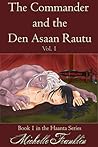
“Boudicca MacDaede was not the most striking of women, but she had a wryness in character and heartiness in form that recommended her to the rough demands of a farmer’s daughter and a soldier’s sufferance." ~ First two lines of book 1 in the Haanta Series”
― The Commander And The Den Asaan Rautu
― The Commander And The Den Asaan Rautu
“A library always housed a trove of undiscovered friendships and forays, and a bookstore, a place where those temporary connections might become a constancy, must always hold a charm over any scholar’s heart.”
―
―
“I did not need an unstable relationship to teach me about the evils of broken promises. I had parents for that.”
―
―
“Tea was the great arbiter of many things, and for Pastaddams, his morning cup meant the difference between expressing rational thought and succumbing to the ineptitude that occupied recesses of his dormant mind. Merely having the cup in his hand facilitated the flow of ideas, and upon tea, the great nourishment of the tailor’s life, rested all his claims to rational dependence.”
―
―
“Someone made a grievous mistake when summer was created; no novitiate or god in their right mind would make a season akin to hell on purpose.
Someone should be fired.”
― I Hate Summer: My tribulations with seasonal depression, anxiety, plumbers, spiders, neighbours, and the world.
Someone should be fired.”
― I Hate Summer: My tribulations with seasonal depression, anxiety, plumbers, spiders, neighbours, and the world.
“Abuse really is its own alphabet. Those who have not gone through it cannot understand it fully. The echos of violence hang in subconscious long after the threat is gone.”
―
―
“The old who refuse to die merely on principle live on forever, to hate life and complain of all the things they could have been spared had they the good sense to die young.”
―
―
“The past is behind us," said Boudicca,"but the difficulty there is we keep looking over our shoulders.”
―
―
“But the world hinges on good fathers and those who would be the merchants of confidence.”
―
―
“And if I use the opportunity to kill you and leave?” the giant said in a tone half-serious half-arch.
“I have never known warriors to be dishonourable. Should you prove me wrong, we will all be dead anyway. There is nothing so ugly as reneging a promise, wouldn’t you agree?”
The giant clenched his teeth and looked down. “I would,” he murmured.”
― The Commander And The Den Asaan Rautu
“I have never known warriors to be dishonourable. Should you prove me wrong, we will all be dead anyway. There is nothing so ugly as reneging a promise, wouldn’t you agree?”
The giant clenched his teeth and looked down. “I would,” he murmured.”
― The Commander And The Den Asaan Rautu
“Books are an absolute necessity. I always have at least two with me wherever I go, to say nothing of my digital collection, and whenever I can get my hands on a delicious new reading piece, I will finish it at a slackened pace, to savour it with all the esteem it deserves, gratulating in its pleasance, deliciating in every word with ardent affection. I have an extensive library that I could never do without, and there are at least four books decorating every surface in my house. A table is not properly set without a book to furnish it. Half of my great collection is non-fiction, mostly science and history books, ranging from the archaeological to the agricultural, and my fiction section is dedicated to the classics, mostly books published before the world forgot about exquisite prose. I have all the greats in hardcover, but I do not read those: hardcover is for smelling and touching only. For all my favourite authors, I have reading copies, which I might take with me anywhere, to read in cafes or to be used as a swatting tool for unwanted visitors, but books are always fashionable even as ornaments; everyone likes a reader, for a good collection of books betrays a intellectualism that is becoming at anytime. Never succumb to the friable wills of those who reject the majesty of books: there is nothing so repelling as willful illiteracy.”
― I Hate Summer: My tribulations with seasonal depression, anxiety, plumbers, spiders, neighbours, and the world.
― I Hate Summer: My tribulations with seasonal depression, anxiety, plumbers, spiders, neighbours, and the world.
“As someone who cannot drive for various reasons, I am at the mercy of public transit, a system that has worse side effects than over the counter medication.”
― I Hate Everyone: An introvert’s miserable adventures with mailmen, children, the outdoors, and the human condition.
― I Hate Everyone: An introvert’s miserable adventures with mailmen, children, the outdoors, and the human condition.
“Her remarks caught his consideration and his violet eyes tapered with growing dislike. He was at least dejected in his solitude, and now she had come to ruin his isolation and compel him to speak when he would otherwise be enjoying silence. He pressed his immense body against the bars of the cell in hopes of intimidating her, but the captain remained complacent and unaffected by his display.
“Leave me, woman,” he bellowed at her.
“I fear a cannot do that just now. I might need your help, should you wish to give it.”
He groaned and turned aside. “I will not assist you.”
“It is rather a shame you won’t. I was going to offer you your freedom.”
The giant turned back and looked at her with hesitation.”
― The Commander And The Den Asaan Rautu
“Leave me, woman,” he bellowed at her.
“I fear a cannot do that just now. I might need your help, should you wish to give it.”
He groaned and turned aside. “I will not assist you.”
“It is rather a shame you won’t. I was going to offer you your freedom.”
The giant turned back and looked at her with hesitation.”
― The Commander And The Den Asaan Rautu
“The absence of life is not the same as material privation: we will never again see the same soul occupying the same space. The world refers to them as pets, but that is what we do, not really what they are. Affection pays for itself in proportion to the love we offer, and if the love we lavished on him was any indication, we are inconsolable. The suffering is more on our side now, for he led an enormously happy and productive life, and we are left to remember and agonize. It is all wretchedness now. Grief is the currency for death, leaving us in emotional debt perhaps forever, but love is the tax we happily pay toward the investment of another's company, and we would all rather pay it and be happy and poor than be rich in a friendless life. He is gone, and we are now beholden to him, but we are so much happier for his having been here than we deserve to be.
On the death of Ted, beloved cat”
―
On the death of Ted, beloved cat”
―
“Is not he? I had him along for his books and potions, and kept him for his character. Profundities of disgruntled sentiments, injured spirits, wounded affection, bitterness, marginality, disdain of establishment—I knew we should get on famously.”
―
―
“We all emerge into this material soup, mix about with the meat and potatoes of life, and then slip away, back to the primordial germination whence we came. Nascence is a strange business: we forget what we were doing only to come forth and continually forget what we were doing perpetually over the course of a lifetime, until it is time to quit this plane through some unseen and ethereal vomitorium, and presumably forget that we had forgotten all over again.”
―
―
“If only the morbidly religious cared more about real atrocities, like war, poverty, and sports.”
―
―
“The silver streaks in his hair, the deep curogations in his forehead, the estuaries at the corners of his eyes were marks of pride to one who had seen countless battles and fought many wars. The map of his features bespoke his many years of triumph and tribulation, and he was glad to wear the aspect of so accomplished a soldier, glad to earn the prize of old age.”
―
―
“My promise is fulfilled,” he said.
“It is,” she coolly replied. “I shall be sorry to lose you as a soldier. I would be inclined to offer you a more agreeable weapon should you like to stay.”
“I am well-trained, woman, unlike most of your men,” the giant scoffed. “The weapon in my hand does not matter as much as the skill behind it.”
“I cannot disagree.” She smiled at him and handed him a few rations for his impending journey. “That should last you a day if you are careful. I would give you more, but unfortunately cannot spare anything beyond that.” She stood back from him, expecting him to take his leave, but he only stood in his place, looked down at the rations in his hand, and sighed. “If you wish to revisit your home, you are more than welcome to return to it. I shall not attempt to stop you or alert the others, as promised.”
The giant gave her a pensive look and remained in his place.
She waited for an explanation owing to his dejected looks and immobility, but received none, leading her to believe the matter of his captivity was graver than she had expected.”
― The Commander And The Den Asaan Rautu
“It is,” she coolly replied. “I shall be sorry to lose you as a soldier. I would be inclined to offer you a more agreeable weapon should you like to stay.”
“I am well-trained, woman, unlike most of your men,” the giant scoffed. “The weapon in my hand does not matter as much as the skill behind it.”
“I cannot disagree.” She smiled at him and handed him a few rations for his impending journey. “That should last you a day if you are careful. I would give you more, but unfortunately cannot spare anything beyond that.” She stood back from him, expecting him to take his leave, but he only stood in his place, looked down at the rations in his hand, and sighed. “If you wish to revisit your home, you are more than welcome to return to it. I shall not attempt to stop you or alert the others, as promised.”
The giant gave her a pensive look and remained in his place.
She waited for an explanation owing to his dejected looks and immobility, but received none, leading her to believe the matter of his captivity was graver than she had expected.”
― The Commander And The Den Asaan Rautu
“I don't talk ill about people I don't know," said Bartleby. "I only disparage them in silence and hope they die.”
―
―
“The dust of thirty years hung lifeless in shafts of morning light, the gilding of perfectly prim pages shone incanescent, the shriek of rolling ladders mourned in perennial soliloquy.”
― Tales from Frewyn: Volume 2
― Tales from Frewyn: Volume 2
“The greatest ugliness in the world is seeing so beautiful a creature spoil themselves on stupidity.”
― The Leaf Flute - A Marridon Novella
― The Leaf Flute - A Marridon Novella
“Your legacy will be the world’s inheritance, and the laughter you left us with will be the birthright of a new generation." -- from a letter to Robin Williams”
―
―
“Why are you wailing away? What is the matter with you?”
“I was playing and—“ and her lip quivered as she spoke, “—and it was cloudy, and then—“ a sniff, “—and then, as I was playing, the sun came out.”
I gave her a flat look. “You’re crying because the sun came out?”
“Yes,” she moped, wiping the tears from her eyes, “the sun came out, and now—“ she heaved, “—and now, it’s hot! I don’t like it when it’s hot. Being hot is dumb!”
I immediately absolved her of all previous sins. I slumped over the sill and gave her as much sympathy as my now warm face allowed. “Yes, child, being hot is very dumb indeed. Very well, you have a reason for crying. But then why are you outside?”
“Because it was too hot inside and mommy won’t let me have ice cream.”
“Well, there is your problem. You must get an air conditioner and a new mother.”
― I Hate Summer: My tribulations with seasonal depression, anxiety, plumbers, spiders, neighbours, and the world.
“I was playing and—“ and her lip quivered as she spoke, “—and it was cloudy, and then—“ a sniff, “—and then, as I was playing, the sun came out.”
I gave her a flat look. “You’re crying because the sun came out?”
“Yes,” she moped, wiping the tears from her eyes, “the sun came out, and now—“ she heaved, “—and now, it’s hot! I don’t like it when it’s hot. Being hot is dumb!”
I immediately absolved her of all previous sins. I slumped over the sill and gave her as much sympathy as my now warm face allowed. “Yes, child, being hot is very dumb indeed. Very well, you have a reason for crying. But then why are you outside?”
“Because it was too hot inside and mommy won’t let me have ice cream.”
“Well, there is your problem. You must get an air conditioner and a new mother.”
― I Hate Summer: My tribulations with seasonal depression, anxiety, plumbers, spiders, neighbours, and the world.
“There comes a point in one's life where the people whom we grew up admiring begin to die, leaving a great chasm in the world. This is awful enough to deal with without having anything so annoying as feelings getting in the way of personal equanimity.
And then, possibly even more horribly, there comes a time in one's life when the people whom we grew up with or the people who are in our same age group begin to die. I have had the disagreeable business of having to watch colleagues only a few years my senior perish without warning, though premonition would not soften the blow. I am now realizing that I am entering this time, the dreadful gateway of existence, the one that leads to watching the ebb and flow of time, the great rote and sussuration of life and death, and being able to do nothing but welter in misery and pine over the dregs of hideous mortality. Death is an unaccountable business, one that robs the living of the peace we believe to be --perhaps mistakenly-- our birthright, one which asks the living to pay for the departed in the currency of feelings, leaving us to wallow in emotional debt. There is a loneliness about behind left behind as is there a thrill of horror for what lies beyond. The sum total of living is to sacrifice peace in favour of finding it, which makes little sense at all. I often wonder if the dead know we grieve for them, as the penury of pity only disconcerts ourselves. It is poor comfort, the business of mourning, for what is there really to mourn about excepting our own desire for reconciliation, something which no one, not even the dead, can furnish?”
―
And then, possibly even more horribly, there comes a time in one's life when the people whom we grew up with or the people who are in our same age group begin to die. I have had the disagreeable business of having to watch colleagues only a few years my senior perish without warning, though premonition would not soften the blow. I am now realizing that I am entering this time, the dreadful gateway of existence, the one that leads to watching the ebb and flow of time, the great rote and sussuration of life and death, and being able to do nothing but welter in misery and pine over the dregs of hideous mortality. Death is an unaccountable business, one that robs the living of the peace we believe to be --perhaps mistakenly-- our birthright, one which asks the living to pay for the departed in the currency of feelings, leaving us to wallow in emotional debt. There is a loneliness about behind left behind as is there a thrill of horror for what lies beyond. The sum total of living is to sacrifice peace in favour of finding it, which makes little sense at all. I often wonder if the dead know we grieve for them, as the penury of pity only disconcerts ourselves. It is poor comfort, the business of mourning, for what is there really to mourn about excepting our own desire for reconciliation, something which no one, not even the dead, can furnish?”
―