Goodreads helps you follow your favorite authors. Be the first to learn about new releases!
Start by following Margaret MacMillan.

Showing 1-30 of 99
“We can learn from history, but we can also deceive ourselves when we selectively take evidence from the past to justify what we have already made up our minds to do.”
―
―
“They should have remembered that famous saying of Bismarck: “Preventive war is like committing suicide out of fear of death.”
― The War That Ended Peace: The Road To 1914
― The War That Ended Peace: The Road To 1914
“What may seem like a reasonable way of protecting oneself can look very different from the other side of the border.”
― The War that Ended Peace: How Europe Abandoned Peace for the First World War
― The War that Ended Peace: How Europe Abandoned Peace for the First World War
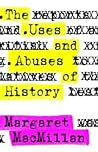
“In a secular world, which is what most of us in Europe and North America live in, history takes on the role of showing us good and evil, virtues and vices. Religion no longer plays as important a part as it once did in setting moral standards and transmitting values. . . .History with a capital H is being called in to fill the void. It restores a sense not necessarily of a divine being but of something above and beyond human beings. It is our authority: it can vindicate us and judge us, and damn those who oppose us.”
― The Uses and Abuses of History
― The Uses and Abuses of History
“The delegates to the peace conference after World War I "tried to impose a rational order on an irrational world.”
― Paris, 1919: Six Months that Changed the World
― Paris, 1919: Six Months that Changed the World
“As the American historian John Lewis Gaddis put it, it is like looking in a rearview mirror: if you only look back, you will land in the ditch, but it helps to know where you have come from and who else is on the road.”
― Dangerous Games: The Uses and Abuses of History
― Dangerous Games: The Uses and Abuses of History
“Theodore Rex. Roosevelt was driven by ambition, idealism and vanity. As his daughter famously remarked: “My father always wanted to be the corpse at every funeral, the bride at every wedding, and the baby at every christening.”
― The War That Ended Peace: The Road to 1914
― The War That Ended Peace: The Road to 1914
“We should not be impressed when our leaders say firmly, "History teaches us" or "History will show that we were right."
They can oversimplify and force inexact comparisons just as much as any of us can. Even the clever and the powerful (and the two are not necessarily the same) go confidently off down the wrong paths. It is useful, too, to be reminded, as a citizen, that those in positions of authority do not always know better.”
―
They can oversimplify and force inexact comparisons just as much as any of us can. Even the clever and the powerful (and the two are not necessarily the same) go confidently off down the wrong paths. It is useful, too, to be reminded, as a citizen, that those in positions of authority do not always know better.”
―
“IF YOU BELIEVE THE DOCTORS,” Salisbury once remarked, “nothing is wholesome; if you believe the theologians, nothing is innocent; if you believe the soldiers, nothing is safe.”
― The War That Ended Peace: The Road to 1914
― The War That Ended Peace: The Road to 1914
“The glories of the past compensated for the imperfections of the present.”
― Paris, 1919: Six Months that Changed the World
― Paris, 1919: Six Months that Changed the World
“Wilson agreed reluctantly to their attempts: “I don’t much like to make a compromise with people who aren’t reasonable. They will always believe that, by persisting in their claims, they will be able to obtain more.”
― Paris, 1919: Six Months that Changed the World
― Paris, 1919: Six Months that Changed the World
“The failure of the talks between Chamberlain and the German ambassador in London, the public and private outbursts of the Kaiser, the well-reported anti-British and pro-Boer sentiment among the German public, even the silly controversy over whether Chamberlain had insulted the Prussian army, all left their residue of mistrust and resentments in Britain as well as in Germany.”
― The War That Ended Peace: The Road to 1914
― The War That Ended Peace: The Road to 1914
“His older compatriot Friedrich Nietzsche had entertained no such hopes: “For long now our entire European culture has been moving with a tormenting tension that grows greater from decade to decade, as if towards a catastrophe: restless, violent, precipitate, like a river that wants to reach its end.”23”
― The War That Ended Peace: The Road to 1914
― The War That Ended Peace: The Road to 1914
“We have engrossed to ourselves, in a time when other powerful nations were paralysed by barbarism or internal war, an altogether disproportionate share of the wealth and traffic of the world. We have got all we want in territory, and our claim to be left in the unmolested enjoyment of vast and splendid possessions, mainly acquired by violence, largely maintained by force, often seems less reasonable to others than to us.”
― The War That Ended Peace: The Road to 1914
― The War That Ended Peace: The Road to 1914
“Nationalist movements often overlapped with economic and class issues: Rumanian and Ruthenian peasants, for example, challenged their Hungarian and Polish landlords.”
― The War That Ended Peace: The Road to 1914
― The War That Ended Peace: The Road to 1914
“Poincaré, unusually for his time and class, was a feminist and a strong supporter of animal rights, refusing, for example, to join the customary hunting parties at the presidential country estate.”
― The War That Ended Peace: The Road to 1914
― The War That Ended Peace: The Road to 1914
“Part of Nietzsche’s appeal was that it was easy to read a great deal into his work, and people including socialists, vegetarians, feminists, conservatives and, later, the Nazis did. Sadly, Nietzsche was not available to explain himself; he went mad in 1889 and died in 1900, the year of the Paris Exposition.”
― The War That Ended Peace: The Road to 1914
― The War That Ended Peace: The Road to 1914
“British would use every means from persuasion to bribery in Morocco and when those failed the wives of British diplomats knew what they had to do to further Britain’s interests.”
― The War that Ended Peace: How Europe Abandoned Peace for the First World War
― The War that Ended Peace: How Europe Abandoned Peace for the First World War
“In the fluid world of 1919, it was possible to dream of great change, or have nightmares about the collapse of order.”
― Paris, 1919: Six Months that Changed the World
― Paris, 1919: Six Months that Changed the World
“told the Reichstag that the age of “Cabinet” wars, that is wars determined by rulers for limited ends, was over: “All we have now is people’s war, and any prudent government will hesitate to bring about a war of this nature, with all its incalculable consequences.” The great powers, he went on, will find it difficult to bring such wars to an end or admit defeat: “Gentlemen, it may be a war of seven years’ or of thirty years’ duration—and woe to him who sets Europe alight, who puts the first fuse to the powder keg!”89”
― The War That Ended Peace: The Road to 1914
― The War That Ended Peace: The Road to 1914
“But the superiority of the British is that it is a matter of complete indifference to them if they appear to be stupid.”
― The War That Ended Peace: The Road To 1914
― The War That Ended Peace: The Road To 1914
“The Italian Futurist artist Giacomo Balla later called his daughters Luce and Elettricità in memory of what he saw at the Paris Exposition. (A third daughter was Elica—Propellor—after the modern machinery he also admired.)”
― The War That Ended Peace: The Road to 1914
― The War That Ended Peace: The Road to 1914
“There are only two perfectly useless things in the world,” he quipped. “One is an appendix and the other is Poincaré!”
― Paris, 1919: Six Months that Changed the World
― Paris, 1919: Six Months that Changed the World
“Anyone who falls into your hands falls to your sword!”
― The War That Ended Peace: The Road to 1914
― The War That Ended Peace: The Road to 1914
“So while we formally mourn the dead from our past wars once a year, we increasingly see war as something that happens when peace—the normal state of affairs—breaks down. At the same time we can indulge a fascination with great military heroes and their battles of the past; we admire stories of courage and daring exploits in war; the shelves of bookshops and libraries are packed with military histories; and movie and television producers know that war is always a popular subject. The public never seems to tire of Napoleon and his campaigns, Dunkirk, D-Day or the fantasies of Star Wars or The Lord of the Rings. We enjoy them in part because they are at a safe distance; we are confident that we ourselves will never have to take part in war. The result is that we do not take war as seriously as it deserves. We may prefer to avert our eyes from what is so often a grim and depressing subject, but we should not.”
― War: How Conflict Shaped Us
― War: How Conflict Shaped Us
“For the sultan Wilhelm II had brought the latest German rifle, but when he tried to present it Abdul Hamid at first shrank away in terror thinking he was about to be assassinated. The heir to Suleiman the Magnificent who had made Europe tremble nearly four centuries earlier was a miserable despot so fearful of plots that he kept a eunuch near him whose sole duty was to take the first puff on each of his cigarettes.”
― The War That Ended Peace: The Road to 1914
― The War That Ended Peace: The Road to 1914
“Louvain was a dull place, said a guidebook in 1910, but when the time came it made a spectacular fire.”
―
―
“A menudo se usa la historia como una serie de cuentos morales para aumentar la solidaridad de grupo o, cosa más defendible, según mi punto de vista, para explicar el desarrollo de instituciones importantes como los parlamentos y conceptos como la democracia y de ese modo la enseñanza del pasado se ha convertido en algo fundamental a la hora de debatir la forma de inculcar y trasmitir valores. El peligro es que ese objetivo, que puede ser admirable, acabe por distorsionar la historia, ya sea convirtiéndola en un relato simplista en el cual sólo hay blanco y negro, o bien representándola como si todo tendiese hacia una sola dirección, ya sea el progreso humano o el triunfo de un grupo en particular. La historia explicada de este modo aplana la complejidad de la experiencia humana y no deja espacio para las distintas interpretaciones del pasado.”
― The Uses and Abuses of History
― The Uses and Abuses of History
“The French would do whatever it took to get Britain to commit itself. In 1909 they produced a carefully faked document, said to have been discovered when a French commercial traveler picked up the wrong bag on a train, which purported to show Germany’s invasion plans for Britain.”
― The War That Ended Peace: The Road to 1914
― The War That Ended Peace: The Road to 1914
“He told conductors how to conduct and painters how to paint. As Edward said unkindly, he was “the most brilliant failure in history.”33”
― The War That Ended Peace: The Road to 1914
― The War That Ended Peace: The Road to 1914